

Microcement Floor vs Polished Concrete Floor
When it comes to achieving a sleek, modern surface in today’s high-end interiors, two finishes stand out: polished concrete and microcement. Both deliver that coveted industrial-luxe aesthetic—but they serve different purposes, perform differently, and suit different types of projects.
If you’re renovating a home, condo, commercial space, or showroom in Toronto or the GTA, understanding the difference between these two materials will help you make an informed choice.
Speak To Shayan 416 (606) 8060 or Request A Quote
What Is Polished Concrete?
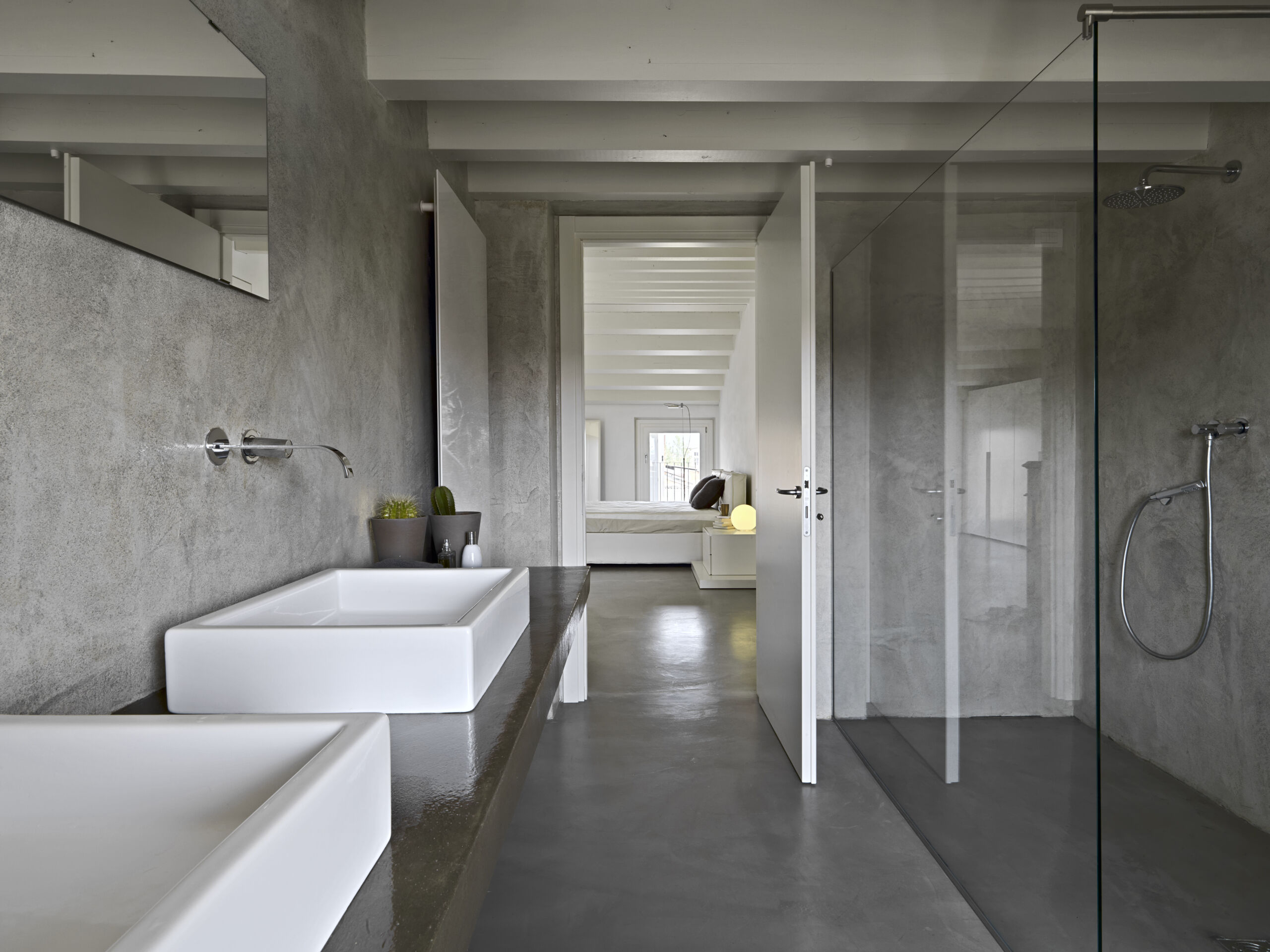
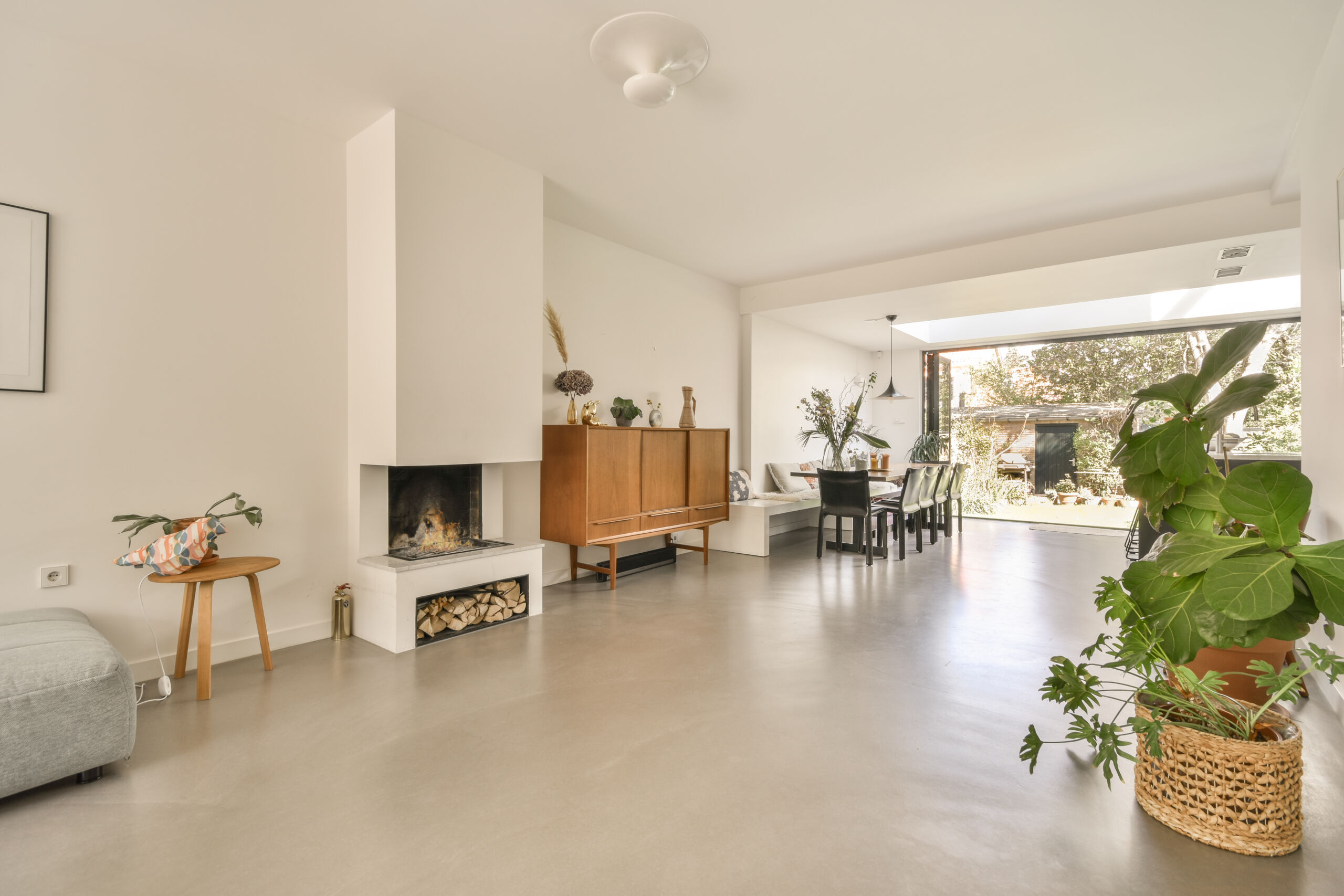
Polished concrete is exactly what it sounds like: the existing concrete substrate is ground down, honed, and polished using industrial diamond pads. The result is a hard, glassy surface that showcases the natural aggregate in the concrete.
Advantages of Polished Concrete
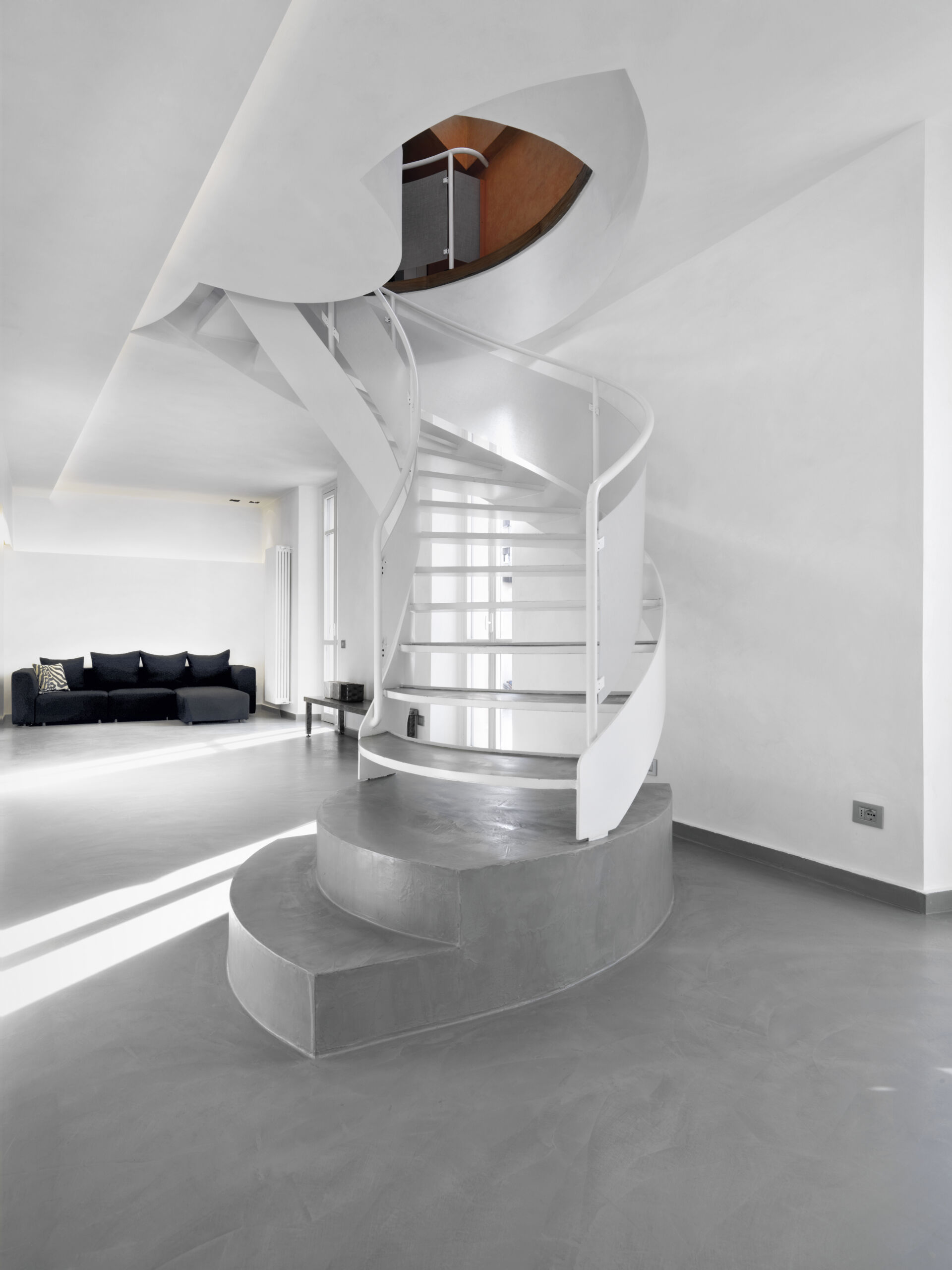
Limitations of Polished Concrete:
What Is Microcement?
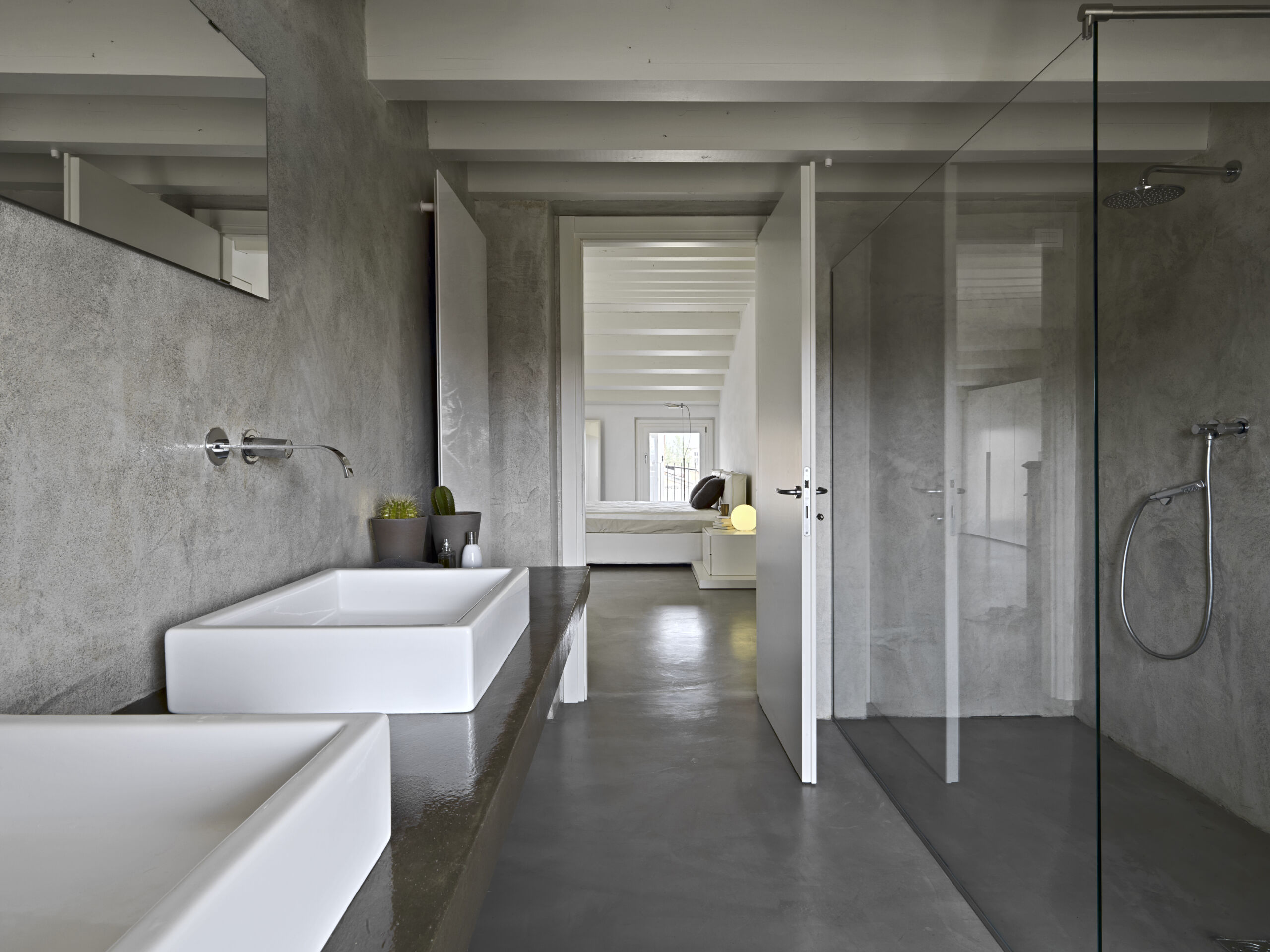
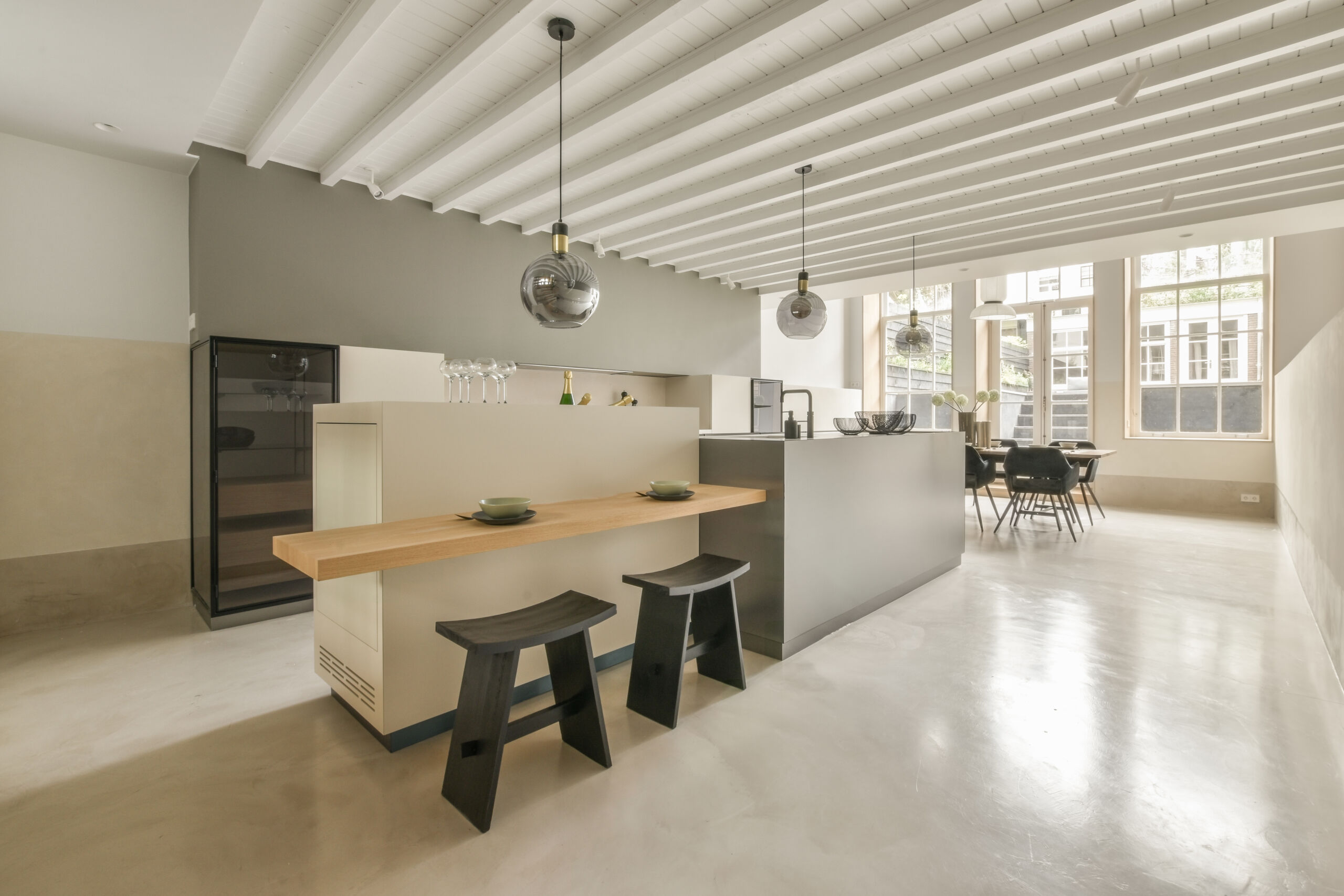
Microcement (also called microtopping or microconcrete) is a thin, cement-based decorative coating applied by hand in multiple layers—usually 2–3 mm thick. It can be installed over a variety of surfaces: tile, wood, drywall, and concrete.
Advantages of Microcement:
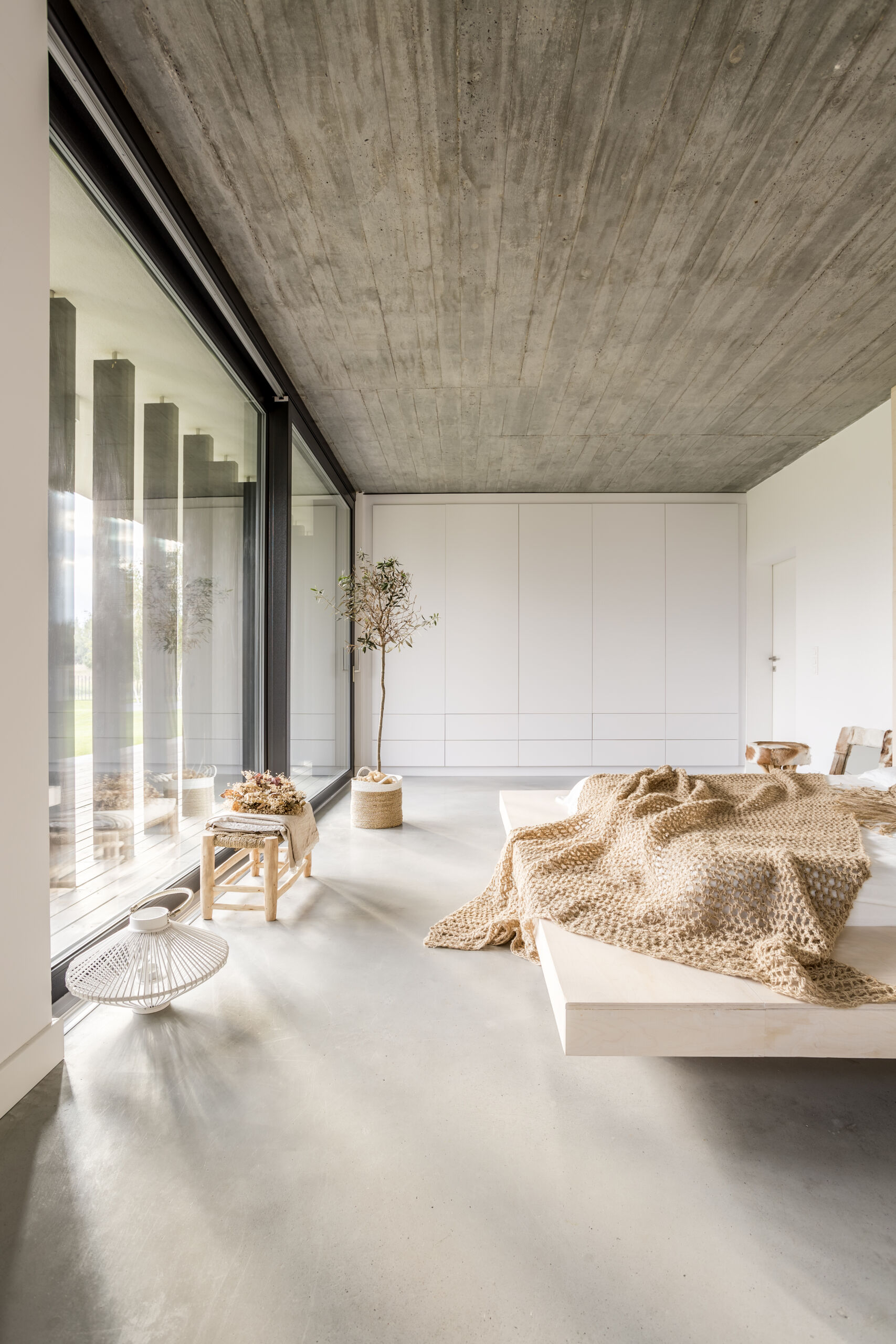
Before: the Vaughan wellness-centre reception and circulation floor during preparation for microcement. View the Vaughan wellness-centre project.
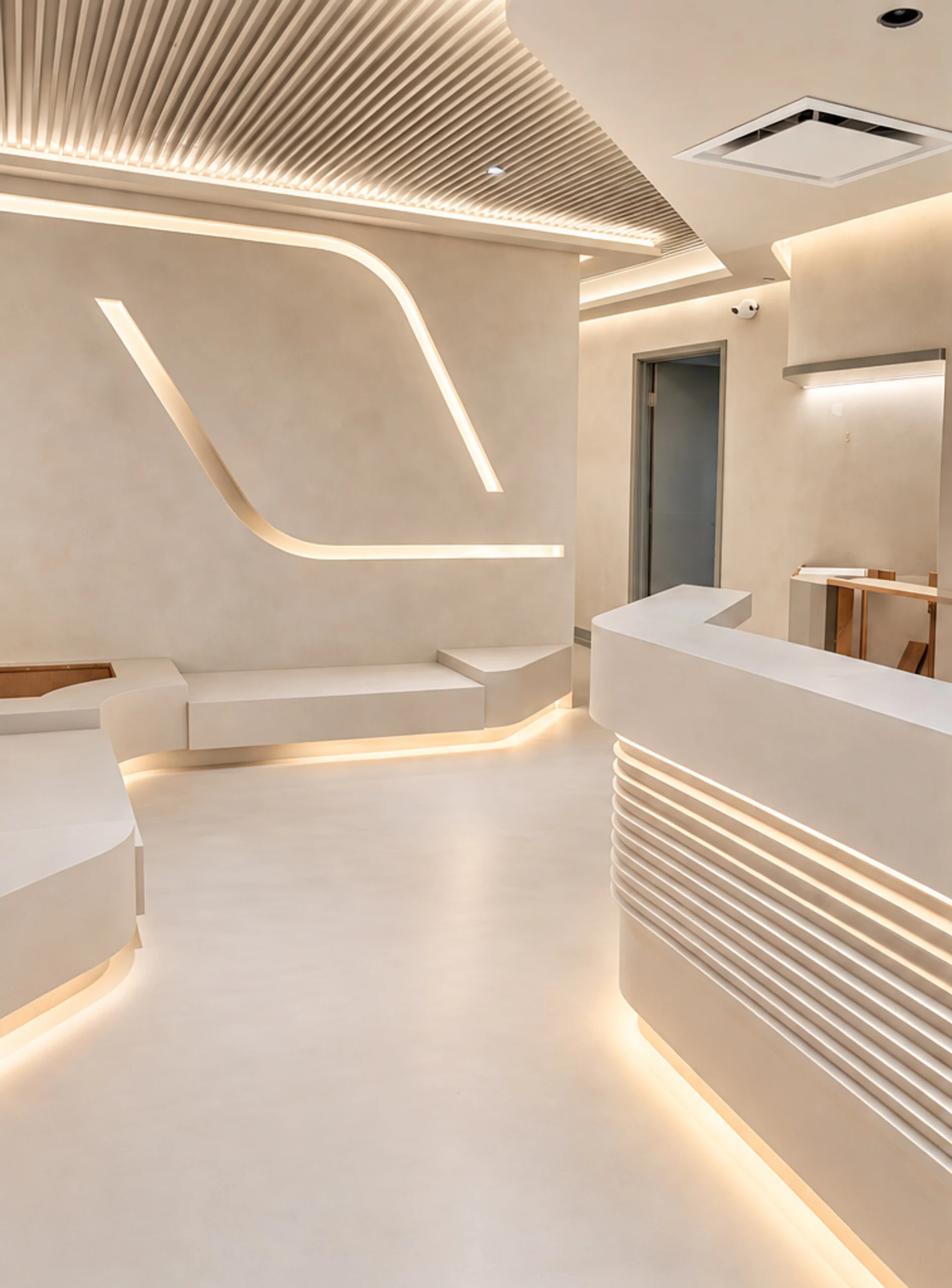
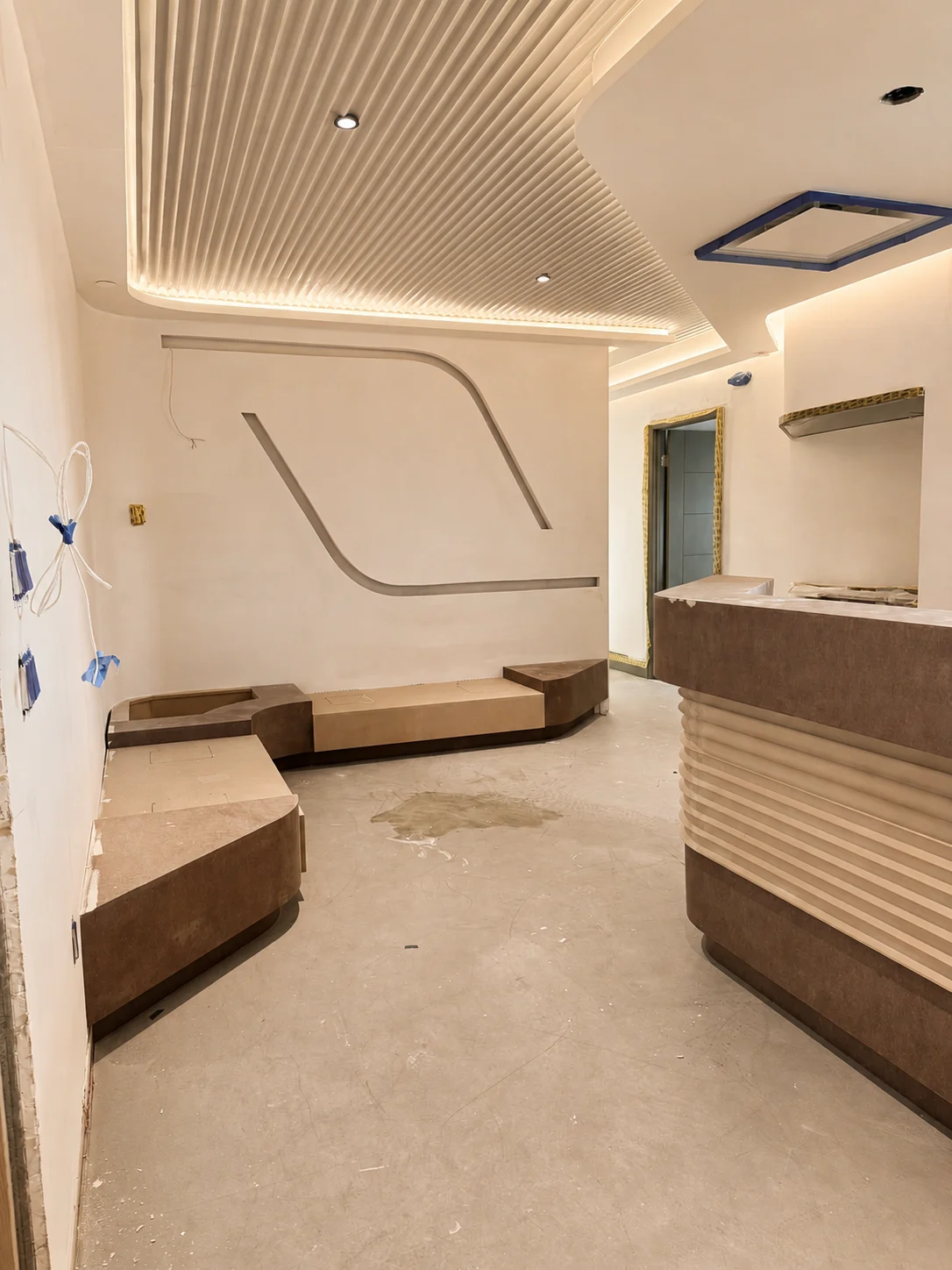
After: the finished microcement floor creates a continuous architectural base for the reception desk and built-in seating. View the Vaughan wellness-centre project.
Limitations of Microcement:
Our Reviews
Polished Concrete vs. Microcement: Side by Side
| Feature | Polished Concrete | Microcement |
|---|---|---|
| Substrate Requirement | Concrete slab only | Concrete, tile, wood, drywall, furniture |
| Typical Thickness | N/A (ground slab) | 2–3 mm |
| Finish Style | High-gloss, natural aggregate | Smooth, seamless, matte to satin to gloss |
| Colour Options | Natural grey or dyed | Fully customizable |
| Water Resistance | Requires sealing | Fully waterproof when sealed |
| Ideal Spaces | Retail, industrial lofts | Bathrooms, kitchens, living areas, staircases, spas |
| Installation Disruption | Requires grinding machinery | Minimal—applied by hand |
| Comfort Underfoot | Hard, cold | Slightly warmer, softer |
| Maintenance | Very low | Low, periodic resealing recommended |
Which Should You Choose for Your Toronto Space?
- Choose polished concrete if you’re working in a space with an excellent concrete substrate and want that authentic industrial loft vibe.
- Choose microcement if you want versatility, seamless beauty, and the ability to resurface walls, ceilings, stairs, or surfaces where concrete grinding isn’t possible.
Many Toronto interior designers and architects now prefer microcement for high-end residential projects, spas, luxury retail spaces, and boutique hotels where flexibility and aesthetic control matter.
FAQ
Is microcement cheaper than polished concrete?
Not always. On large, open floor areas, polished concrete is often more cost-effective if you already have a good concrete substrate in place. However, if your existing floor needs extensive repair or if you’re applying the finish to walls, stairs, furniture, or wet areas, microcement can be a smarter investment—especially because it requires no demolition and offers more flexibility.
What are the disadvantages of microcement?
Softness & Patina: Microcement develops a natural patina over time. While many clients love this soft evolution, it may not suit every style.
Installation skill: Microcement is a hand-applied artisan finish. Poorly done applications can lead to cracking or unevenness.
Cost on large floors: In large commercial spaces where cost-per-square-foot matters, polished concrete may be more economical.
Learn more about microcement floors here.
What are the disadvantages of polished concrete flooring?
Requires perfect substrate: Polished concrete needs an excellent concrete slab. Any cracks, uneven areas, or previous coatings will show through.
Cold & hard: It can feel cold underfoot, especially in Toronto winters, and is not forgiving if you drop fragile items.
Acoustic properties: Polished concrete reflects sound and can make a space feel louder.
Limited application: It’s a floor-only solution—whereas microcement can be used seamlessly on walls, ceilings, furniture, and stairs.
What is a cheaper alternative to polished concrete?
Microcement can often be more affordable for feature walls, bathrooms, or multi-surface applications. Other budget-friendly options include:
Epoxy flooring (though less natural-looking and prone to yellowing)
Concrete-look tiles (but with visible grout lines)
Overlay cement coatings (basic, not decorative like microcement)
Is microcement good for garage floors?
Generally, no—microcement is not recommended for garage floors exposed to vehicular traffic, hot tires, and heavy mechanical use. For garage floors, polished concrete or epoxy coatings are more suitable and durable. Microcement is best for residential interiors, showrooms, and wet spaces like bathrooms and spas.
What is the life expectancy of polished concrete?
Properly installed and maintained polished concrete floors can last 20 to 30+ years—especially in residential or light commercial settings. Routine cleaning and periodic resealing can extend its lifespan.
Does polished concrete crack easily?
Polished concrete itself does not inherently crack—but if the underlying concrete slab moves, shrinks, or cracks, those imperfections will become visible on the polished surface. This is why slab preparation and control joint placement are crucial. In comparison, microcement is more flexible and can bridge minor surface imperfections.
Serving Downtown Toronto & Etobicoke Commercial Projects
At Chromatist, we specialize in both microcement and decorative concrete finishes in Toronto, the GTA, and beyond. Whether you’re renovating a Queen West loft, an Oakville spa, or a Rosedale home, we can help you select and apply the perfect finish for your project.
Contact us today for a free consultation!
Let’s Bring Texture & Sophistication to Your Commercial Design
Speak to Shayan at (416) 606-8060 or request a quote here.
We bring artisan-crafted, high-performance finishes to every surface of your commercial interior—from walls and ceilings to floors, counters, and niches.
Serving Toronto, British Columbia, Los Angeles, Florida and Texas
| Toronto & GTA | |
|---|---|
|
|
| British Columbia (BC) | The Okanagan Valley & Island Coast | ||
|---|---|---|---|
|
|
|
|
| Jacksonville | Tampa | Miami | Broward County | Palm Beach County |
|---|---|---|---|---|
|
|
|
|
|
| Los Angeles | Sacramento | Long Beach | Santa Monica | Mission Viejo |
|---|---|---|---|---|
|
|
|
|
|
| Dallas | Houston | Austin | San Antonio | Fort Worth |
|---|---|---|---|---|
|
|
|
|
|