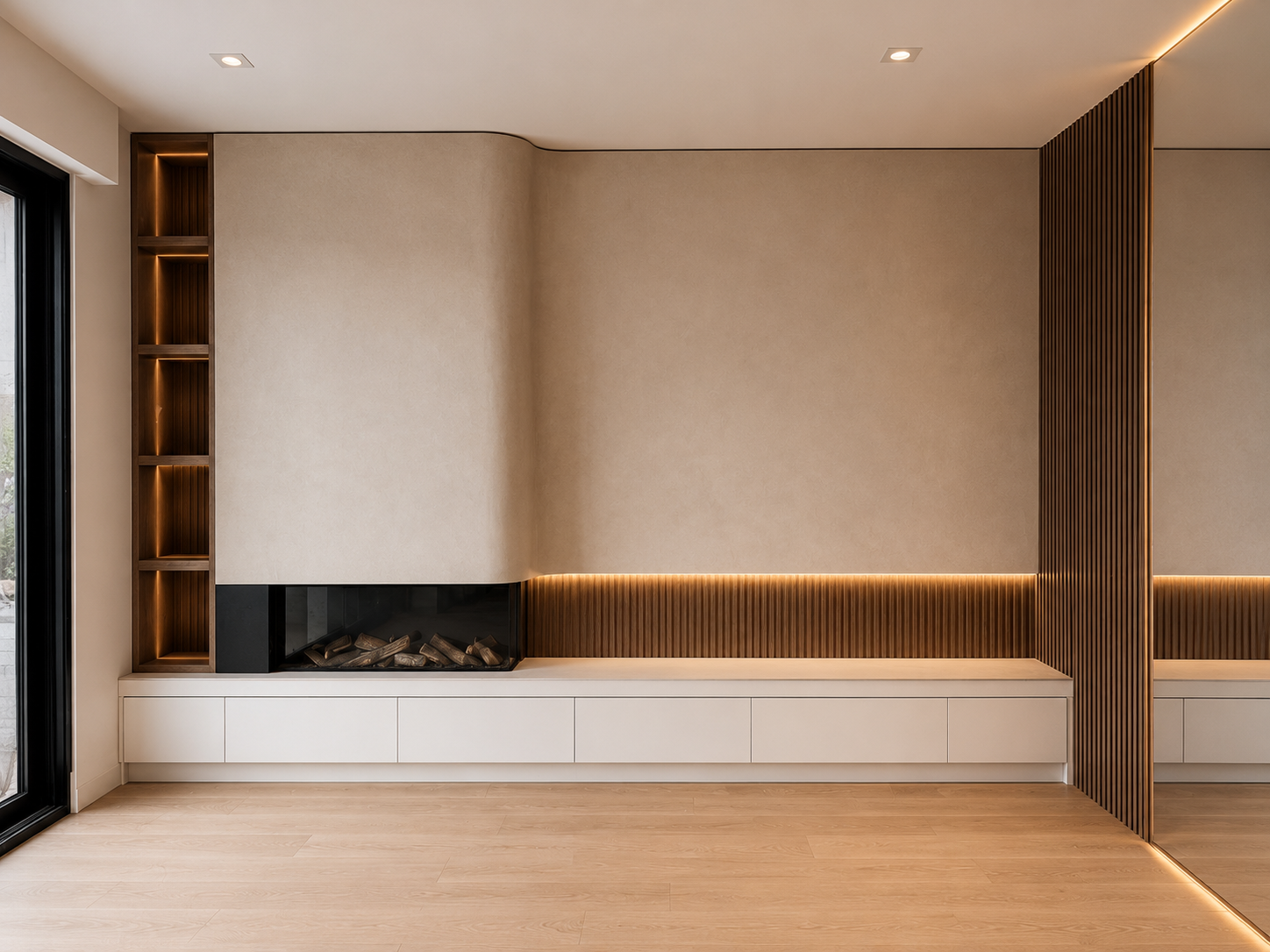

Roman Clay Walls Toronto: Hand-Trowelled, Quietly Textured Interiors
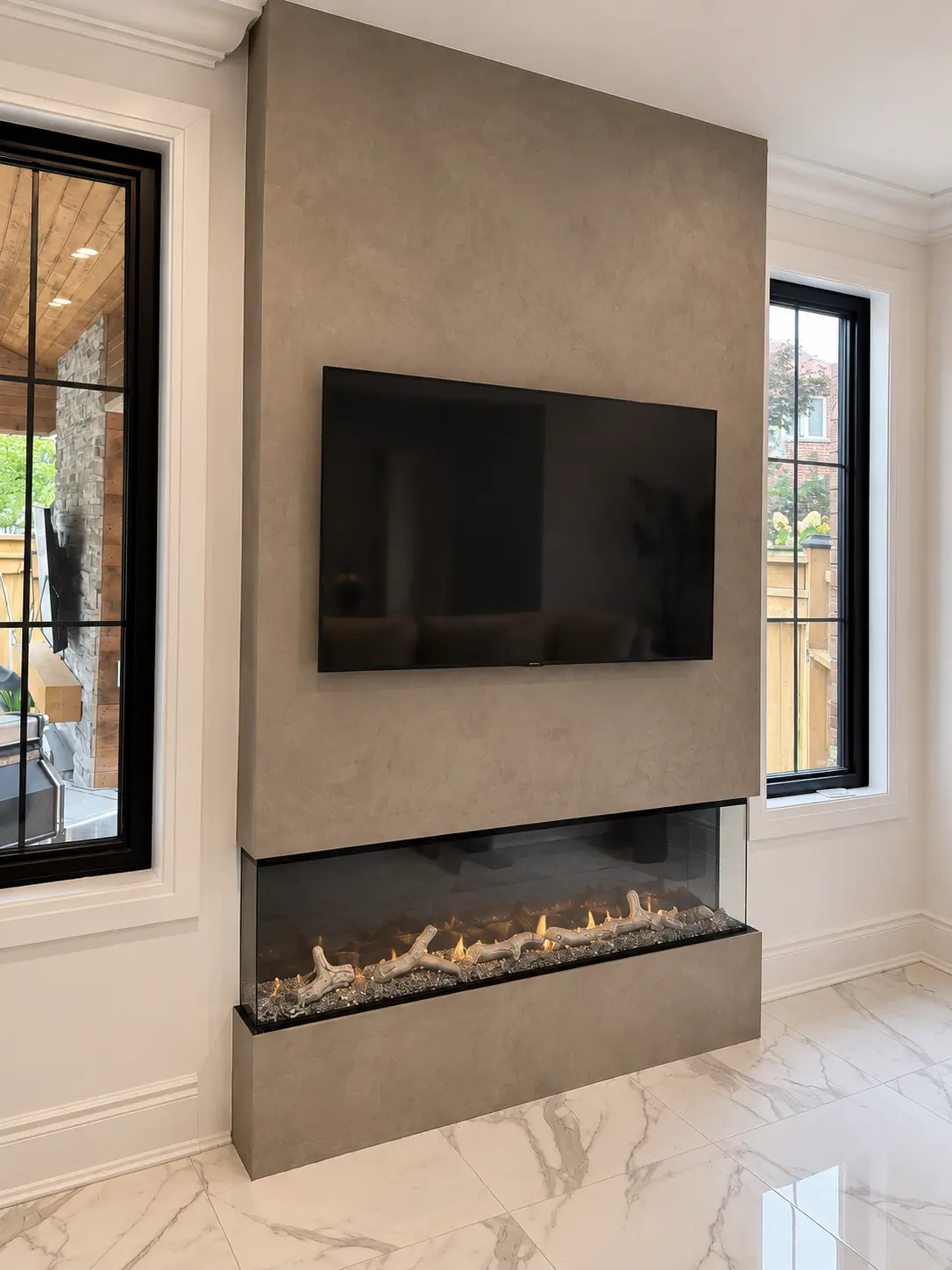
Roman Clay Walls Toronto: Hand-Trowelled, Quietly Textured Interiors
Roman Clay is a quiet, hand-trowelled wall finish for interiors that need softness, depth, and a sense of material presence without a high shine. At Chromatist, we create Roman Clay walls for Toronto homes and considered commercial spaces where the finish is meant to sit naturally within the architecture.
Its movement is subtle rather than dramatic: a soft, matte surface with tonal variation that changes gently with daylight and adjacent materials. Roman Clay works especially well in rooms that call for warmth, restraint, and an intentionally imperfect character.
What Is Roman Clay?
Roman Clay is a decorative plaster-style wall coating applied by hand in layered trowel movements. Depending on the specified system, it can create a smooth, suede-like or lightly textured surface with nuanced colour variation.
It is chosen less for a polished, formal effect and more for its calm, earthy character. In the right setting, it can make a wall feel integrated with the room rather than simply painted.
Common Roman Clay Applications:
Roman Clay: A Soft Alternative to Polished Plaster
Roman Clay, Roman Clay, and Venetian Plaster can all bring depth to an interior, but they do it differently.
Roman Clay is generally selected for a soft, low-sheen, earthier appearance. Roman Clay has a more mineral character and can range from matte to softly luminous. Venetian plaster is typically more compressed and polished, with a stronger sense of sheen and movement.
The best choice depends on the room’s light, intended texture, existing materials, and how refined or relaxed the final surface should feel.
The Quiet Character of Roman Clay Walls
The appeal of Roman Clay is in its restraint:
- Soft tonal movement rather than a flat painted surface
- A matte or low-sheen finish that absorbs light gently
- Hand-trowelled variation that gives each wall its own character
- An easy fit with wood, stone, linen, aged metal, and natural textiles
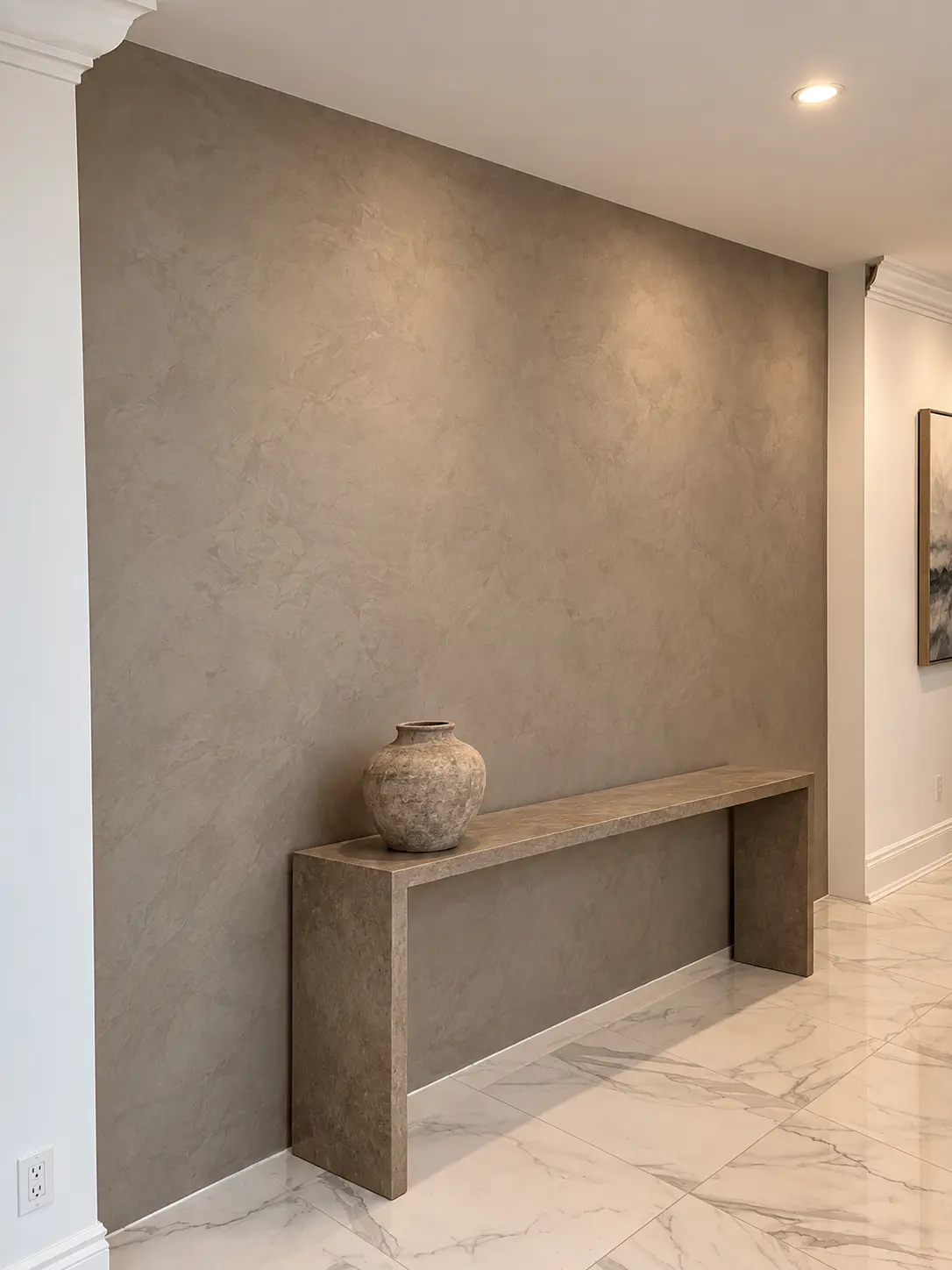
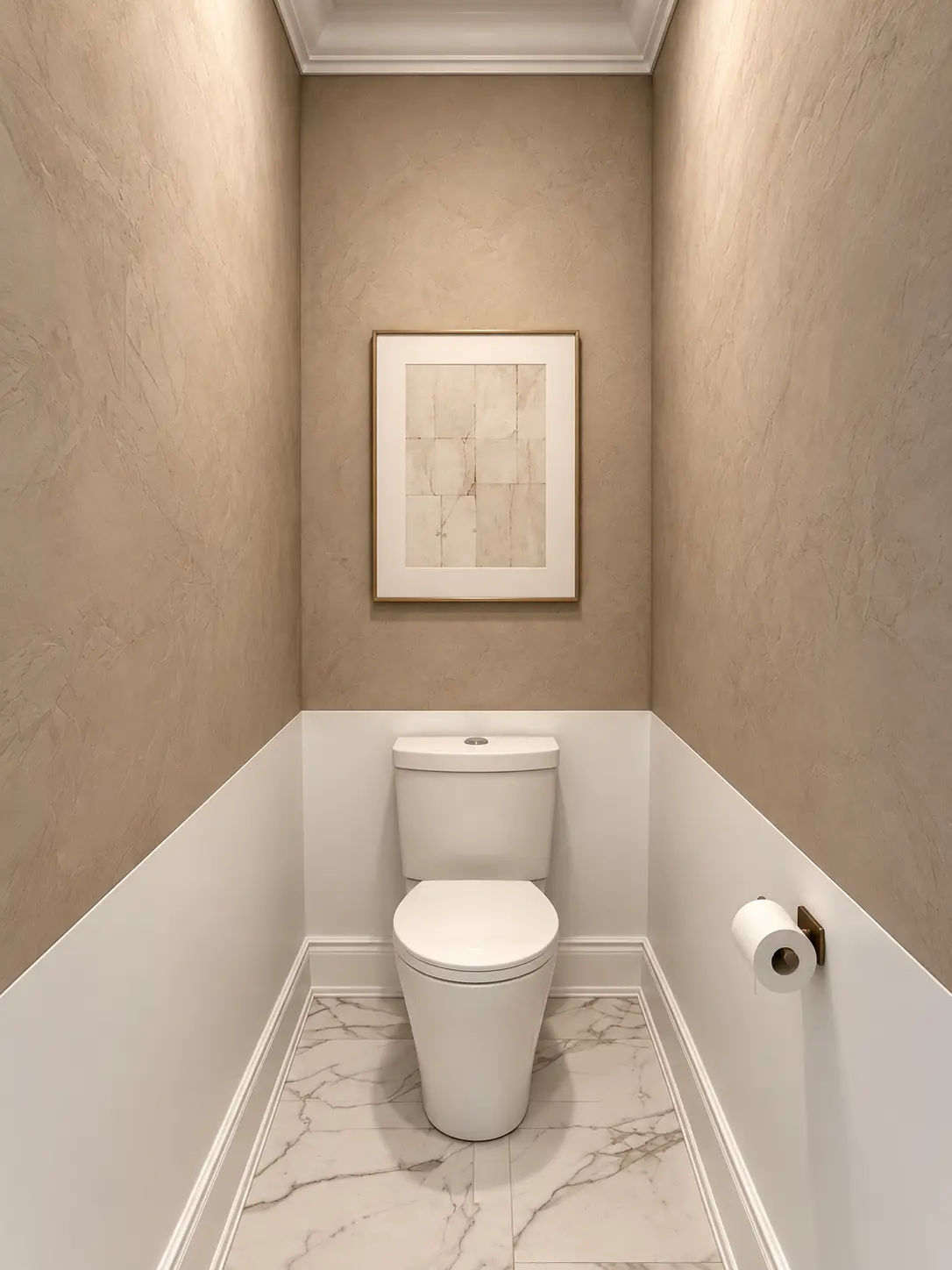
Our Roman Clay Installation Process
Our Roman Clay application is a deliberate, multi-step process that combines careful substrate preparation with controlled hand-trowel work. The aim is a surface that feels composed, tactile, and appropriate to the room.
Step 1: Design Consultation and Colour Direction
We begin by reviewing the room, its natural light, existing finishes, and the character you want the wall to carry. Samples are important because Roman Clay can read differently depending on texture, colour, and viewing angle.
Step 2: Substrate Assessment and Preparation
A refined finish depends on a stable, well-prepared substrate. We assess the wall condition, repair or level it where needed, and select the appropriate primer and base preparation for the specified system.
Step 3: Layering the Finish
Roman Clay is applied by hand in controlled layers. The trowel work establishes the movement, depth, and texture of the surface, so this stage is where the finish begins to take on its individual character.
Step 4: Refinement of Texture and Movement
As the finish develops, we refine the surface to keep the movement deliberate and balanced. The goal is not uniformity; it is a composed surface that feels natural at both close range and across the room.
Step 5: Final Protection and Care Guidance
Where the room and selected system call for it, we discuss appropriate protection and maintenance. Suitability for kitchens, bathrooms, fireplaces, or other higher-use areas should always be confirmed during consultation rather than assumed.
Roman Clay Feature Wall in Toronto West
Speak to our team or Request a Quote to discuss a Roman Clay feature wall, fireplace, range hood, or full interior.
Cost Factors for Roman Clay Installation
Roman Clay projects are priced around the scope and finish complexity rather than a single generic rate.
Key factors influencing the estimate:
- Wall condition and preparation: Repair, levelling, reinforcement, and primer selection affect the scope.
- Finish depth and texture: The intended movement, colour complexity, and number of layers influence labour and material requirements.
- Architectural details: Niches, corners, curves, transitions, fireplaces, and hoods require more detailed work.
- Project scale and access: A continuous surface is assessed differently from several small or difficult-to-access areas.
Featured Clients









FAQ: Roman Clay Walls in Toronto & the GTA
We provide a tailored Roman Clay estimate after reviewing the room, substrate, finish direction, and project details. This makes it possible to recommend the appropriate preparation and finish system before the work is specified.
Toronto & GTA Service Areas
Decorative Wall Finishes for Toronto’s Distinctive Homes
Chromatist creates hand-applied limewash, Venetian plaster, microcement, Tadelakt, and custom decorative finishes for homes throughout Toronto and the GTA. Our work is shaped around the architecture of each space—from heritage residences and established neighbourhood homes to contemporary custom builds and designer-led renovations.