

Microcement Bathroom Ideas for New Builds and Renovations
A microcement bathroom can feel like one considered composition: a wall turning into a niche, a floor sitting quietly beside timber, a shower that belongs to the same material palette. Colour, texture and light give the room its character without requiring every surface to become a separate feature.
At Chromatist, our bathroom work includes new builds, shower and bathroom walls, complete bathrooms with finished floors, and renovations over existing tile. The design possibilities overlap, but the starting conditions differ. These microcement bathroom ideas explore both scenarios and the decisions that shape a coherent, practical result.
For project assessment and installation, explore our microcement bathroom and shower services.
Microcement in a New-Build Bathroom
In a new build, microcement can be considered while the bathroom is taking shape. The finish direction can inform how walls meet floors, where a niche sits and how a curved return relates to the vanity or shower enclosure.
Shower walls alone can provide a quiet focal point; carrying a related finish across bathroom walls and floors gives the room a shared material language. Early coordination of substrates, drainage, junctions and waterproofing allows each surface to be prepared for its intended use.
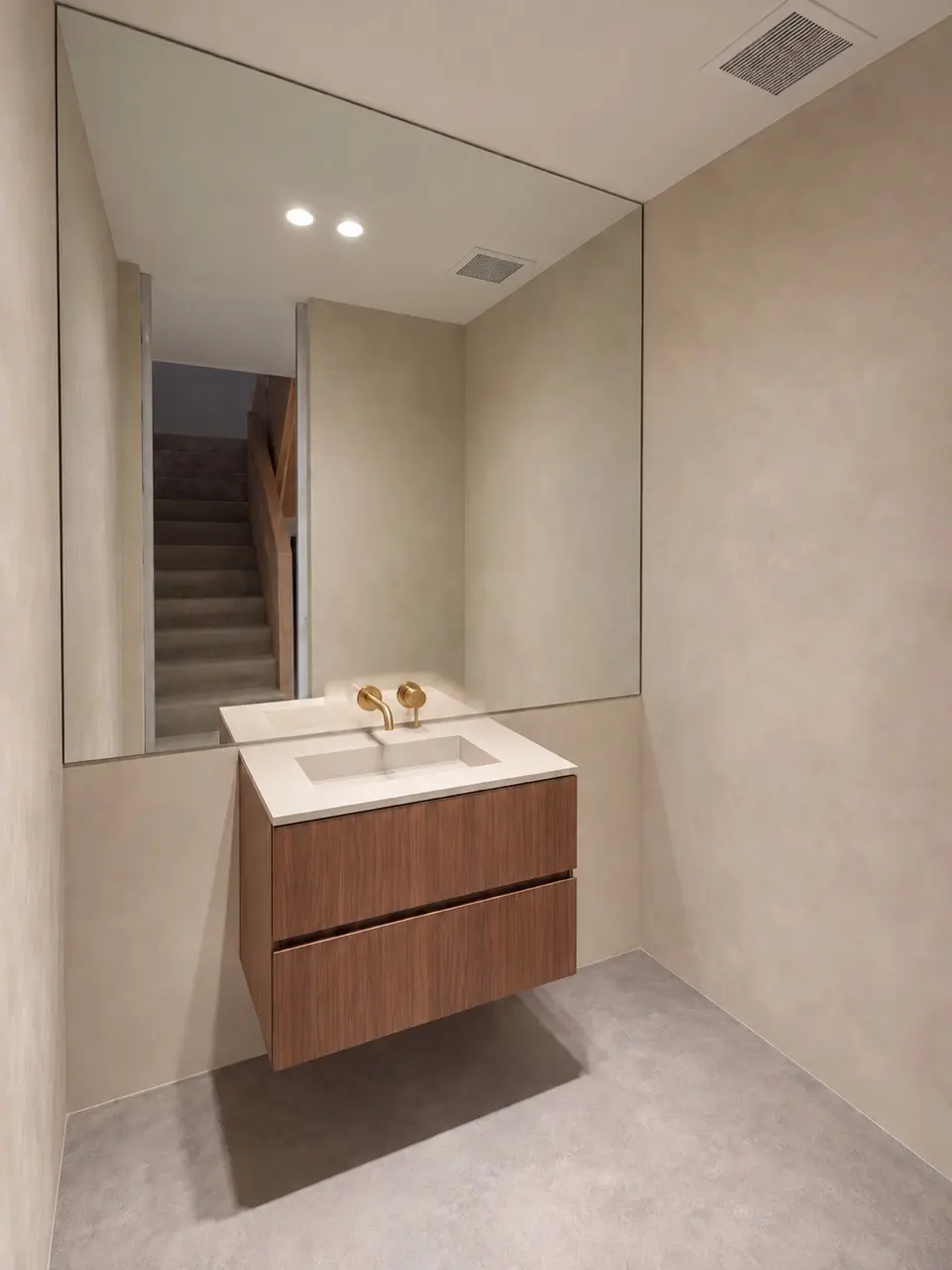
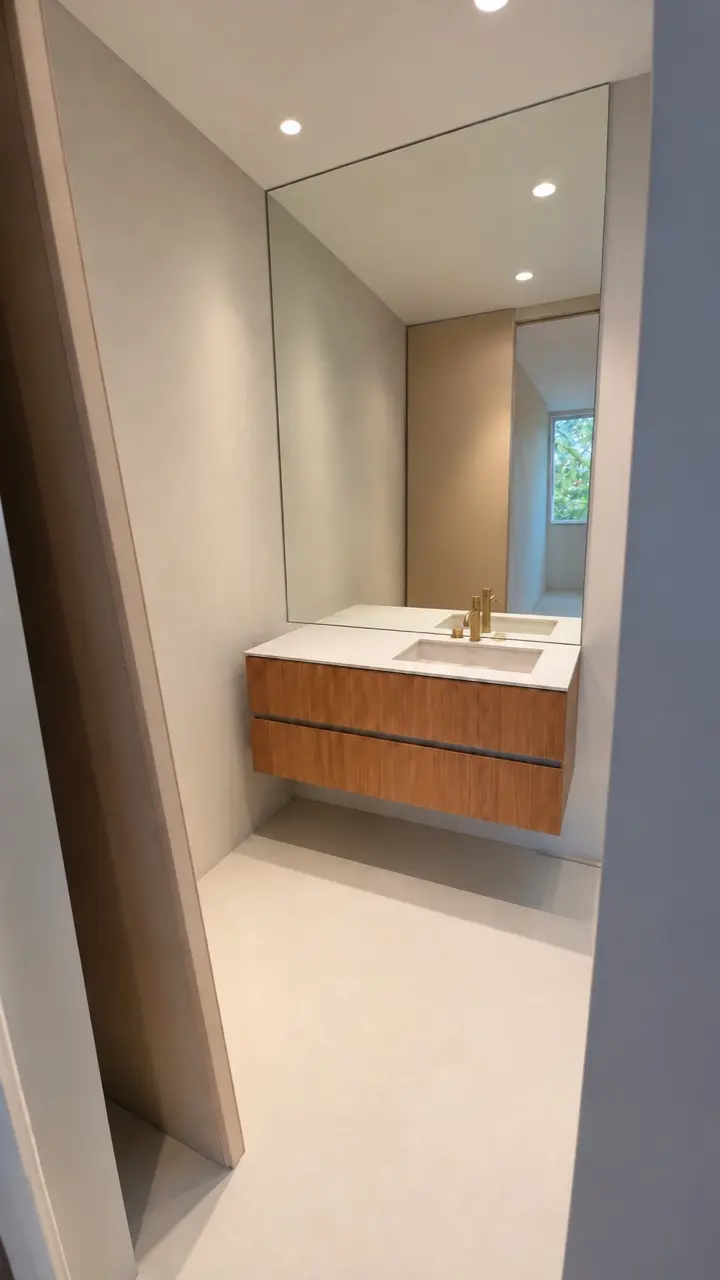
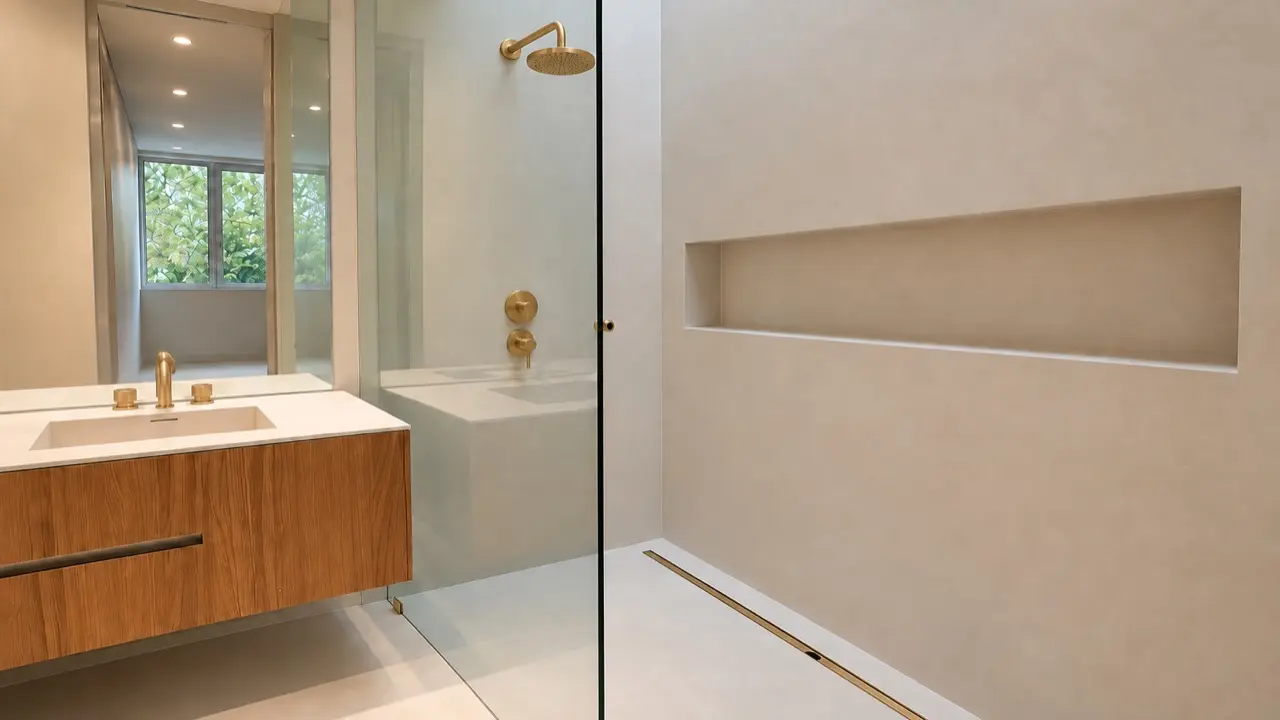
In this new-build project, we applied microcement to bathroom and shower walls and floors. Soft neutral tones and hand-trowelled movement connect the surfaces, while timber vanities and brass fixtures bring warmth to each space.
Speak To Shayan 416 (606) 8060 or Request A Quote
Microcement Over Existing Bathroom Tiles
An existing tiled bathroom offers a different opportunity: changing the surface character while assessing what can responsibly remain beneath it. Suitable tiles may be retained and prepared for microcement, but their condition and the underlying assembly need to be reviewed first.
Covering tiles does not repair a leak or an unstable base. Some projects require repairs, removal or a different build-up. Our guide to microcement over existing tiles explains the assessment in more detail.
Where Can Microcement Be Applied in a Bathroom?
Start with the surfaces that will shape the room: a wall framing the vanity, a shower enclosure, or a floor connecting the spaces. They can share a colour direction while using different preparation and surface specifications.
Microcement Bathroom Floors
A continuous-looking floor gives the room a calm visual base. Consider its relationship with timber, stone and cabinetry alongside substrate stability, levels, movement and any underfloor-heating requirements.
Microcement Shower Floors
A shower floor needs a suitable waterproofing assembly, falls to the drain and carefully resolved transitions. Texture, protective treatment and slip resistance must follow the intended use; microcement is not automatically slip resistant or a substitute for waterproofing.
Microcement Bathroom Walls
Microcement bathroom walls offer room to explore movement and proportion. A quieter application can let a curved niche or recessed shelf carry the design, while more visible trowelled variation gives a broad wall a stronger material presence.
Consider the finish at two distances. Across the room, its colour should sit comfortably with cabinetry, fixtures and flooring. Up close, texture becomes more apparent, particularly where daylight grazes the surface or turns around a corner.
A wall outside the shower and a wall exposed to running water have different demands. Define those areas early so preparation and protection follow the actual use, rather than the appearance alone.
Microcement Shower Walls and Built-In Details
Microcement shower walls can carry the bathroom palette into the enclosure without introducing a new visual pattern. Niches, returns and edges become part of the composition, giving the shower an architectural presence.
Wet-area detailing still needs its own specification. Our Toronto microcement shower project explores waterproofing, heated floors and preparation in more detail.
Vanity Surrounds and Built-In Details
Suitable shelves and vanity surrounds can extend the palette. Countertops and integrated basins need a separate suitability review because cosmetics, soap and standing water create different demands from a decorative wall.
Microcement Bathroom Colours: Whites, Beige and Soft Greys
Colour sets the atmosphere of a microcement bathroom. White and off-white can keep the room light and quiet; beige and warm greige introduce a softer relationship with timber and stone; pale grey gives curves and niches a more restrained architectural presence.
The Soft, Organic Character of Hand-Trowelled Microcement
Texture is inherent to microcement’s hand-trowelled character. Subtle marks, tonal variation and movement across the surface are part of the finish, giving a broad wall or curved niche an organic presence. The application shapes how quietly or visibly that movement reads.
That character can evoke Mediterranean interiors: sun-washed surfaces, softened forms and a palette that feels connected to natural materials. In a bathroom, pale mineral colours and gentle trowelled movement can make the room feel calm and enveloping, with a visual softness that carries from one surface to the next.
We consider the feeling of the whole room when discussing texture. Grazing daylight can reveal the hand of the application, while softer lighting lets the finish sit quietly behind timber, stone and fixtures. Reviewing a sample helps establish the amount of movement and surface character you want to live with.
Custom Colours from Benjamin Moore and Sherwin-Williams
We can tint microcement to client-requested colours from the Benjamin Moore or Sherwin-Williams palettes. An existing paint colour can become the starting point for a bathroom’s material palette, whether the intention is to carry a familiar neutral into the shower or coordinate the finish with adjoining rooms.
In our work, client preferences have largely been for white, off-white, beige and organic neutrals, alongside soft off-white greys and light greys. These quieter colours allow the hand-applied texture, changing light and architectural details to carry more of the design.
Microcement Colours We Have Worked With
Benjamin Moore colour references we have used include Classic Gray, Gray Owl, Edgecomb Gray, Pale Oak and Collingwood. They offer starting points when considering the relationship between a light grey bathroom, a warmer neutral palette and the surrounding materials.
The choice should follow the whole room. Place the proposed colour beside the vanity timber, stone, fixtures and flooring, then consider how it reads in daylight and under the bathroom’s evening lighting. A beige microcement bathroom can feel quite different beside warm wood than beside cool stone, even when the same colour reference is used.
Review the Colour in the Actual Finish
We include colour consultation and samples of the chosen colour and finish before application. A paint-palette reference begins the discussion; the microcement sample shows how that direction reads with the selected texture, tonal movement and protective finish. Review that sample in the room before settling the palette.
If you are comparing surface characters as well as colour, explore our Tadelakt versus microcement guide.
Our Microcement Bathroom Process
Our process connects the design direction with the surfaces beneath it. New construction and an existing tiled shower may share a palette while requiring different preparation.
1. Substrate Analysis and Scope
We review the existing or proposed base, the surfaces involved and how each area will be used.
2. Colour Consultation and Samples
We discuss the material palette and prepare samples of the chosen colour and finish, establishing a reference for texture, movement and sheen.
3. Preparation for the Selected System
Repairs, levelling, primers, reinforcement and wet-area requirements follow the substrate and selected system. Read our microcement bathroom preparation guide for the technical considerations.
4. Microcement Application and Protective Finish
Application develops the chosen surface character, followed by the specified protective treatment. Curing and return-to-use requirements follow the products and site conditions.
Microcement Bathroom Care and Cost Considerations
Caring for a Microcement Bathroom
Follow the cleaning and maintenance instructions for the actual finish system and protective treatment. Normal bathroom cleaning, ventilation and attention to surrounding junctions remain important. Any renewal of the protective finish should follow its condition and use, rather than a universal resealing interval.
What Affects Microcement Bathroom Cost?
Substrate condition, tile retention or removal, wet-area requirements, access, niches, curves and the selected system influence the quotation. A compact shower with intricate details can involve more work than its floor area suggests.
Plans, dimensions and photographs help establish the scope. Explore our microcement projects in Toronto and the GTA for more examples of how the finish can be used.
Microcement Bathroom Design Questions
Discuss Your Microcement Bathroom
Whether you are planning a new build or reconsidering an existing tiled bathroom, begin with the surfaces, construction and material palette together. Share your plans, current conditions and finish references through the form below.
For application assessment and installation enquiries, explore our microcement bathroom and shower service.
Toronto & GTA Service Areas
| Toronto & GTA | |
|---|---|
|
|