

Microcement Bathrooms Prep: Why the Foundation Matters More Than the Finish

Microcement Bathroom Prep

When it comes to modern bathroom design, microcement is the ultimate “grout-free” dream. It offers a seamless, monolithic aesthetic that tile simply cannot replicate. However, there is a fundamental truth every homeowner and contractor must understand: Microcement is a decorative skin, not a structural barrier.

While a high-quality sealer makes the surface water-repellent, the true success of a microcement bathroom is decided long before the first trowel hits the wall. Here is why prep work for microcement is a completely different beast than prepping for tile.

1. The "Invisible" Danger: Waterproofing from Behind

In a traditional tiled shower, the grout and tile provide the first line of defense, and the membrane behind them catches the rest. With microcement, the material is breathable and decorative. If the waterproofing membrane is not applied completely from corner to corner and 100% secured, moisture can seep behind the system.

If water penetrates the substrate, it attacks the microcement from the back. This leads to:

  • Delamination: The microcement losing its bond to the wall.

  • Ghosting: Dark patches where moisture is trapped under the sealer.

  • Cracking: Structural degradation of the substrate that telegraphs through the finish.

Insecure Schluter Membrane in Microcement Bathroom Prep

2. The Mirror Effect: Microcement Shows Everything

Unlike tile, which uses mortar and thick slabs to mask uneven walls or messy membrane applications, microcement is incredibly thin (usually 2-3mm). It acts as a mirror to the substrate.

If your waterproofing membrane is bunched up in the corners, has ridges, or is unevenly applied, it will show. To achieve that high-end, seamless look, the waterproofing layer must be:
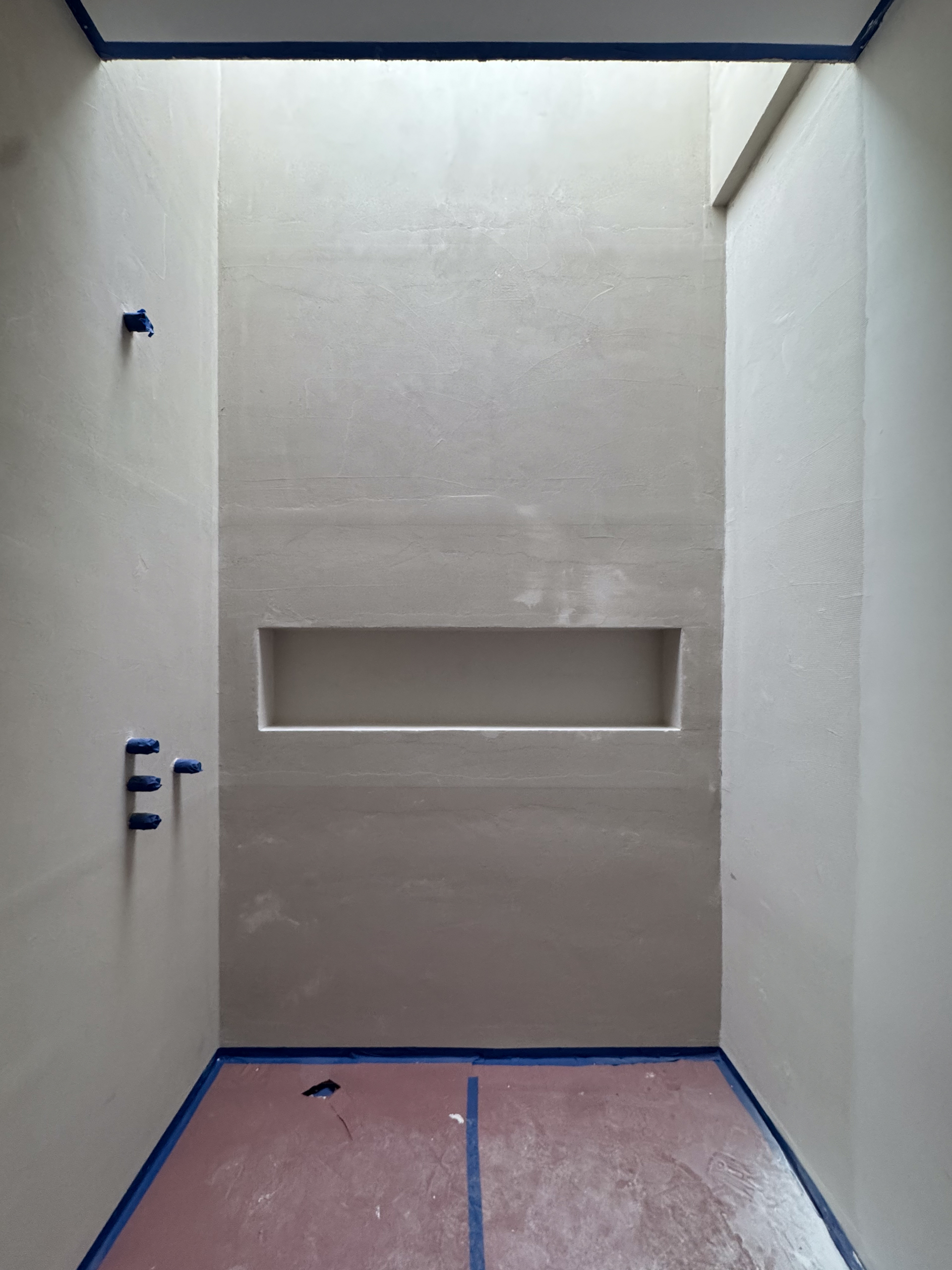
  • Sanded and Leveled: The substrate must be as smooth as a finished wall before the microcement starts.

  • Flawless in the Corners: Any "bulk" in the waterproofing tape will create a visible bump in your "seamless" bathroom.

A close-up of a microcement wall where the rectangular outlines of the Schluter membrane overlaps are visible through the decorative finish.
The "Mirror Effect": How Poor Substrate Prep Telegraphs Through Microcement
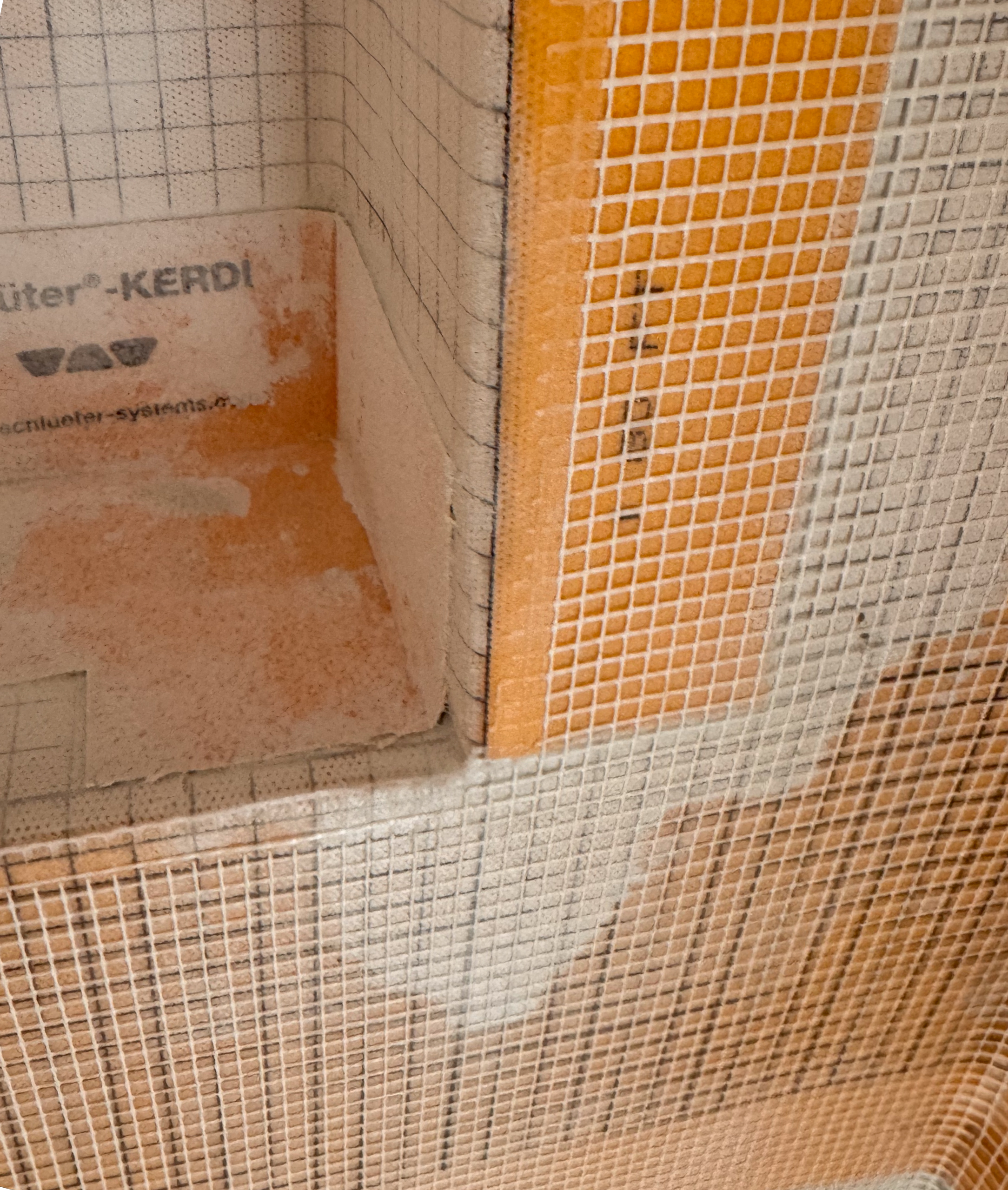
A photo showing a badly prepped shower corner with bunched, overlapping, and loose Schluter waterproofing membrane before microcement application.
Structural Failure: Uneven and Insecure Waterproofing Membrane Application

3. Movement is the Enemy to Microcement

Tile is rigid and can often bridge minor shifts in a home’s structure. Microcement, however, is vulnerable to movement. Because it is a continuous surface, any flex in the subfloor or vibration in the wall studs will result in a hairline crack.

Before application, the bathroom must be structurally sturdy. This means:
  • Using high-density cement boards.

  • Ensuring zero "bounce" in the floor joists.

  • Reinforcing joints with fiberglass mesh embedded in the base coat of microcement.

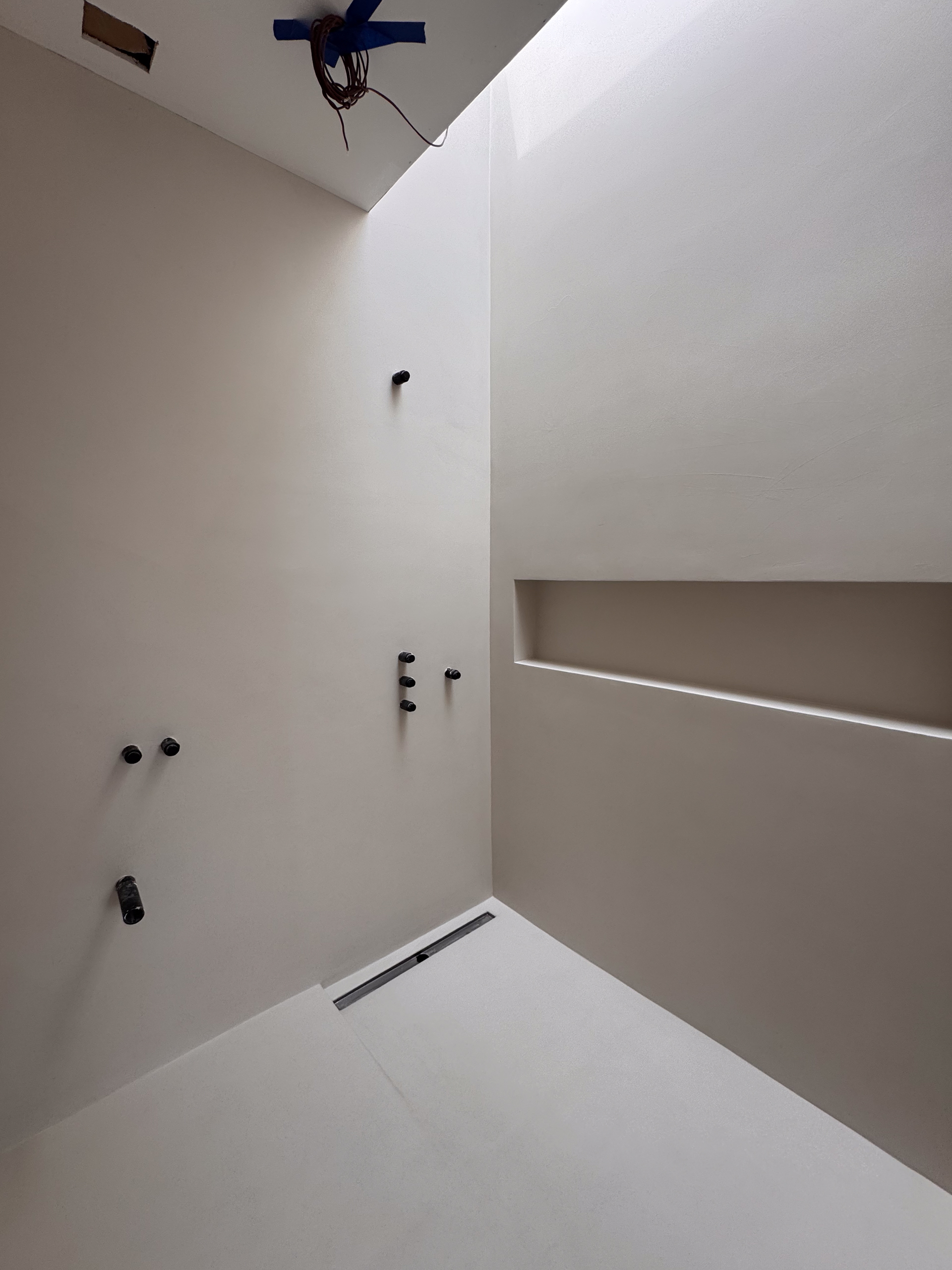
A contemporary bathroom shower area in Richmond Hill, Toronto, featuring seamless soft grey microcement applied to the walls, floor, and a built-in storage niche, finished with a matte, waterproof sealer.
Bathroom floors and walls finished in microcement for Richmond Hill residence.

4. Decorative Layer vs. Structural Seal

It is a common misconception that microcement is the waterproofing. It is not. Think of microcement as the "paint" and the membrane as the "umbrella." While the specialized polyaspartic or polyurethane sealers we use provide excellent surface tension and water resistance, they are only as good as the bone-dry, rock-solid wall beneath them.
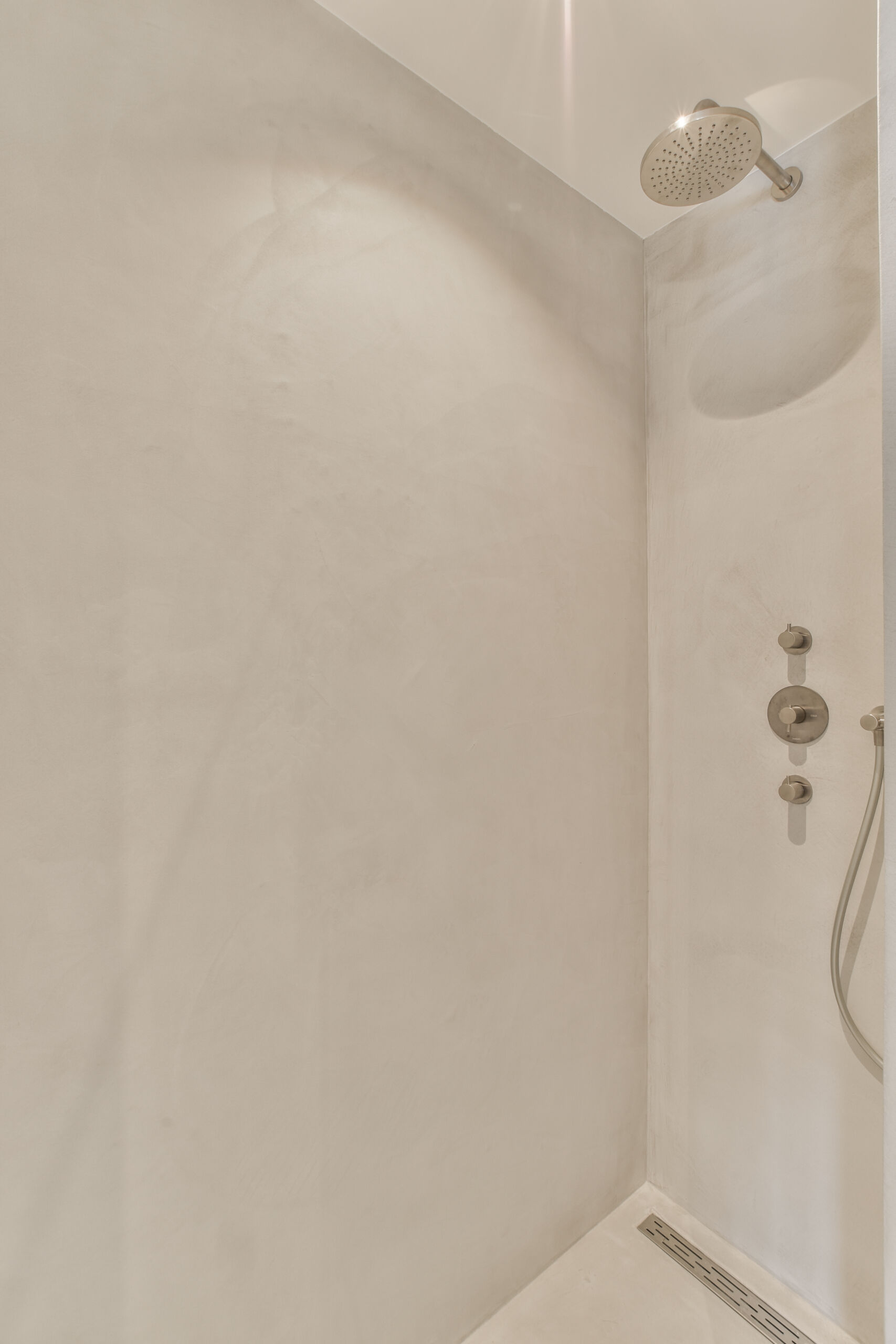
Microcement shower floors, walls, and ceilings in Woodbridge residence.

The Microcement Artisan’s Rule

At the end of the day, a microcement bathroom is an artisanal masterpiece. To ensure it looks as elegant in 2030 as it does today, we treat the prep work with more intensity than the finish itself. We aren't just applying a decorative layer; we are engineering a waterproof system that happens to look like seamless stone.

Microcement Walls FAQ: Everything You Need to Know

Is microcement good for bathrooms and wet areas?2026-09-08T13:15:57-04:00

Microcement can be used in bathrooms and other wet areas when the complete system—including the substrate, preparation, waterproofing where required, microcement layers and compatible sealer—is correctly specified and installed. Suitability depends on the existing surface and how the area will be used, so we assess it before recommending a system.

Is microcement cheaper than tiling?2026-09-08T13:15:57-04:00

Not necessarily. The comparison depends on demolition, the condition of the existing surface, the tile being considered, the geometry of the room and the desired finish. Microcement may reduce demolition when the substrate is sound and suitable, but its value is primarily the seamless, hand-applied result rather than being the least expensive option.

Is it expensive to microcement a bathroom?2026-09-08T13:15:57-04:00

The investment varies with the size of the room, substrate condition, preparation, wet-area requirements, architectural details, chosen finish and sealing system. We assess those factors before preparing a project-specific quotation rather than relying on a generic square-foot figure.

Does microcement crack or go mouldy easily?2026-09-08T13:15:57-04:00

Like any applied finish, performance begins with the structure beneath it. Existing movement or cracking in an unstable substrate can transfer through a new surface, which is why assessment and preparation matter. A correctly installed and sealed, joint-free surface is straightforward to maintain, although ventilation and normal cleaning remain important in damp rooms.

Can microcement be applied directly over existing tiles or drywall?2026-09-08T13:15:57-04:00

Microcement can often be installed over existing tile or suitably prepared drywall, but it is not automatic. The substrate must be sound, stable and appropriate for the intended use. Some projects need repairs, reinforcement, levelling or a different build-up before the decorative finish can begin.

What is the lifespan of microcement?2026-09-08T13:15:58-04:00

Its service life depends on the substrate, preparation, system specification, traffic, cleaning and maintenance. Rather than promising a universal number, we recommend periodic inspection and resealing when the surface and its use call for it.

Can I DIY a microcement bathroom?2026-09-08T13:15:58-04:00

Bathrooms and showers are technically demanding because the decorative finish is only one part of the wet-area assembly. We recommend professional assessment and installation for these spaces. Professional kits may suit selected smaller projects, but wet rooms require careful substrate and waterproofing decisions.

What is the difference between Microcement, Epoxy, and Tadelakt?2026-09-08T13:15:58-04:00

Microcement is a cement-based, hand-applied finish that can be used across many floors, walls and architectural features when the system is correctly specified. Epoxy is resin-based and has a different visual and tactile character. Tadelakt is a traditional lime plaster with its own softly polished appearance and maintenance requirements. The right choice depends on the substrate, room, use and desired aesthetic.

Why has microcement become so popular in bathroom renovations recently?2026-09-08T13:15:58-04:00

Microcement creates a continuous surface without visually interrupting grout lines, while still allowing variation from the hand of the applicator. It works particularly well with curved forms, niches and integrated details, making it appealing for calm, contemporary bathrooms. Its suitability still depends on the substrate, wet-area construction and the selected sealing system.

Don’t settle for a temporary trend. Bring the enduring elegance of Venetian Plaster or Microcement to your home and enjoy a finish that grows in character every year.

Microcement isn’t just a finish—it’s a statement of quality and durability. Contact us today to discuss specifications for your next commercial development or residential masterpiece.

Tel: 416-606-8060

Email: shayan@chromatist.com

Toronto & GTA Service Areas

Decorative Wall Finishes for Toronto’s Distinctive Homes

Chromatist creates hand-applied limewash, Venetian plaster, microcement, Tadelakt, and custom decorative finishes for homes throughout Toronto and the GTA. Our work is shaped around the architecture of each space—from heritage residences and established neighbourhood homes to contemporary custom builds and designer-led renovations.

Central Toronto

North Toronto

  • Lawrence Park
  • Lytton Park
  • Hoggs Hollow
  • York Mills
  • The Bridle Path
  • St. Andrew-Windfields

East and West Toronto

Greater Toronto Area

  • Kleinburg
  • Vaughan
  • Thornhill
  • Richmond Hill
  • Oakville
  • Mississauga
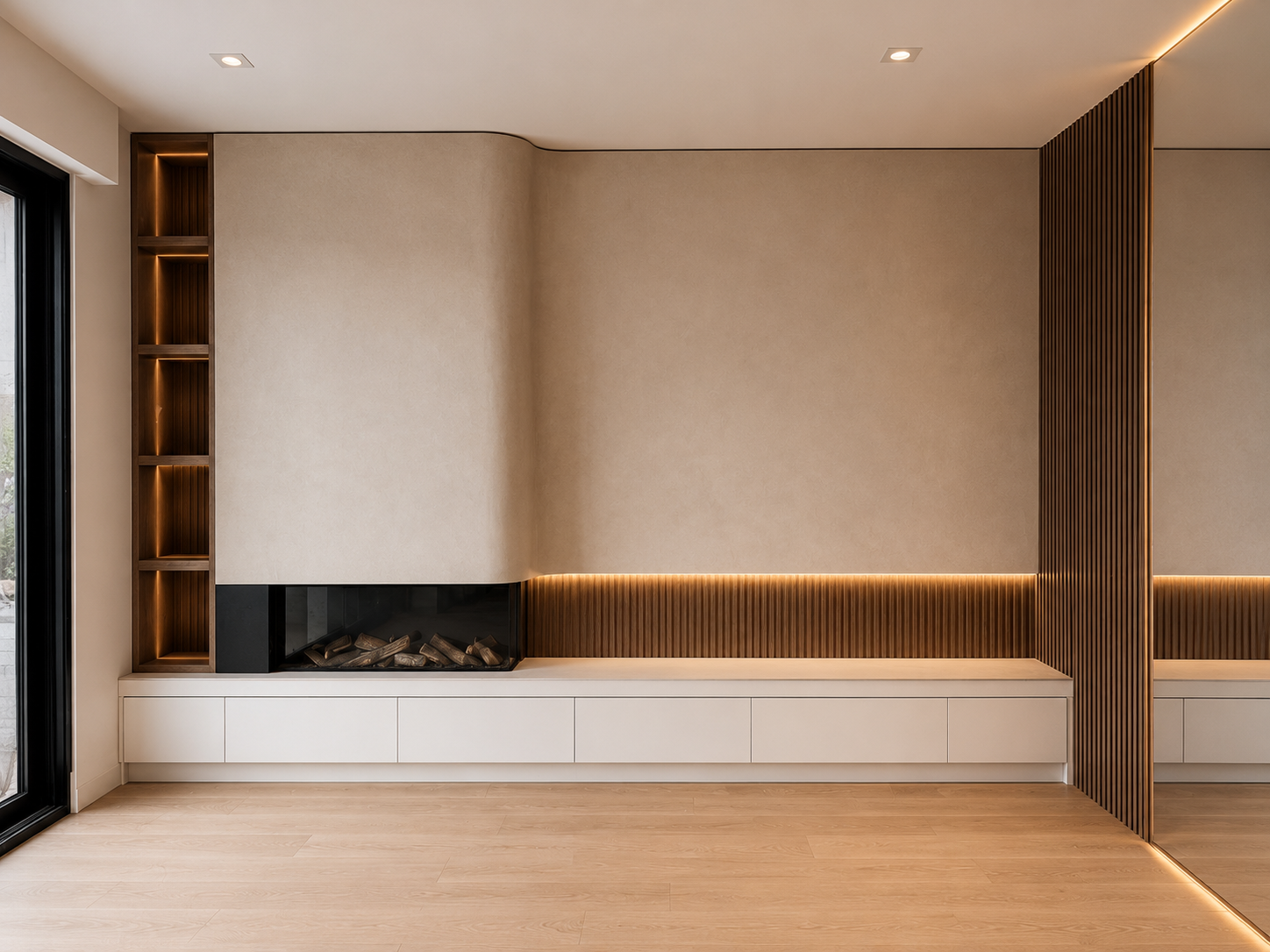
Curved decorative microcement media wall created by Chromatist in a North York, Toronto home

Based in Toronto and serving the GTA, Chromatist may also travel elsewhere in Ontario or outside the province for selected residential and commercial projects. Availability depends on the project’s scope and design requirements.

Go to Top