

The Modern Appeal of Microcement Bathrooms
In the world of modern interior design, microcement is rapidly becoming a go-to material for creating sleek, minimalist bathroom spaces. Clean lines and a seamless finish define this contemporary trend, making microcement in bathrooms an ideal choice for those looking to achieve a tranquil and cohesive environment. The use of this versatile material contributes to a serene, clutter-free space.
What is Microcement?
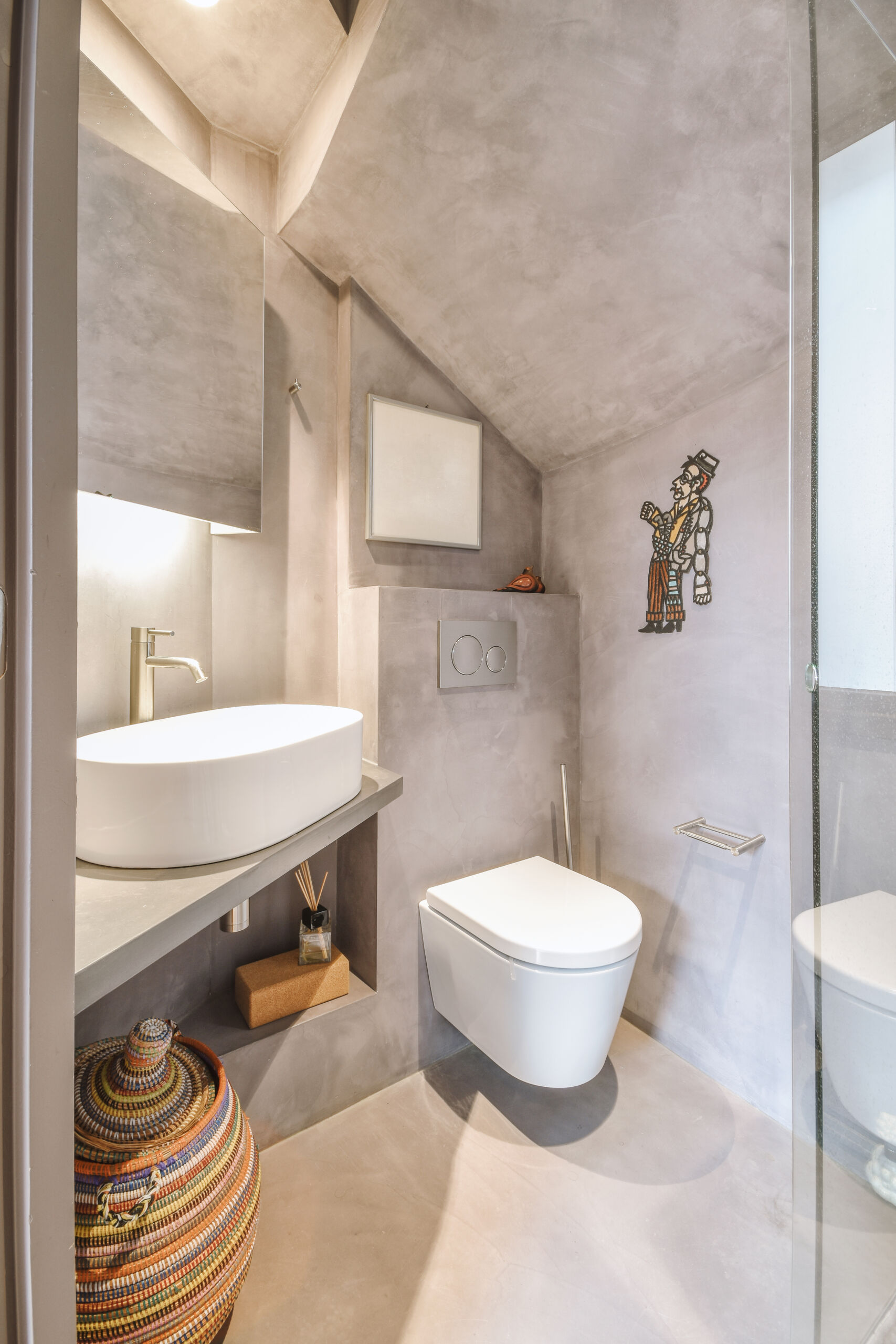
Microcement is a highly versatile, thin-layered coating made from a blend of cement, fine aggregates, polymers, and color pigments. It can be applied to a variety of surfaces, including walls, floors, and furniture, providing a seamless and durable finish. Unlike traditional cement, microcement is only a few millimeters thick, making it an ideal choice for renovations where adding extra weight or altering existing structures isn’t practical. Its application results in a smooth, continuous surface free of grout lines, offering a modern, minimalist aesthetic that is both water-resistant and easy to maintain. This makes it particularly popular in bathrooms and kitchens, where durability and hygiene are paramount. Additionally, microcement is available in a wide range of colors and textures, allowing for endless customization and design possibilities.
Speak To Shayan 416 (606) 8060 or Request A Quote
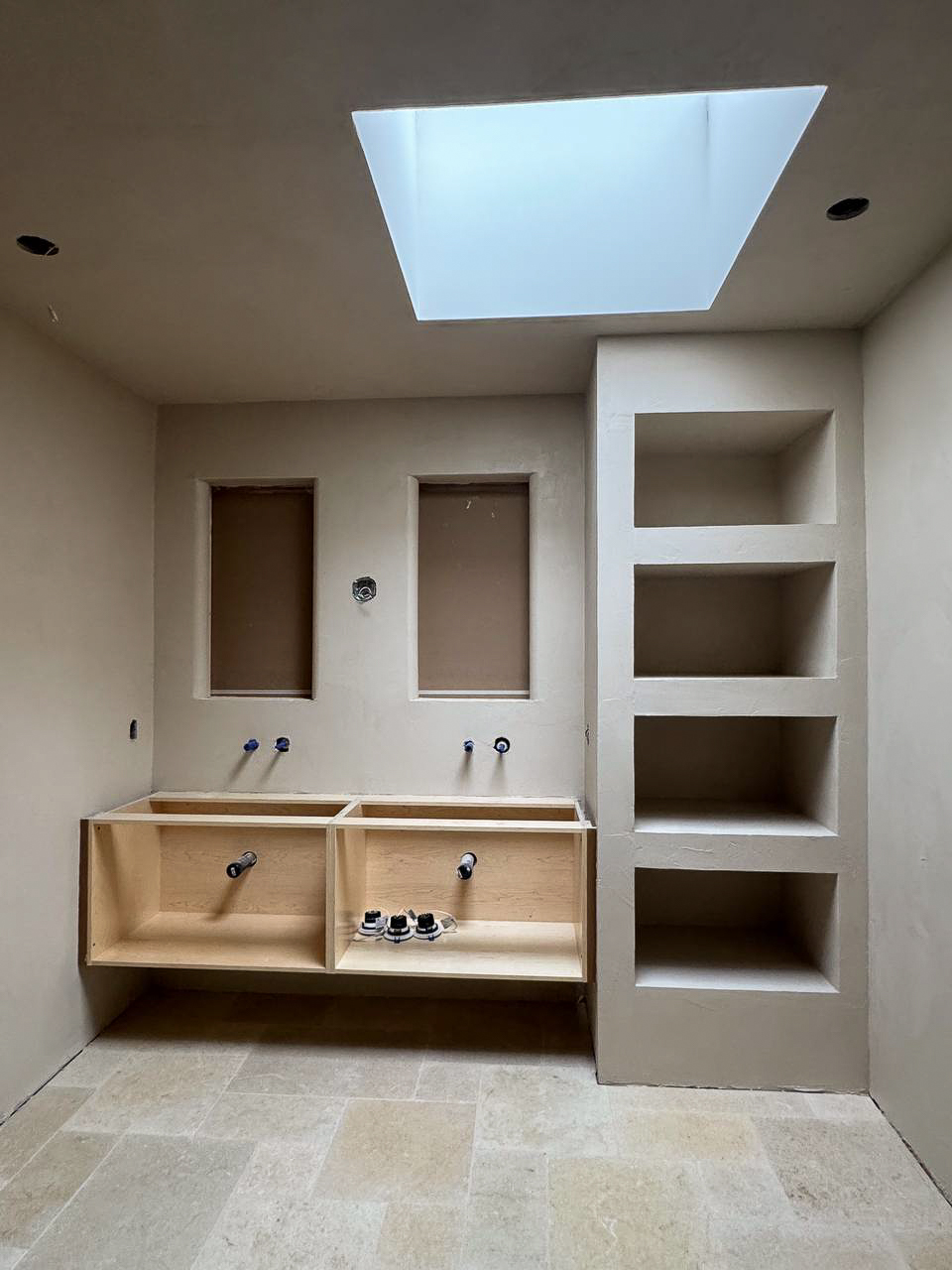
Microcement Bathroom with Curved Niches in Mt Pleasant, Toronto
Light Gray Microcement Bathroom Floors and Walls Richmond Hill, Toronto
Why Choose a Microcement Bathroom?
Microcement is an incredibly versatile and durable material, perfectly suited for bathrooms and wet rooms. Its rise in popularity is no surprise, given its practical benefits and aesthetic appeal. Microcement offers a smooth, uniform finish that eliminates the need for grout lines, creating a seamless surface that is not only visually striking but also easy to clean. This material is available in a wide range of colours, finishes, and effects, allowing for diverse design possibilities—from sleek modern looks to rustic, textured styles. For those who appreciate a more organic, artisanal feel, a similar option is Tadelakt, a celebrated Moroccan lime plaster known for its natural beauty and waterproof qualities. While both materials create beautiful, grout-free spaces, they offer distinct aesthetics. To help you choose the ideal finish for your project, we’ve created a comprehensive guide to Tadelakt vs. Microcement for Bathrooms.
One of the standout features of microcement is its 100% waterproof nature, even before applying sealers. This makes it ideal for use in bathrooms, where surfaces are constantly exposed to moisture. Additionally, microcement’s seamless finish makes it more resistant to stains and mold compared to traditional materials like tiles, enhancing both hygiene and ease of maintenance.
Microcement Bathroom Colors, Finishes, and Effects
Microcement Colors
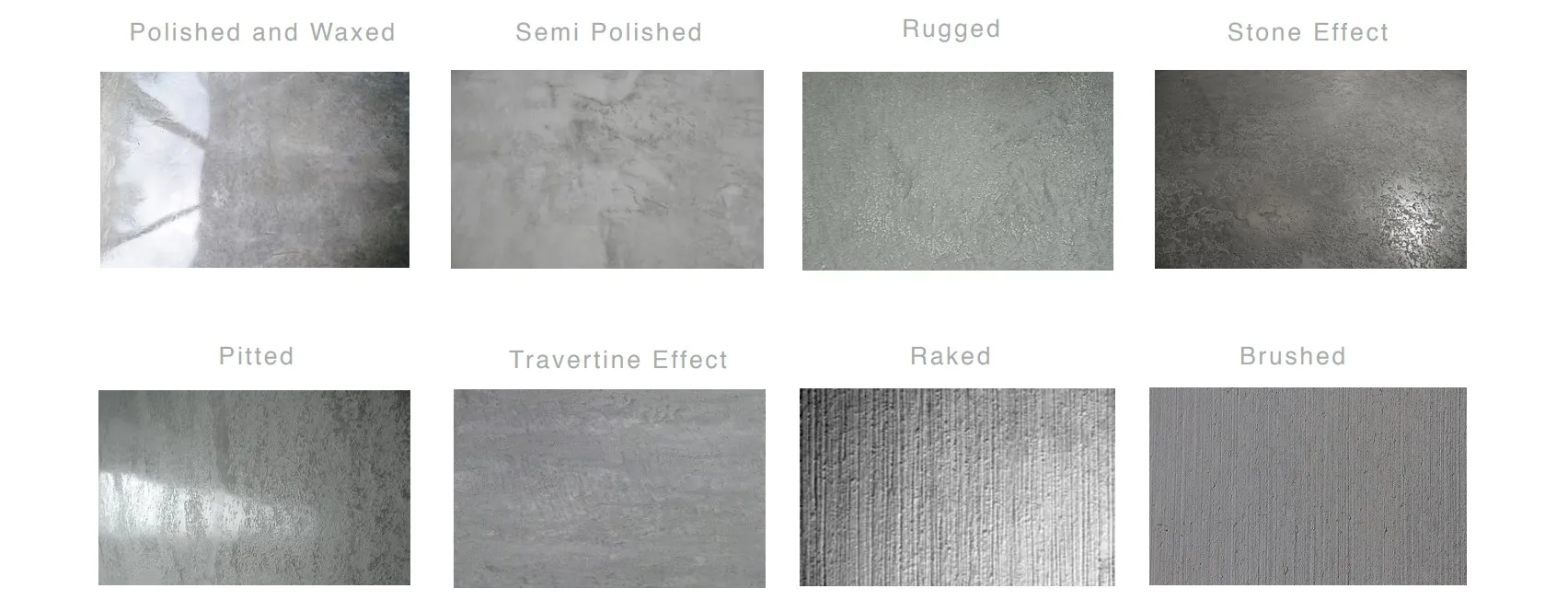
When it comes to colors, microcement offers a broad palette ranging from light neutrals to bold, saturated hues. Whether you’re aiming for a calm, spa-like atmosphere with soft tones or a more dramatic, modern look with darker shades, microcement provides the flexibility to achieve your desired aesthetic. The color options include classic whites and greys, earthy tones, and vibrant colors, ensuring a match for any design style. Additionally microcement can be tinted in the most of Benjamin Moore colors.
Microcement Finishes
The finish of microcement can dramatically alter the ambiance of a space. Here are some finish options:
- Matt: A non-reflective, flat finish that delivers a subtle, understated effect.
- Satin: A smooth, semi-gloss finish that adds a touch of elegance and sophistication.
- Gloss: A high-shine finish that imparts a modern, luxurious appearance.
Microcement Effects
- Continuous: Features a smooth texture with gentle visual movement, minimizing trowel marks.
- Stucco: Offers a textured appearance with tonal variation, providing a dynamic, visually interesting surface.
- Coarse: Provides a tactile, textured surface ideal for bathroom walls.
Microcement Bathroom Walls
Microcement’s adaptability makes it an excellent choice for bathroom walls. It can be applied to virtually any surface, creating a continuous, grout-free finish that enhances the overall sense of space. In a bathroom, where walls are often exposed to water and humidity, microcement provides a durable and waterproof solution. The material’s versatility also allows for various finishes, from smooth and sleek to textured and rustic, depending on the desired effect.
Microcement Bathroom Before and After in Mt Pleasant, Toronto: Walls, Ceilings, and Niches
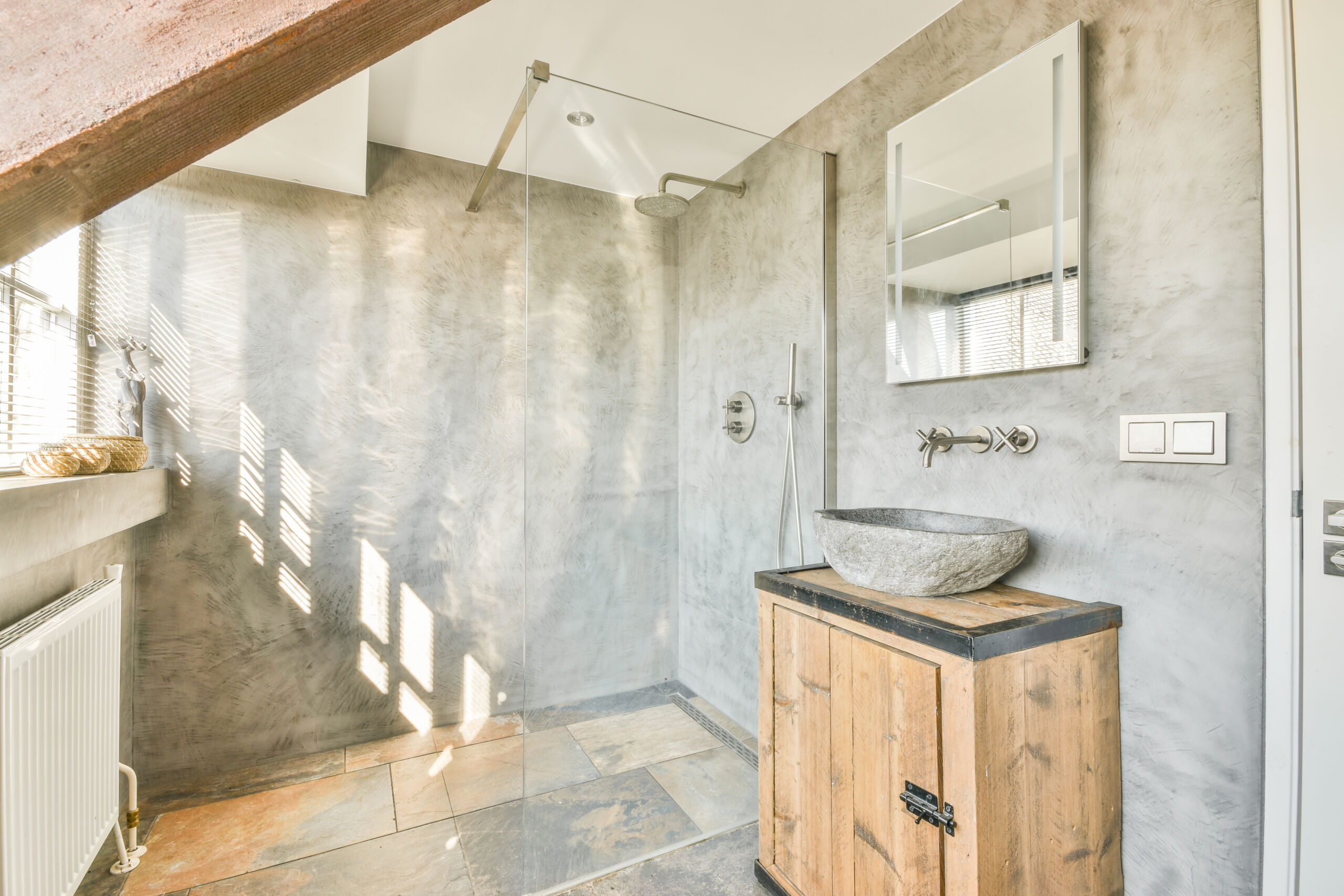
Deep Grey Microcement Bathroom Walls
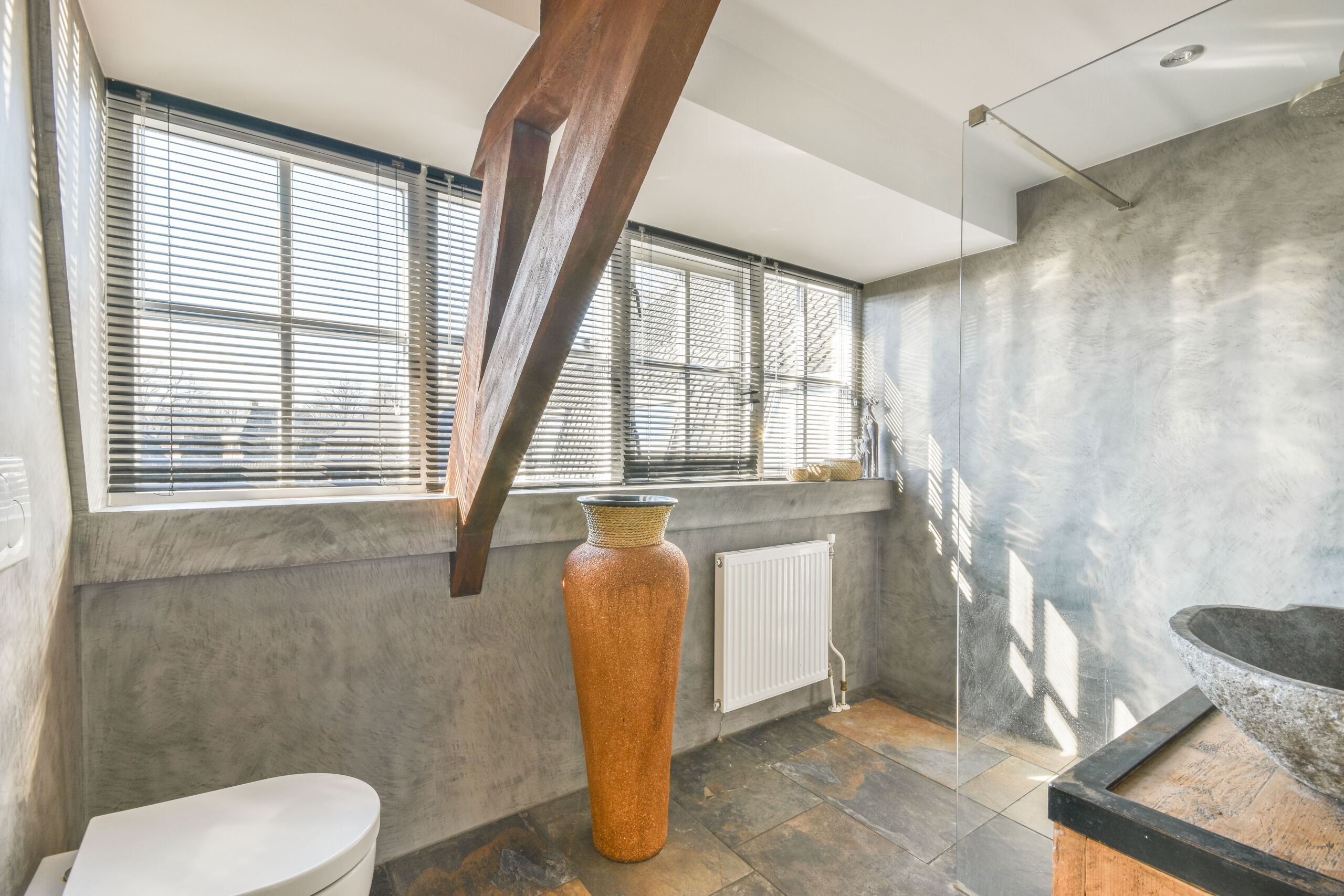
Deep Grey Microcement Bathroom Walls, High Park – Toronto
Microcement Bathroom Shower
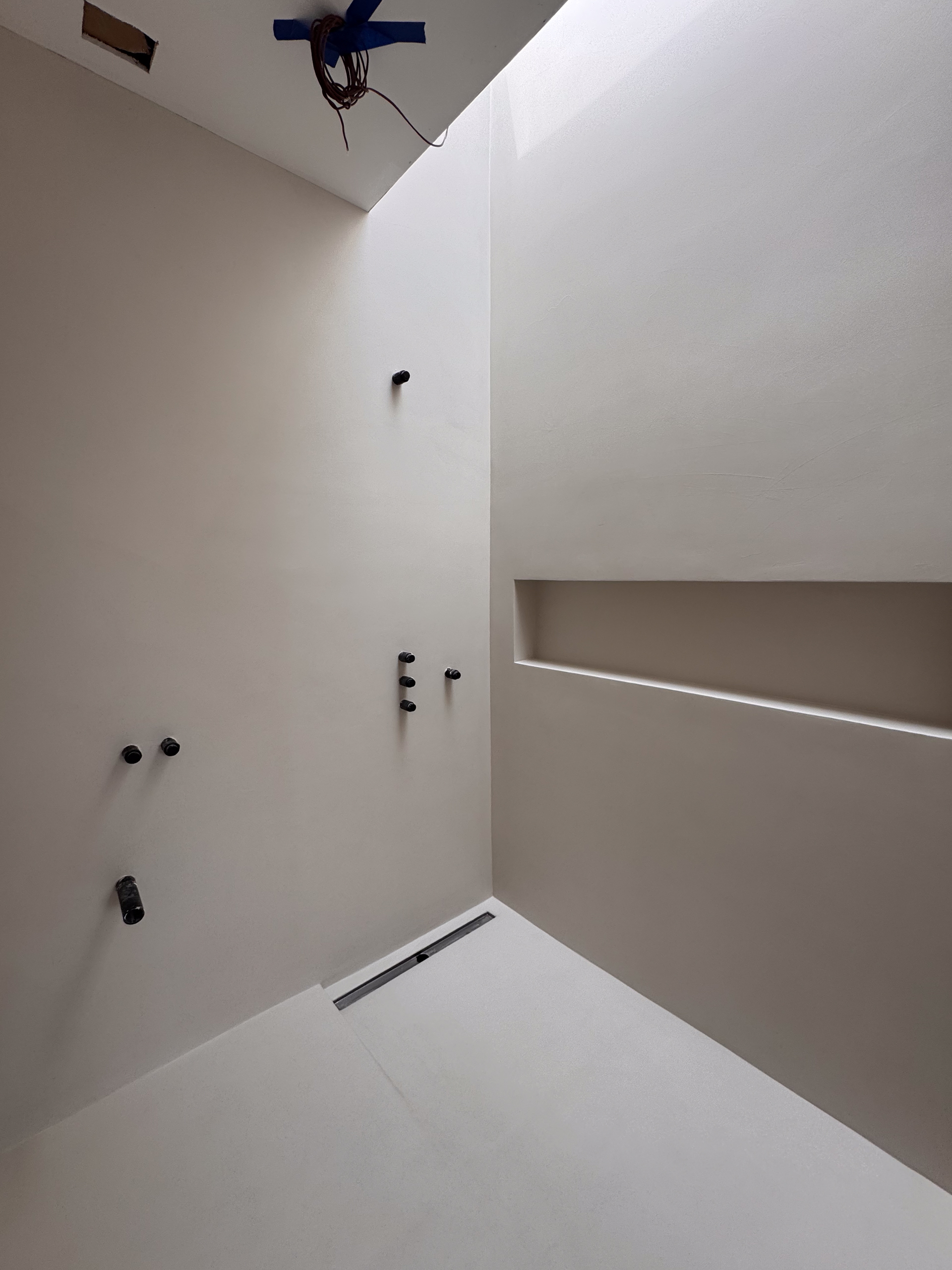
For showers, microcement is a top choice due to its waterproof properties and seamless finish. It can be applied directly to shower trays, walls, and even ceilings, creating a cohesive look that is both functional and visually appealing. The lack of grout lines not only makes cleaning easier but also reduces the likelihood of mold growth. Additionally, microcement’s non-slip properties make it a safe option for shower floors.
Microcement Bathroom Vanity
Microcement can be used to create stunning vanity units that blend seamlessly with the rest of the bathroom. Whether applied to the countertop, the sink, or the entire vanity unit, microcement provides a sleek and modern look. Its ability to hide pipework and create flush surfaces, as demonstrated in the minimalist London bathroom project by Bindloss Dawes, further adds to the appeal of using microcement for vanities.
Microcement Bathroom Tiles
While traditional tiles are often the go-to choice for bathroom floors and walls, microcement offers a compelling alternative. Its continuous application means no visible grout lines, resulting in a cleaner and more streamlined appearance. Microcement can also be applied over existing tiles, providing a cost-effective and less invasive way to update a bathroom. The material’s durability and resistance to water and stains make it an ideal choice for high-traffic areas like bathrooms.
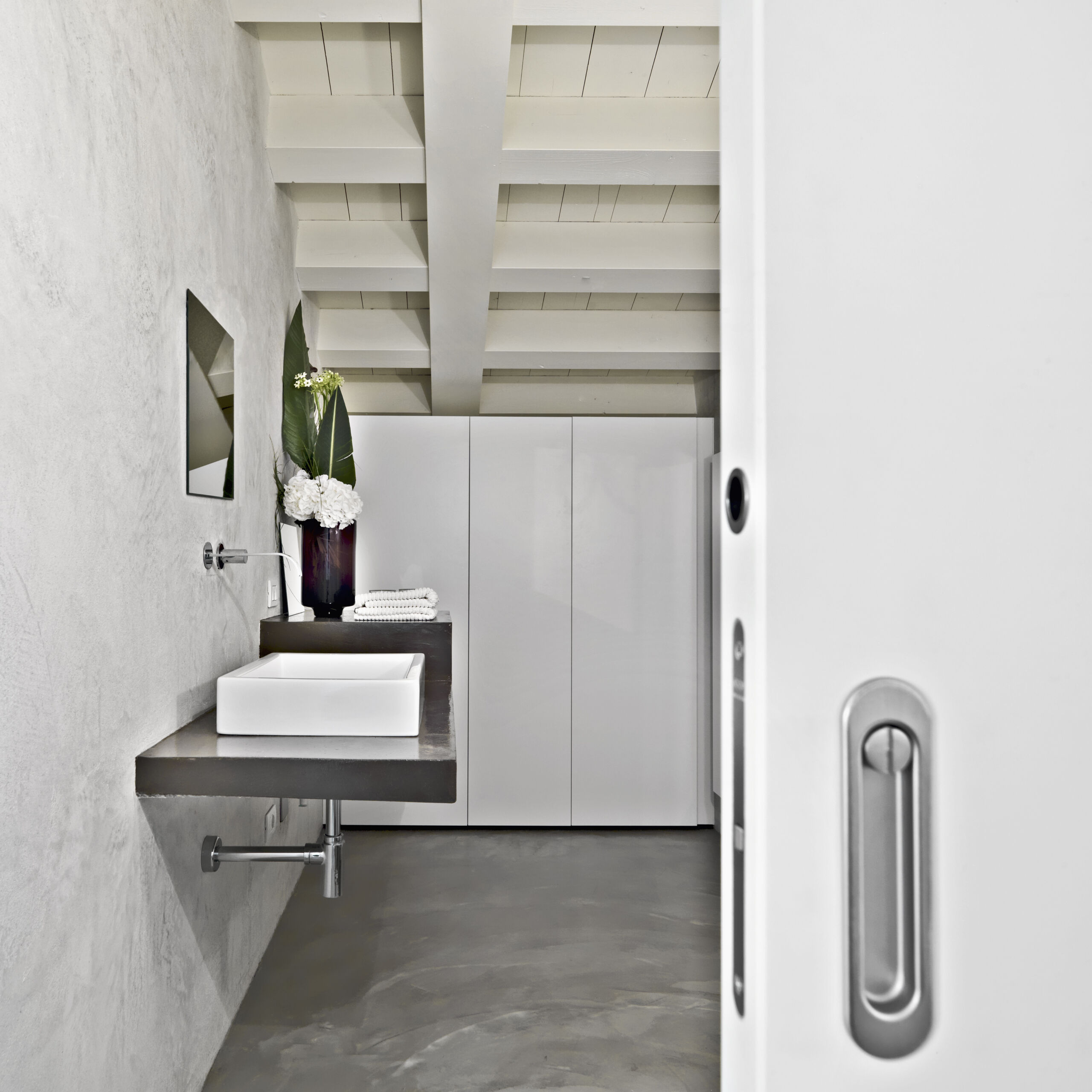
Grey Microcement Bathroom in The Beaches, Toronto
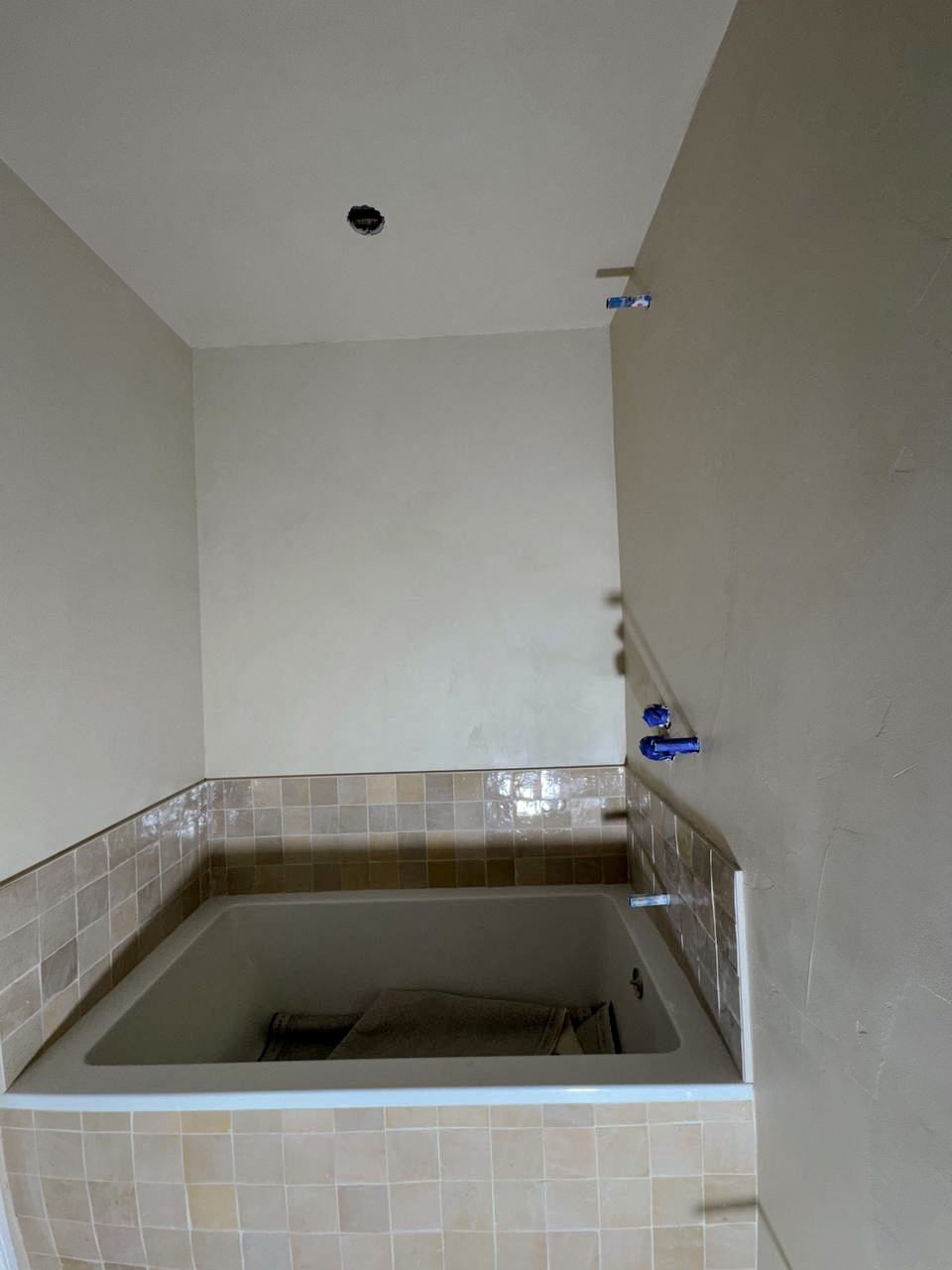
Microcement Bathtub Surround and Walls in Eglinton Park, Toronto
Understanding Microcement Bathroom Costs and Installation Process
For detailed information on the cost and installation process of microcement in bathrooms, please visit our dedicated page on microcement costs and procedures. The final cost is not a simple fixed price but is influenced by several critical factors, ensuring a tailored and durable result for your unique space.
While costs for microcement in Toronto typically range from $25 to $35+ per square foot, this figure can fluctuate based on the specific requirements of your project. Here’s a closer look at what influences the final expense:
- Waterproofing: The most significant factor is whether the area is in direct contact with water, such as a shower floor or walls. These spaces require a robust, liquid waterproofing membrane and specialized sealers to create a completely impermeable barrier, which adds to both the material and labor costs.
- Mesh Requirement: For optimal durability and crack prevention, a reinforcing fiberglass mesh is often installed, particularly when applying microcement over existing tiles or on surfaces with potential for movement. This mesh provides a stable foundation and ensures the longevity of the finish.
- Surface Condition and Complexity: The state of the existing surface is a key determinant. A smooth, well-prepared substrate requires less work, while a surface with cracks, unevenness, or numerous grout lines will need additional preparation, leveling, and patching. Similarly, complex designs with many corners, niches, or custom built-ins require more meticulous, time-consuming labor, which directly impacts the total cost.
- Material Quality: The cost of microcement materials themselves can vary. Higher-quality, specialized products for wet areas or specific finishes will be more expensive than standard microcement.
Ultimately, the investment in a microcement bathroom is a blend of a high-quality product and the artisanal skill required for a flawless, seamless finish. Our comprehensive guide provides insights into these factors so you can make an informed decision for your renovation.
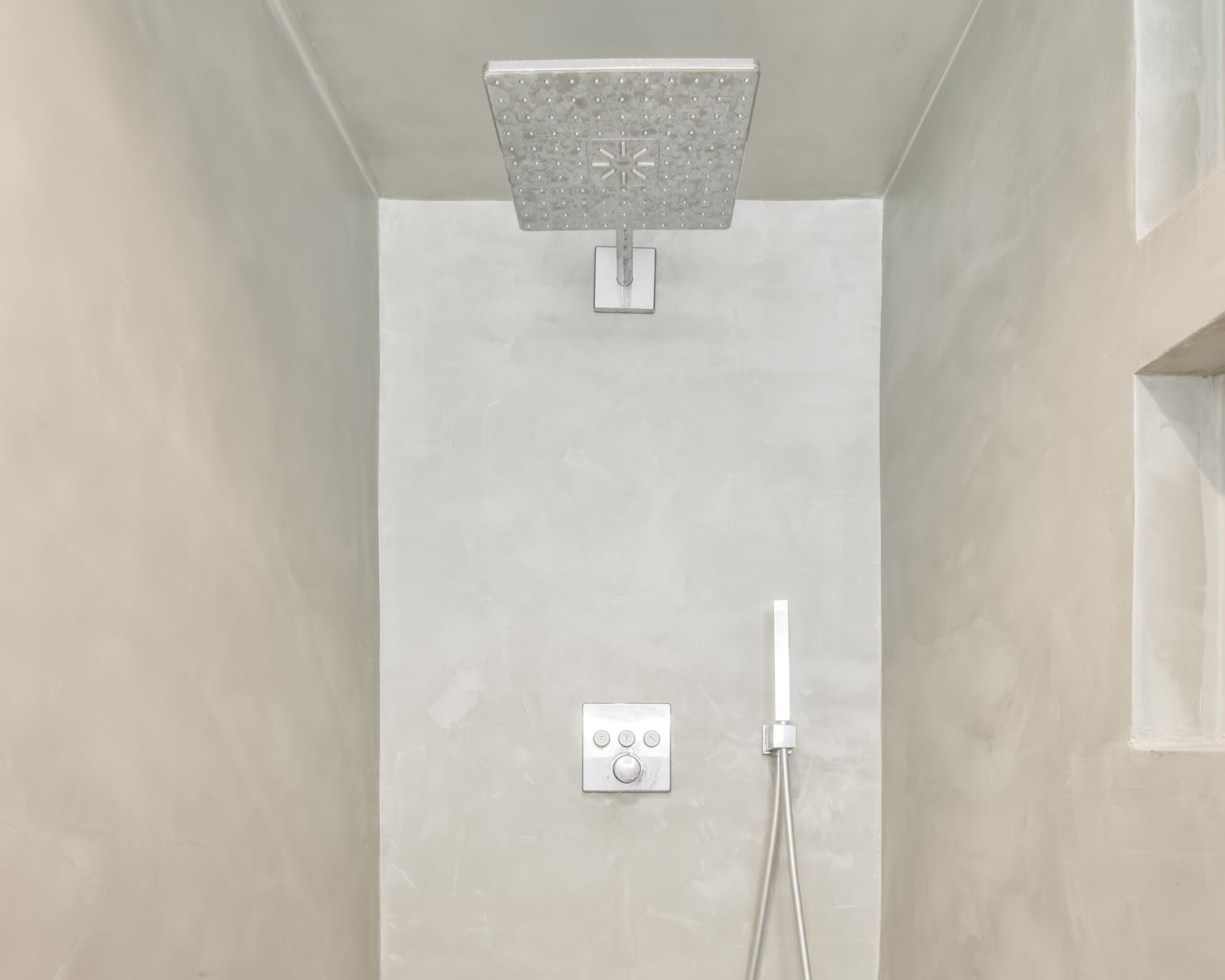
Warm Grey Microcement Shower in The Junction, Toronto
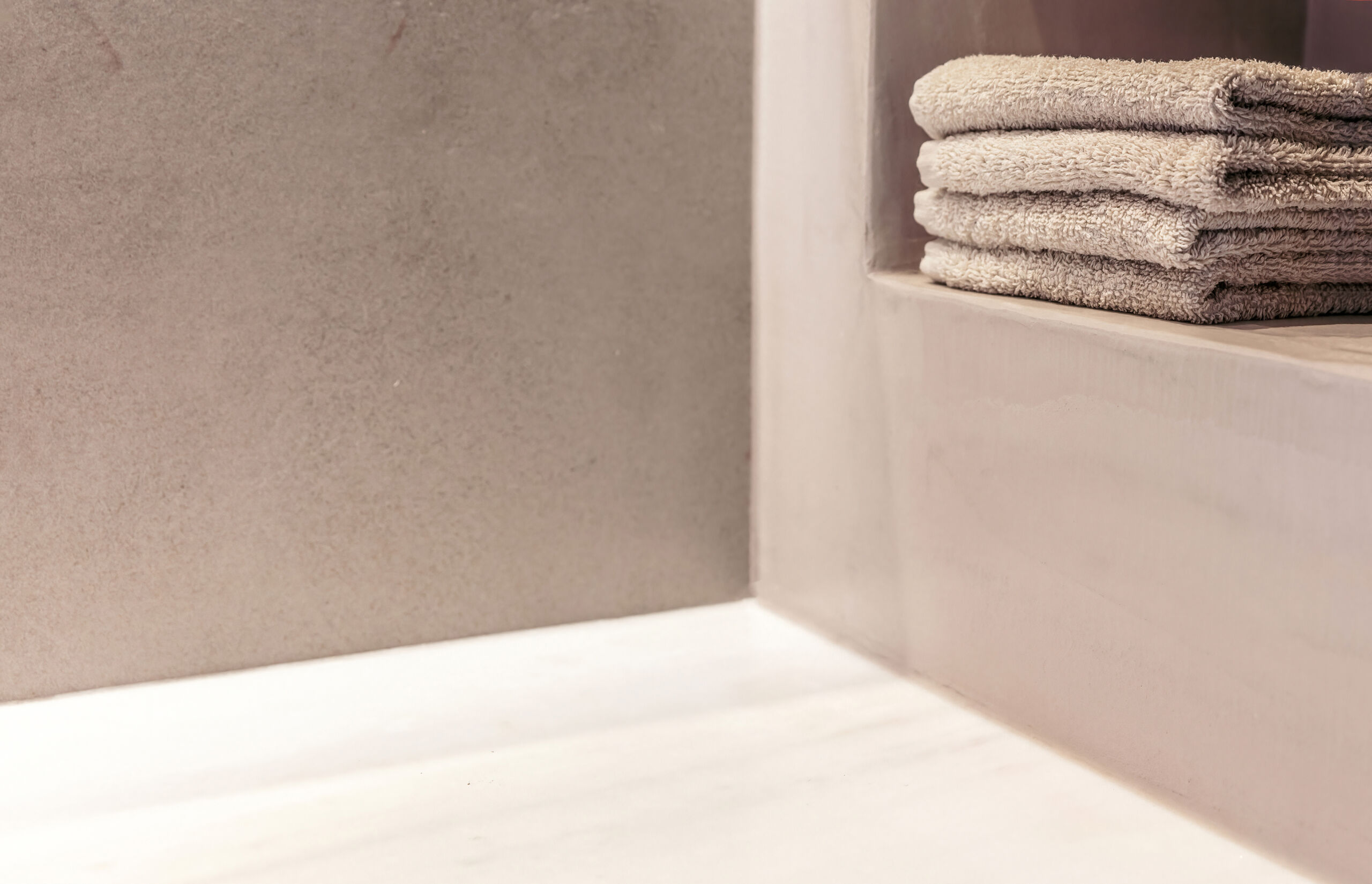
Close-up of Microcement Walls Reaching the Floor , Toronto
Frequently Asked Questions About Microcement in Bathrooms
Get a Free Online Quote
Ready to transform your bathroom with microcement? Get a personalized quote today and see how this sleek, modern material can elevate your space. Contact us now to start your project.
Serving Toronto, British Columbia, Los Angeles, Florida and Texas
| Toronto & GTA | |
|---|---|
|
|
| British Columbia (BC) | The Okanagan Valley & Island Coast | ||
|---|---|---|---|
|
|
|
|
| Jacksonville | Tampa | Miami | Broward County | Palm Beach County |
|---|---|---|---|---|
|
|
|
|
|
| Los Angeles | Sacramento | Long Beach | Santa Monica | Mission Viejo |
|---|---|---|---|---|
|
|
|
|
|
| Dallas | Houston | Austin | San Antonio | Fort Worth |
|---|---|---|---|---|
|
|
|
|
|