

Microcement vs. Concrete Finish: Why One Wins the Concrete Wall Finish Debate
The demand for concrete wall finish aesthetics is soaring in modern design, driven by a global shift toward urban minimalism and raw, tactile surfaces. Homeowners and commercial developers alike are seeking that stark, unadorned look that speaks of industrial chic, structural integrity, and enduring simplicity. Historically, achieving this meant relying on exposed concrete wall finish—a heavy, time-consuming process involving formwork and extensive curing.
Today, however, a superior, flexible, and surprisingly versatile contender has emerged to capture this same desirable aesthetic without the structural limitations or high risks: Microcement. This innovative, polymer-modified coating offers the texture, depth, and seamless appeal of real concrete in an application that is millimeters thin, revolutionizing how we approach concrete-style surfaces in renovations and new construction. Learn more about microcement on the microcement finish in Toronto.
This article will compare traditional concrete finishes against the agile, versatile nature of microcement, helping you decide which material is best for your next project.
Concrete Effect Microcement Finish for Fireplace TV Wall – North York, Toronto
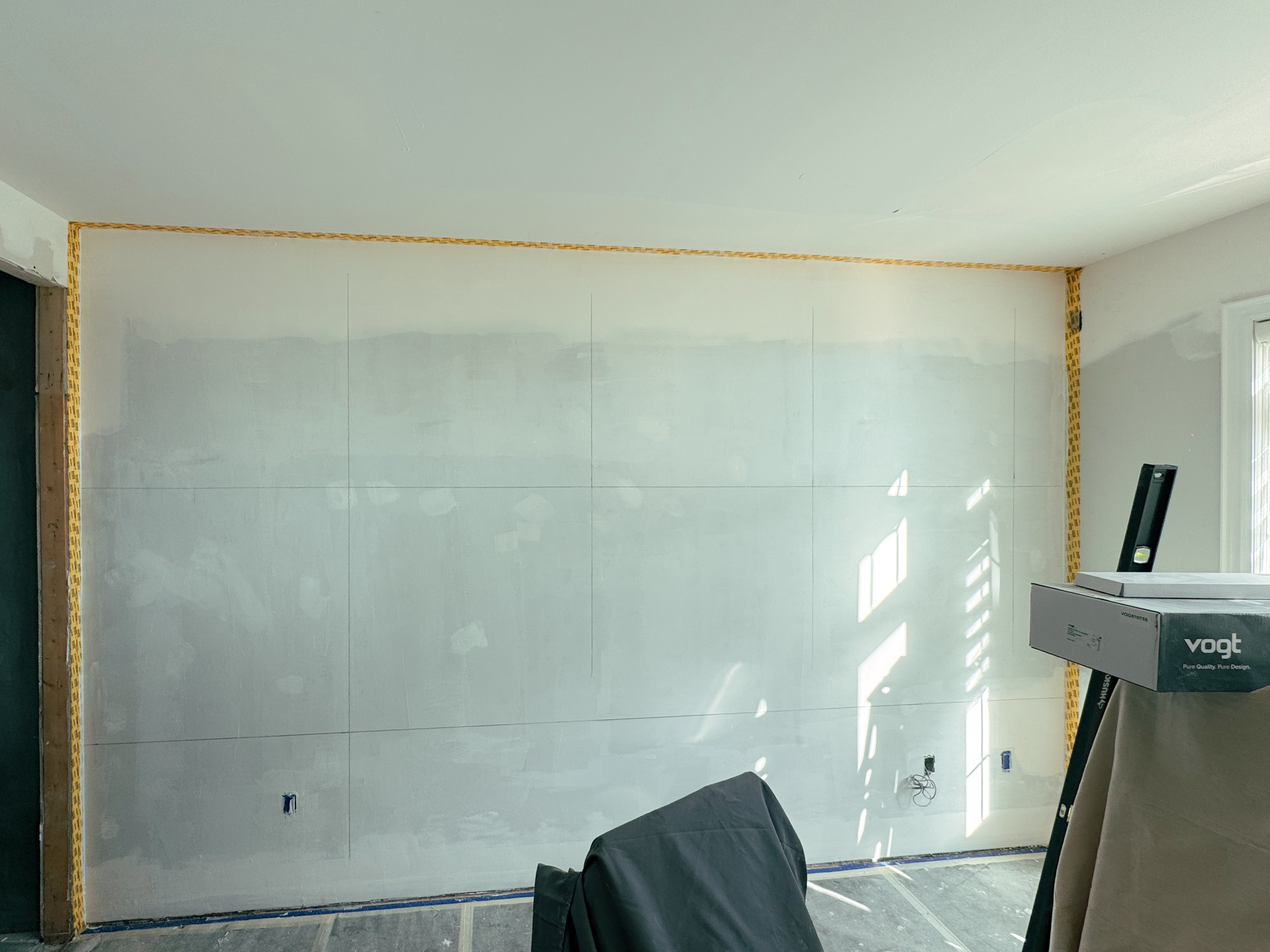

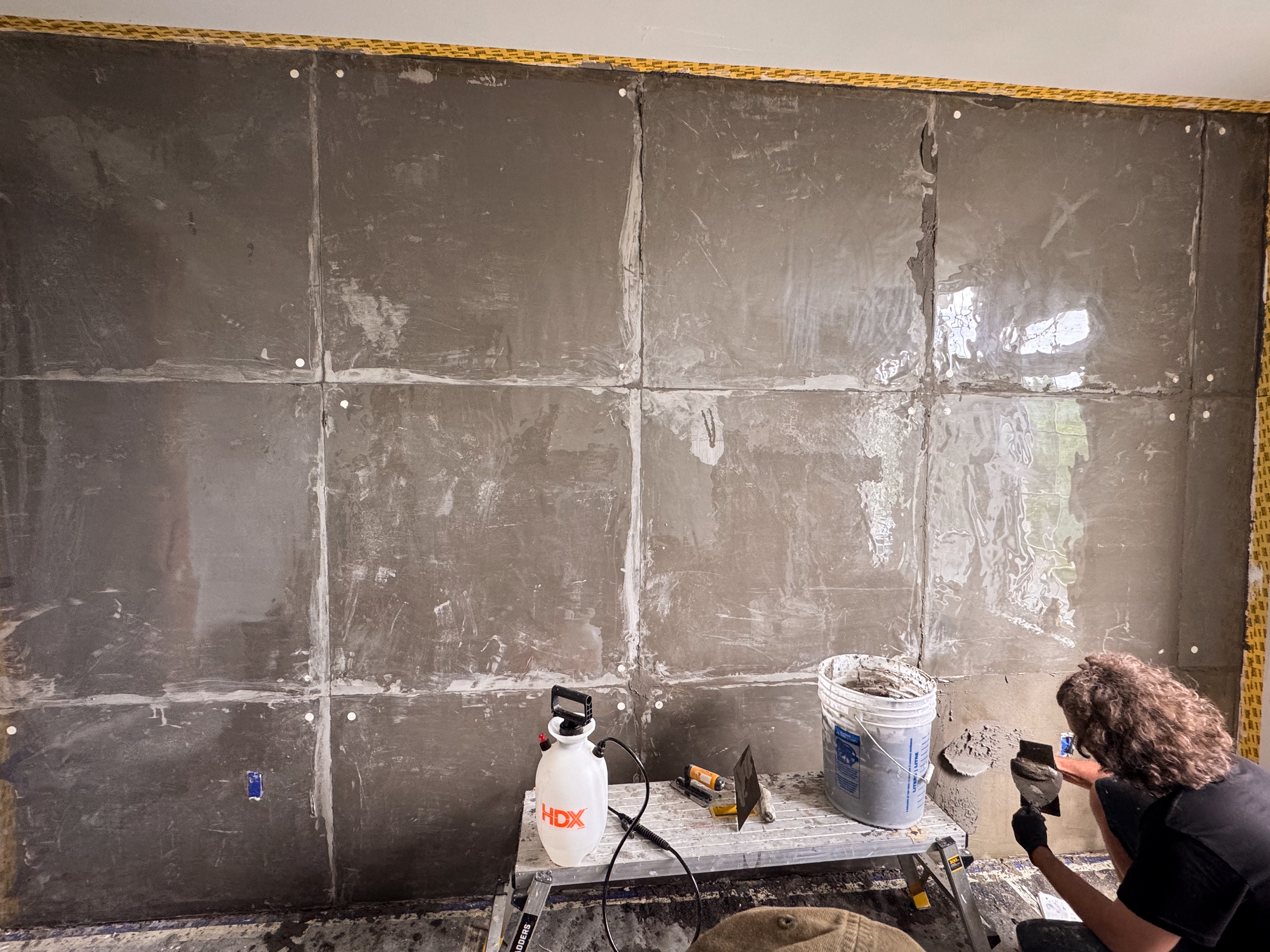
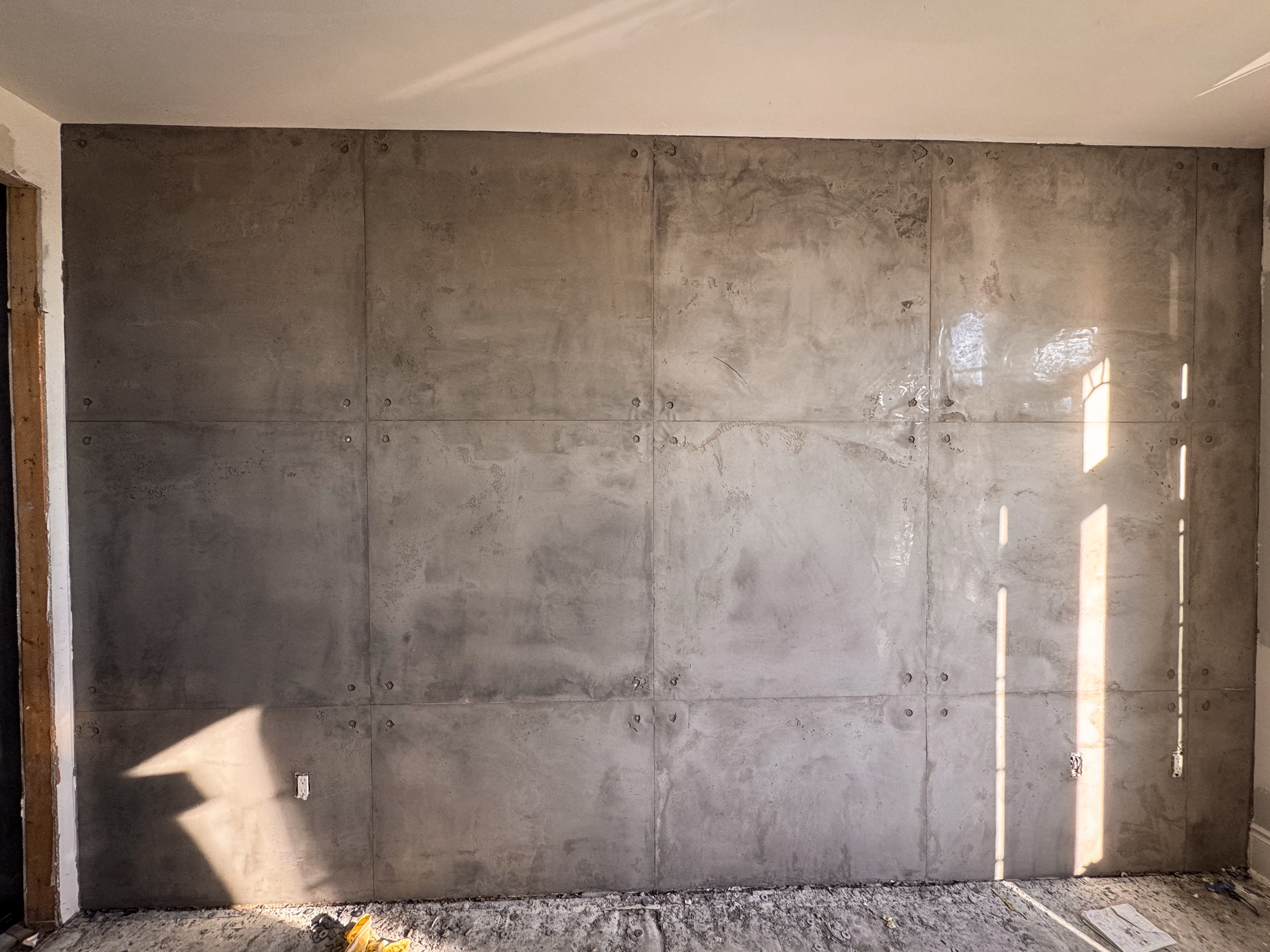
Artisanal Application: Crafting a Raw Concrete Texture Wall in Brampton
Speak To Shayan 416 (606) 8060 or Request A Quote
Introducing the Materials
Microcement: The Modern Finish
Microcement is a polymer-modified, cementitious coating composed of cement, fine sand, water-based resins, and pigments. Its defining feature is its minimal application thickness—just 2-3 millimeters. This ultra-thin, high-performance product adheres firmly to almost any existing stable surface (drywall, tile, plaster, etc.) without requiring demolition.
Concrete Finish: The Classic Method
The term concrete wall finish generally refers to the natural surface created by traditional poured or pre-cast concrete. This aesthetic is achieved either by intentionally leaving structural concrete exposed or by applying a heavy, cement-based plaster (like thin-set or stucco) to mimic the look. These applications require substantial material thickness, considerable drying time, and significant structural stability.
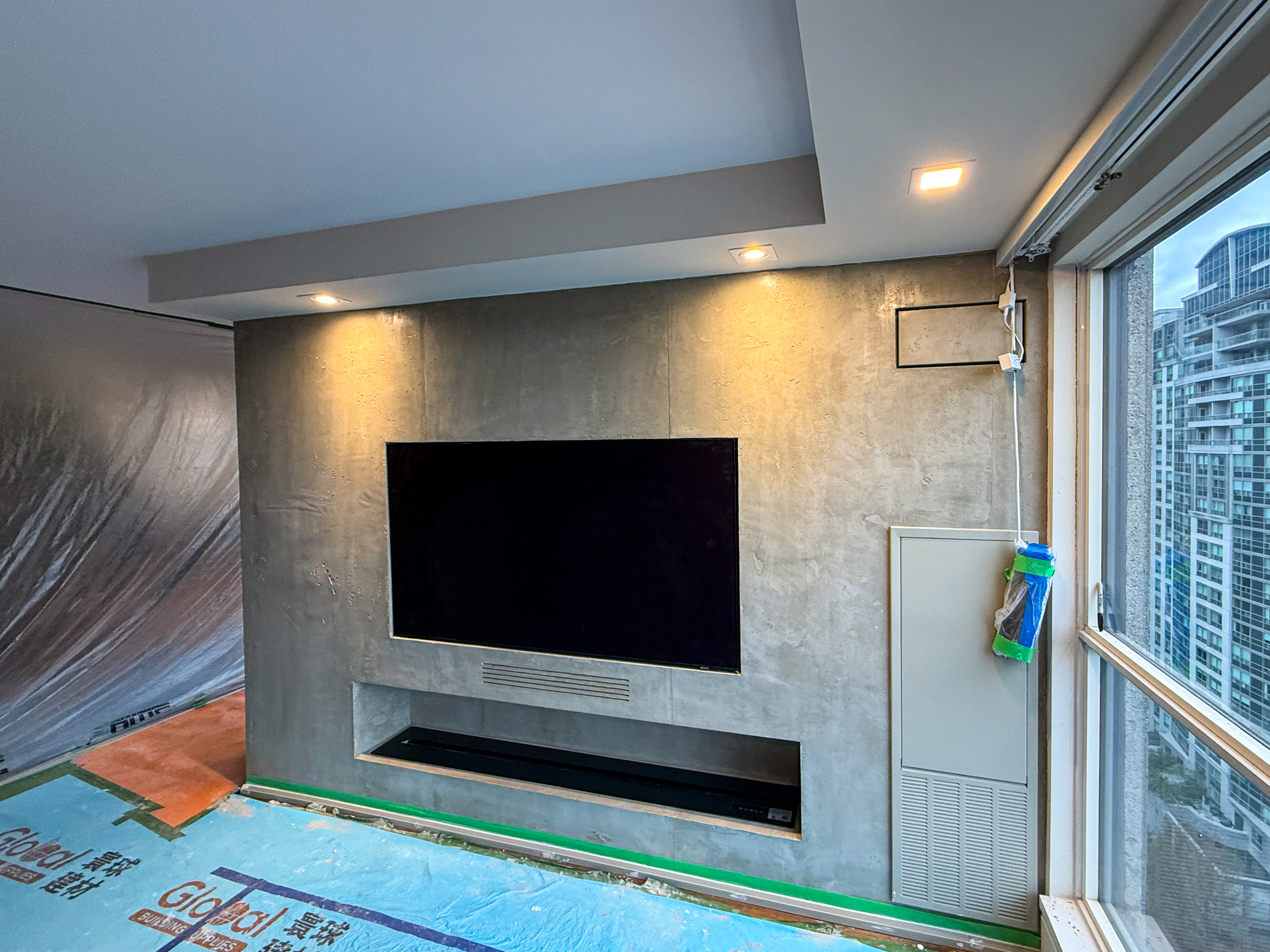
Concrete Effect Fireplace Microcement Finish – North York, Toronto

A Highly Textured Microcement Finish
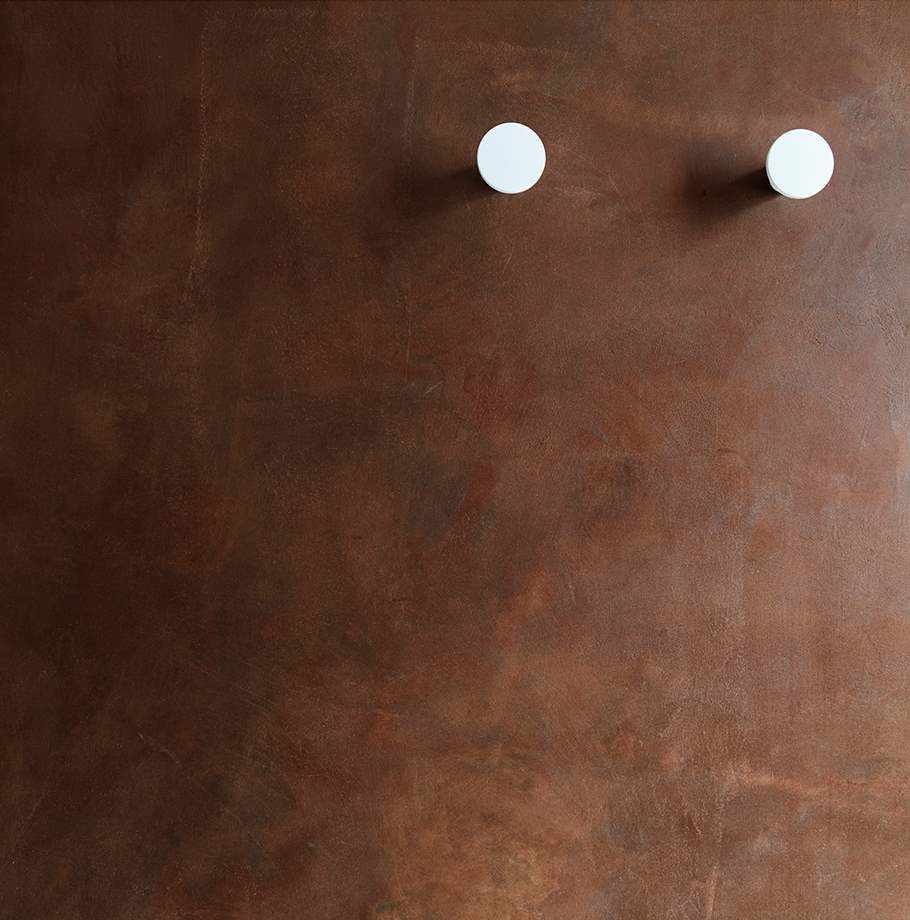
Copper Colour Microcement Wall Finish by Topciment
Product Comparison: Material, Aesthetics, and Cost
The differences between these two finishes are stark, impacting everything from installation to the final look.
Material & Application
| Feature | Concrete Finish (Traditional) | Microcement |
|---|---|---|
| Material Thickness | 5 mm to several inches (requires structural stability). | 2–3 mm (ultra-thin). |
| Weight Load | Heavy; adds significant load to the wall/floor. | Lightweight; negligible weight addition. |
| Seamlessness | Difficult to achieve a truly seamless look without pouring a large slab; often requires expansion joints. | Truly seamless; eliminates grout lines and joints entirely. |
| Substrate Compatibility | Requires a highly rigid, structural substrate (masonry, block, or new concrete). | Adheres to almost any stable substrate (tile, drywall, wood, etc.). |
| Drying/Curing | Long curing time (weeks) due to thickness. | Quick drying between thin layers; project finished in days. |
Aesthetics & Versatility
| Feature | Concrete Finish (Traditional) | Microcement |
|---|---|---|
| Texture & Movement | Texture is rough, uneven, and difficult to control; tone is often uniform. | Artisan control allows for customized textural “movement” and subtle tonal variation. |
| Waterproofing | Requires specialized sealers and can be prone to efflorescence/staining. | Fully waterproof when sealed properly; ideal for seamless showers. |
| Colour Range | Primarily limited to the gray spectrum. | Unlimited colour matching. |
[/fusion_table]
Cost & Durability
| Feature | Concrete Finish Wall | Microcement |
|---|---|---|
| Installation Cost | High labor cost due to weight, mess, and extensive prep work. | High labor cost due to the requirement for skilled artisan application. |
| Cracking Risk | High risk of hairline cracks due to curing, settling, or thermal movement. | High crack resistance due to resin flexibility (when applied over a stable substrate). |

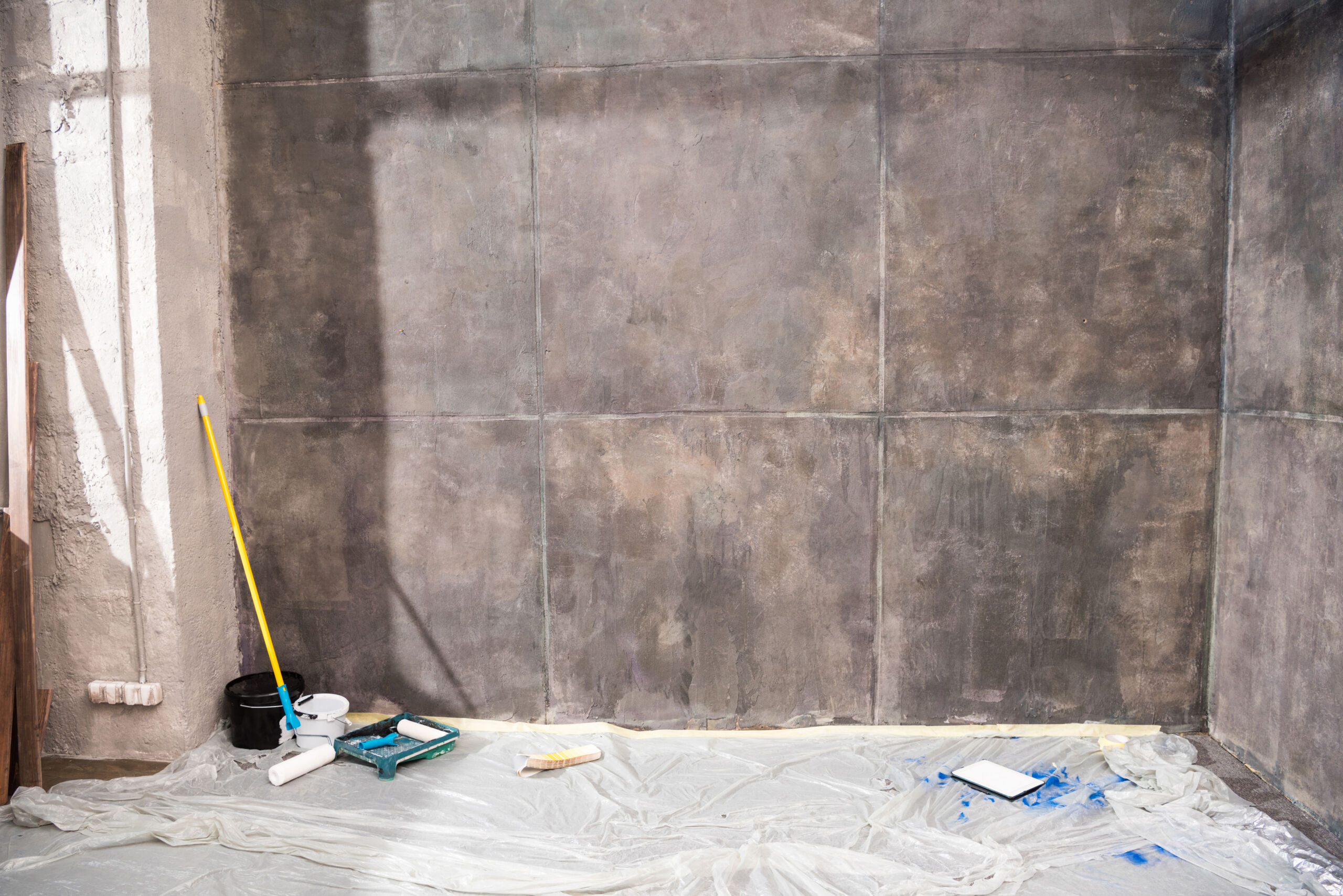
Concrete Wall Finish vs. Microcement
Our Reviews
Verdict: Why Microcement is the Better Concrete Wall Finish
While traditional concrete offers an authentic, raw finish, microcement is the superior choice for modern interior and renovation projects.
The primary advantage of microcement is its versatility without compromise. It delivers the exact aesthetic designers and clients want—the seamless, monolithic, raw look of concrete—but achieves it using a material that is lighter, more flexible, and non-structural.
Microcement is the winner for creating a high-end, durable, and fully waterproof concrete wall finish because of these 3 key reasons:
- Seamless Waterproofing: It is the only practical solution for achieving a grout-free concrete look in showers, wet rooms, and kitchens without relying on heavy slab construction.
- Zero Demolition, Zero Structural Load: Its minimal thickness eliminates the need for costly demolition of existing surfaces and adds no meaningful structural weight, making it ideal for renovations and vertical applications.
- Total Artisan Control: It provides superior control over the final look, allowing for custom-tailored texture, depth, and colour that a poured concrete wall cannot match.
If you desire the sophisticated look of a concrete wall finish that is both practical and enduring, microcement is the definitive modern choice.
Concrete Wall Finish vs. Microcement
Microcement Explained
Contact Us Today
Ready to achieve the perfect concrete aesthetic without the demolition and weight?
Stop compromising on your design. Fill out the form below to connect with a Microcement Specialist and get a detailed quote for your seamless concrete wall finish project today!
Discuss Your Microcement Fireplace Project
| Toronto & GTA | |
|---|---|
|
|