
Porcelain Slabs vs Microcement in Toronto Bathrooms: What to Choose in 2025

Porcelain Slab vs. Microcement for Bathrooms in Toronto

In Toronto’s most design-forward neighborhoods like Yorkville, Summerhill, and Casa Loma, bathrooms are no longer just utilitarian—they’re curated spaces that reflect a home’s aesthetic values. When it comes to high-end, seamless bathroom finishes, porcelain slabs and microcement have emerged as two of the most sought-after options. Each offers a sleek, modern look, but they differ in key ways that could make one a better fit for your space.

Introducing Microcement: The Seamless, Sculptural Solution with No Demolition

Microcement—a polymer-modified, trowel-applied cement-based coating—is making significant waves in Toronto design circles for its flexibility, rapid adaptability, and profound visual impact. It is remarkably thin (typically 2-3 mm) yet exceptionally durable, and its core advantage is its ability to be applied over virtually any stable existing surface. This means that in many modern renovation projects, costly and time-consuming tile demolition is not required, making microcement a highly efficient and desirable alternative for residential and condo renovations.

A microcement finish in bathroom designs delivers a singular, monolithic, and artisanal look with a soft matte or satin texture. Its application results in a unique microcement texture—a subtle, nuanced variation created by the artisan’s hand—that provides visual depth without the distraction of grout lines, aligning perfectly with the demand for minimalist, sculptural interiors.

Where Can Microcement in Bathroom Be Applied?

The versatility of microcement is its greatest strength, allowing it to coat virtually every surface within the wet room seamlessly, creating an integrated, holistic aesthetic:

  • Microcement for Bathroom Walls: Creates a continuous, grout-free backdrop.
  • Microcement for Bathroom Floor: Provides a durable, slip-resistant, and relatively warm-to-the-touch surface.
  • Microcement Shower Walls and Floors: When fully sealed, it eliminates grout lines and provides a completely waterproof enclosure.
  • Ceilings: Unifies the room with a seamless overhead finish.
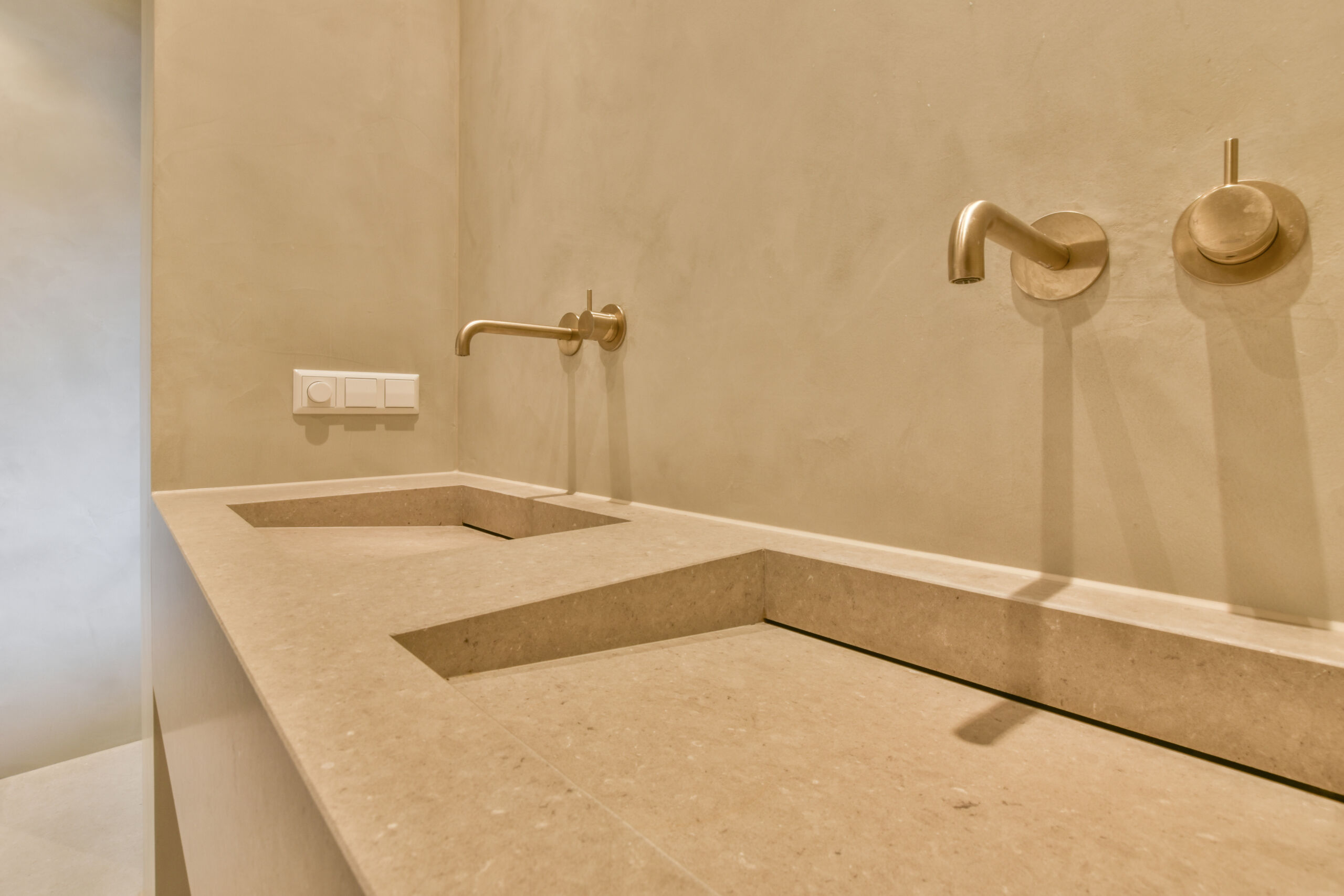
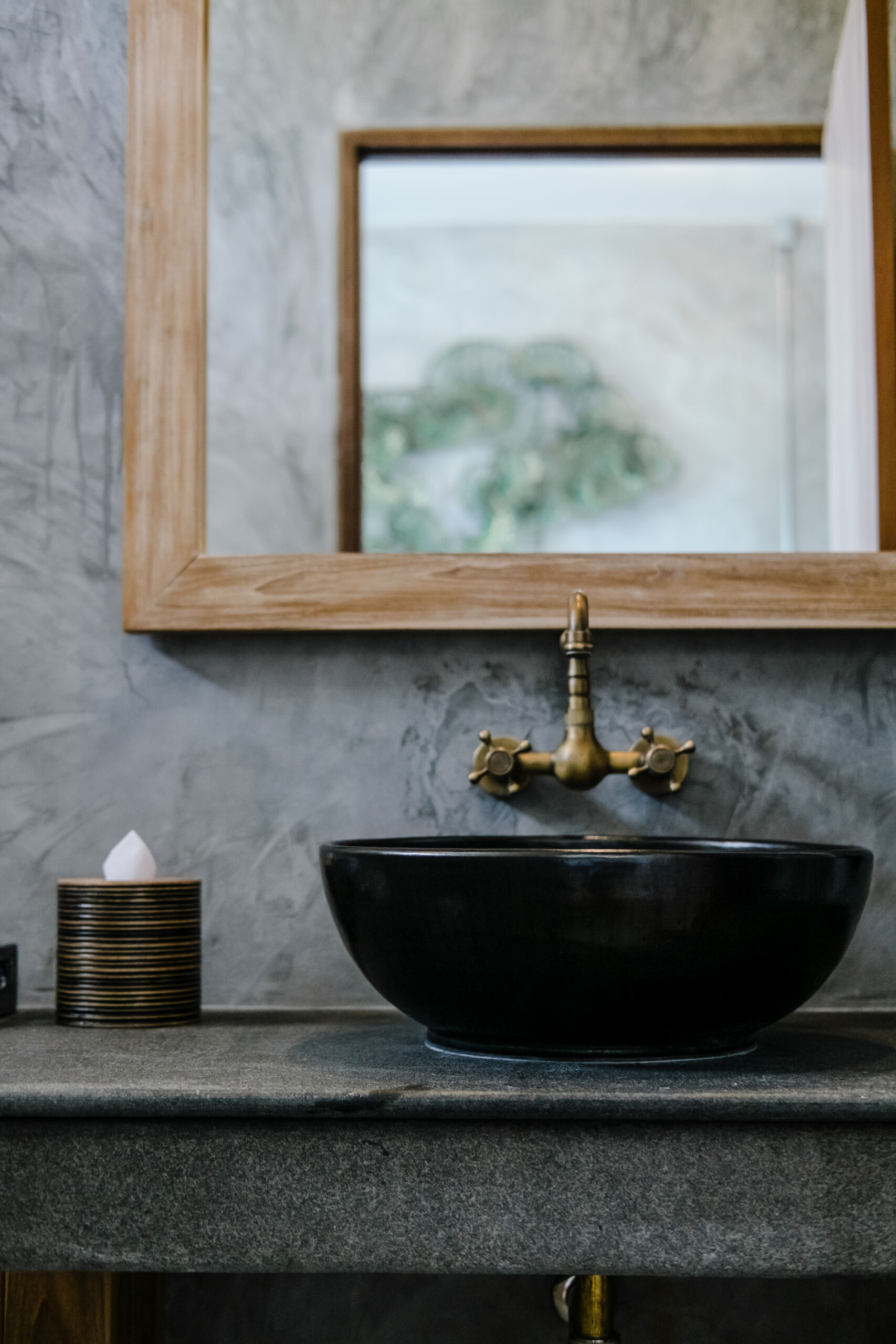
  • Custom Fixtures: Microcement can be applied directly over built vanity units, sinks, and even bathtub surrounds, creating integrated, sculptural pieces.

To dive deeper into the world of seamless design, visit our dedicated Microcement Installation page where you can learn about the detailed application process, the unique waterproof and durable properties of the material, and a comprehensive breakdown of project cost.
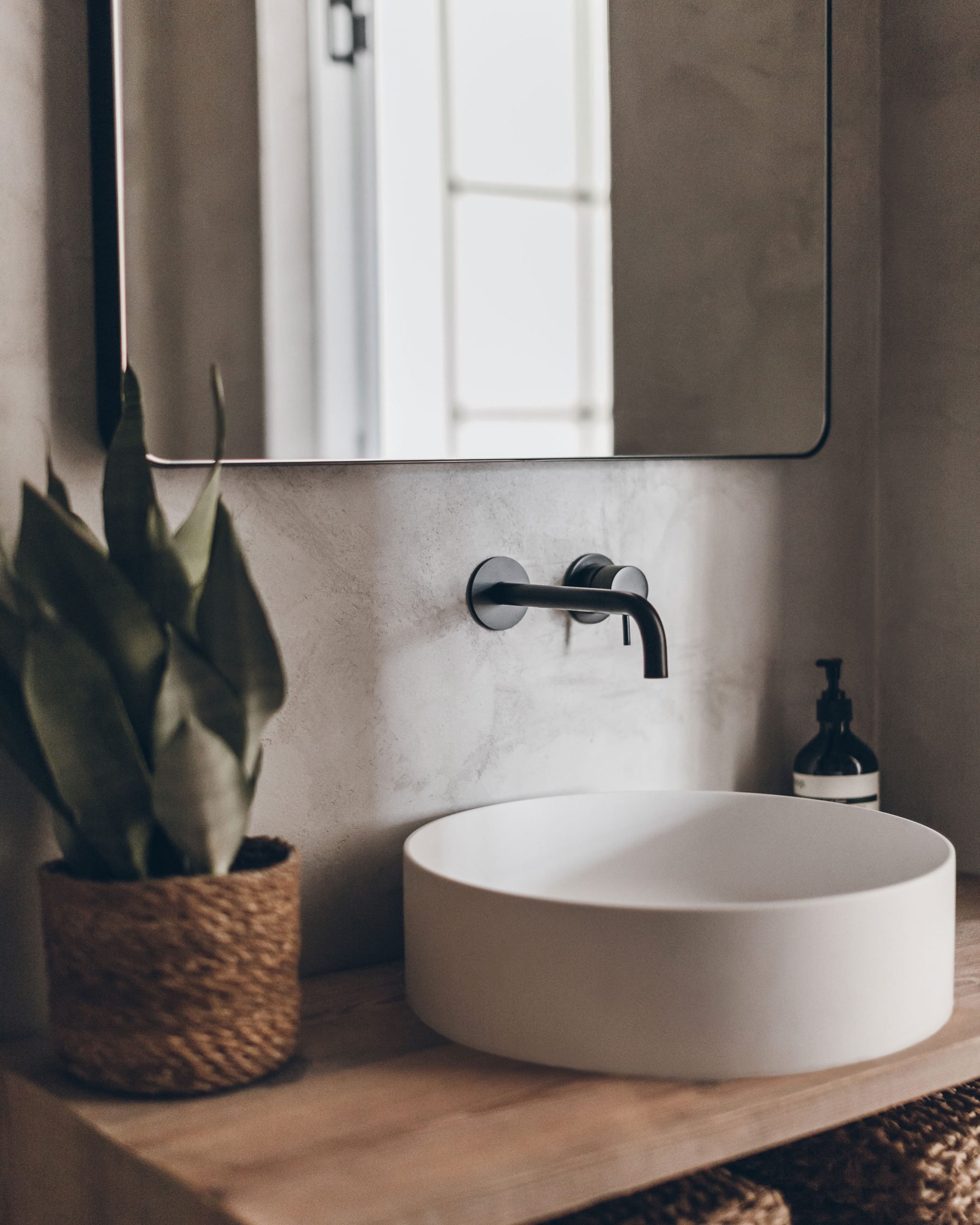
Microcement in the bathroom walls  @Mikuta 
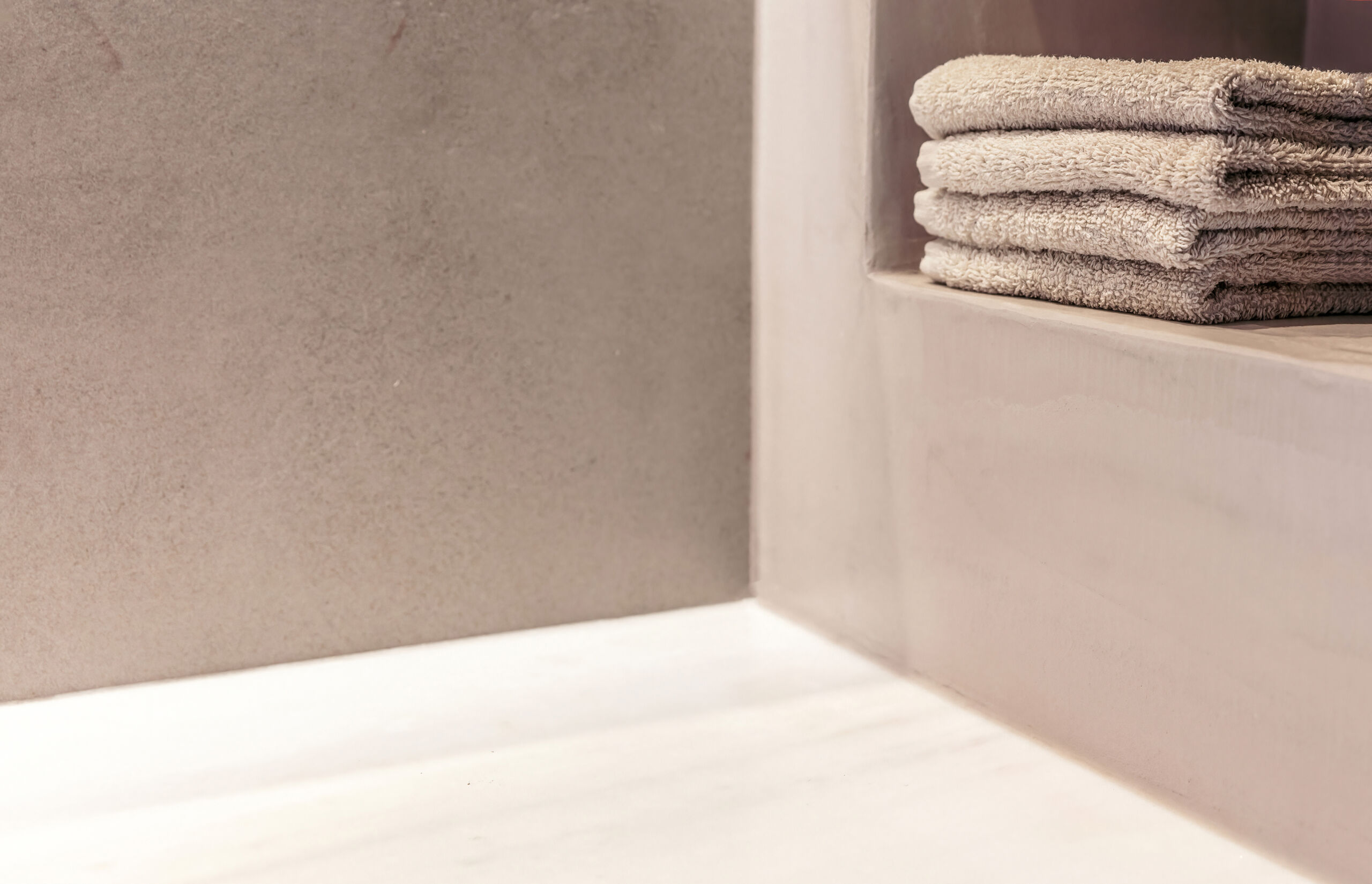
close up of a bathroom wall finished in microcement with subtle texture.
Microcement bathroom and shower walls, Toronto
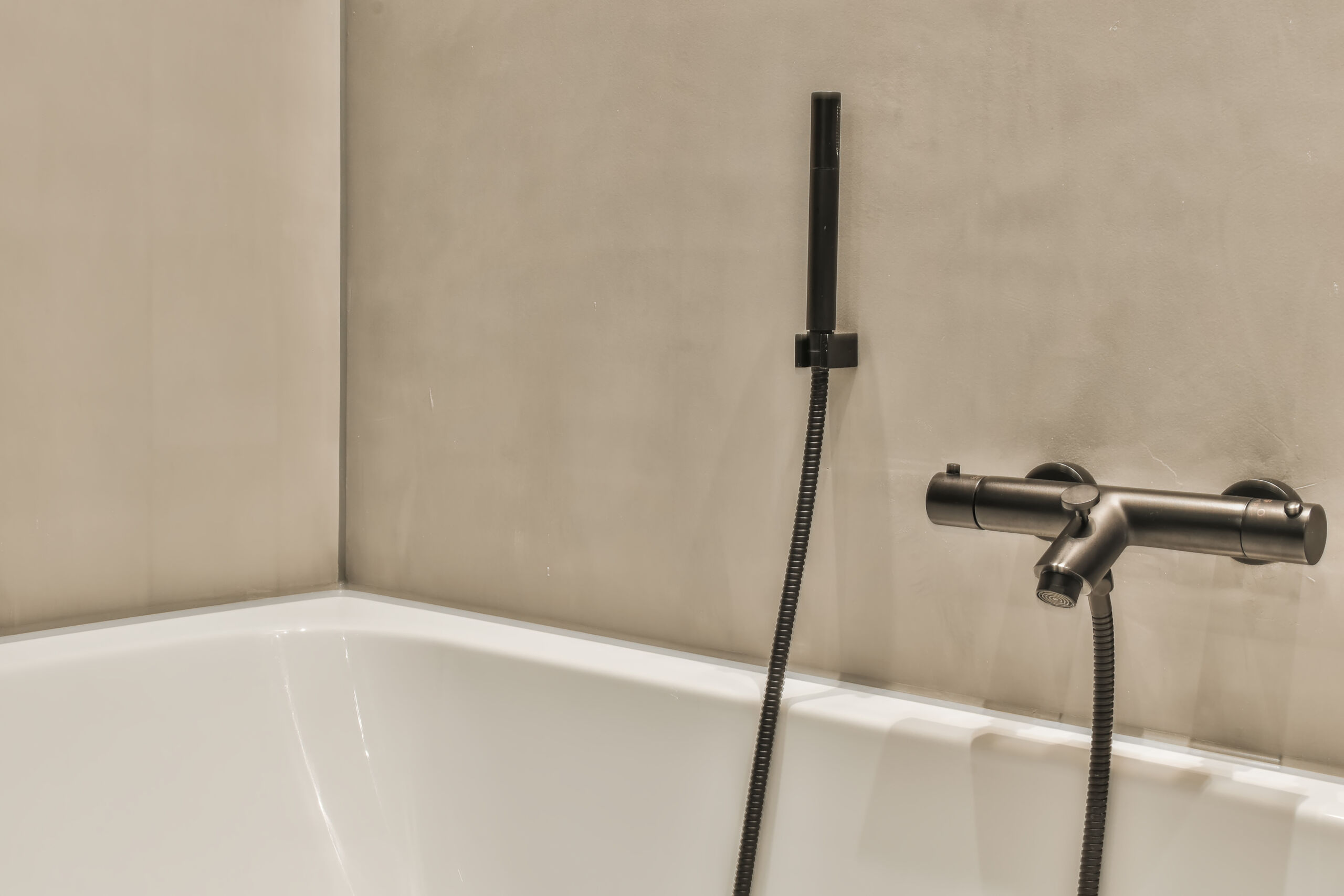
microcement bathroom, walls reaching a bath tub, modern design.
Microcement over tile for bathroom walls
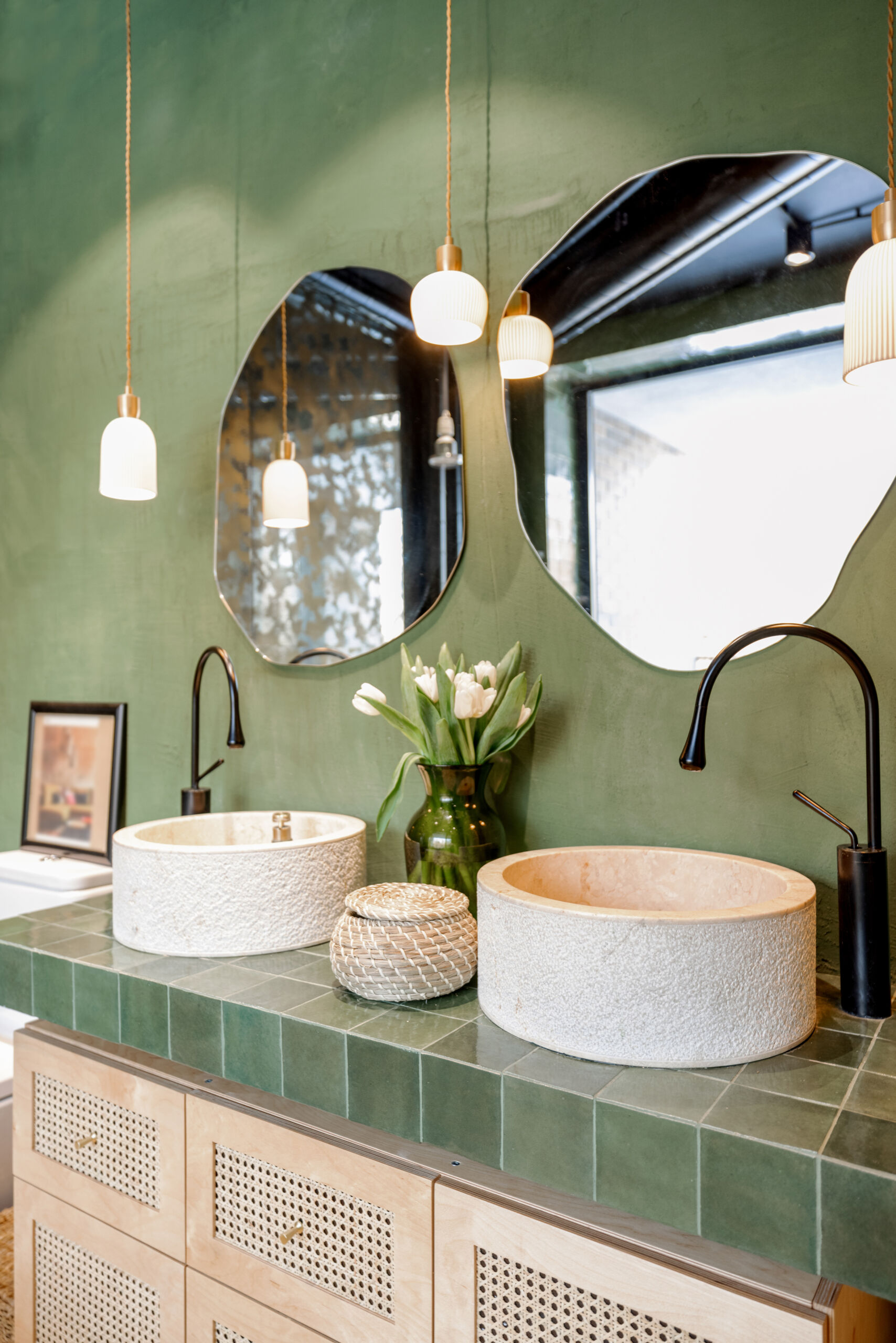
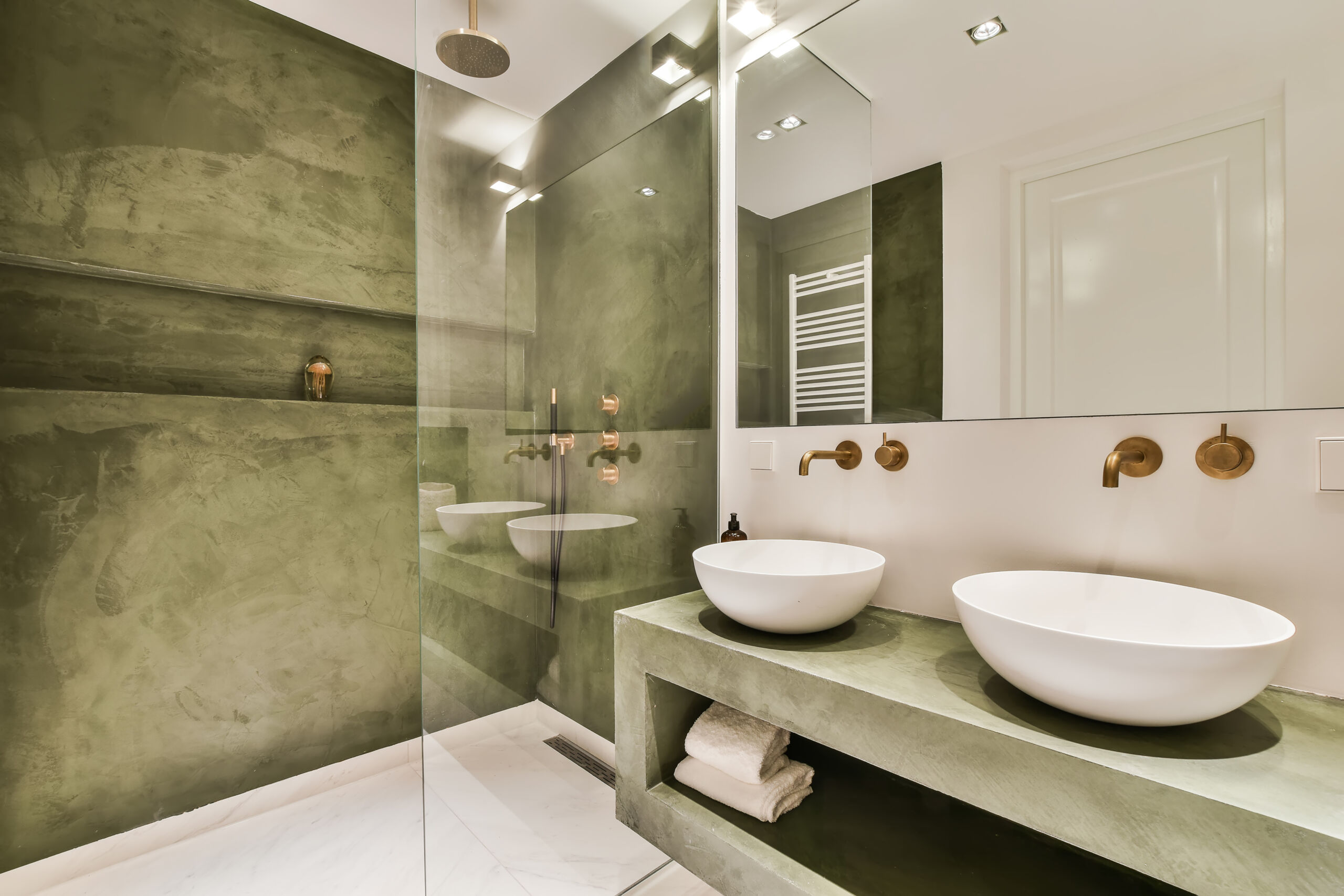
Green microcement bathroom walls in a Toronto-area wet room.
Green Microcement for Bathroom Walls – Boho Aesthetic Finish in Toronto
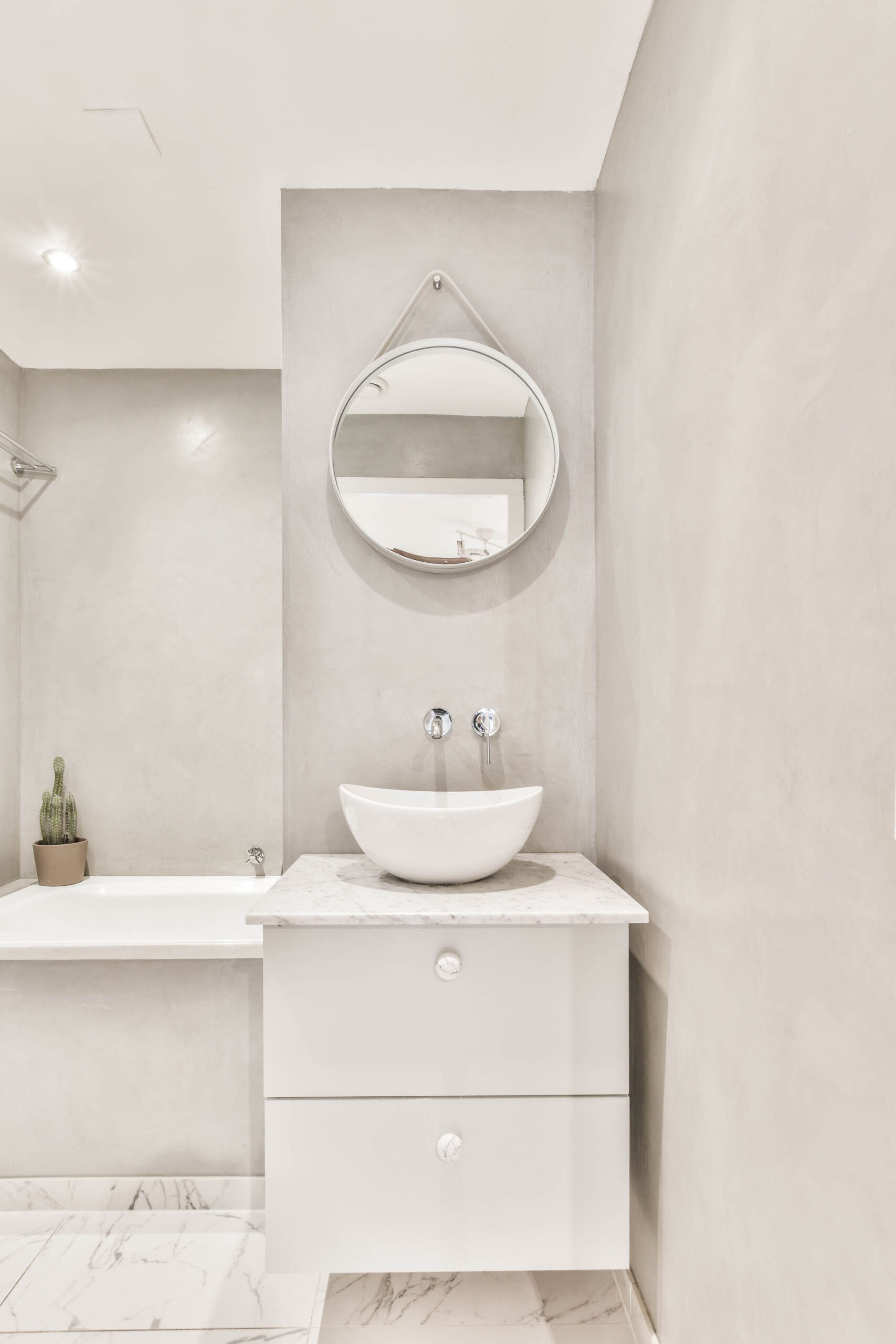
Microcement shower walls, floor and enclosure in a Toronto bathroom.
Seamless Microcement Bathroom Walls and Ceilings Finish in East York, Toronto

Porcelain Slabs in Toronto Bathrooms: Durable, Polished, and Architectural
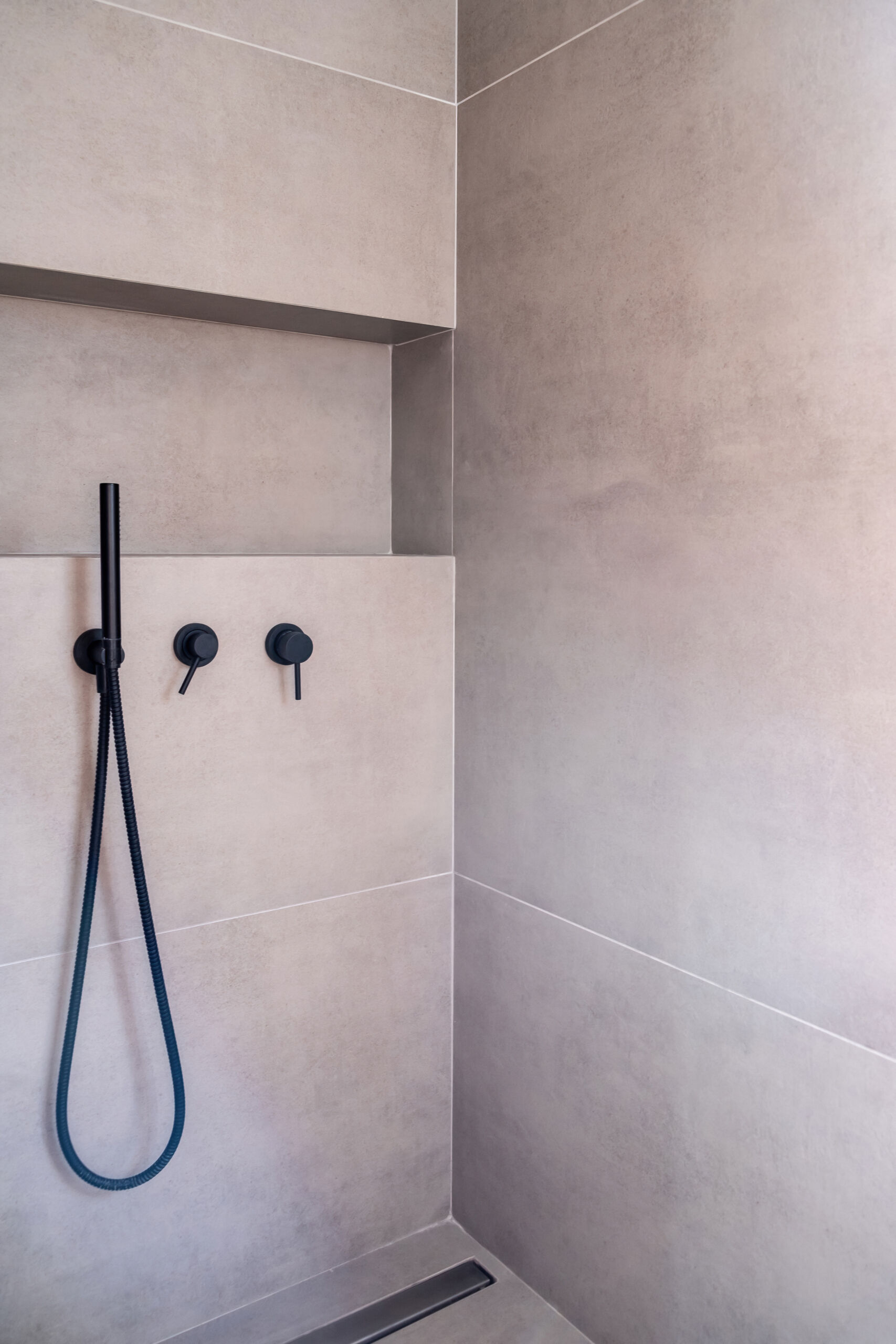
Porcelain Slabs vs. Microcement in Modern Toronto Bathrooms

Porcelain slabs offer an ultra-refined, marble-like look without the maintenance of natural stone. Large-format slabs minimize grout lines, creating a clean, uninterrupted surface perfect for shower walls, floors, and vanities. They’re ideal for luxury bathroom renovations in neighborhoods like Forest Hill and Rosedale.

Pros:

  • Highly resistant to moisture, stains, and heat
  • Easy to clean and maintain, minimizes grout

  • Mimics the look of stone, marble, or concrete

  • Durable and long-lasting
  • Great for wall cladding and shower surrounds

Cons:

  • Limited color availability (tied to what manufacturers produce)
  • Expensive installation (requires professional slab handling and special cutting tools)
  • Can feel cold and rigid in small or cozy spaces
  • Requires demolition of existing surfaces for a true slab application

Microcement Bathrooms: Versatile, Modern, and Ultra-Customizable

Microcement is gaining traction in Toronto lofts, condos, and character homes for its ability to coat nearly any surface with a seamless, waterproof layer. This solution is perfect for achieving a modern aesthetic where the microcement for bathroom floor and microcement for bathroom walls flow together without interruption.

Pros:

  • Completely seamless (no grout lines) across microcement for bathroom floor and walls

  • Can be tinted in virtually any colour (Benjamin Moore, Farrow & Ball, etc.)

  • Works over existing tiles or drywall (No demolition)

  • Warm, tactile feel with an artisanal, customized look

  • Waterproof and easy to maintain

Cons:

  • Requires expert installation to avoid inconsistencies
  • Not as hard as porcelain—can scratch with heavy wear
  • More susceptible to cracking if substructure moves
  • Higher cost than basic tile finishes
  • Finish is fixed; cannot be changed easily

Microcement Bathroom Cost: Understanding the Investment

Adding microcement in your bathroom is an investment in a custom, high-end finish, and pricing reflects the artisan skill required. Generally, the microcement bathroom cost starts in the average range of $25 per square foot for walls or larger decorative areas. However, this price can fluctuate significantly based on the application type: microcement for bathroom floors often fall within the average range due to simpler application over large, flat areas, while complex areas like wet areas (microcement shower walls and floors ), countertops, and detailed fixtures (microcement over vanities/sinks) may be priced higher. This is due to the extensive preparation needed underneath the microcement and the extra layers of high-performance sealant application. Conversely, for very large projects exceeding 1,000 square feet, the cost can be negotiated lower, sometimes dipping as low as $20 per square foot.
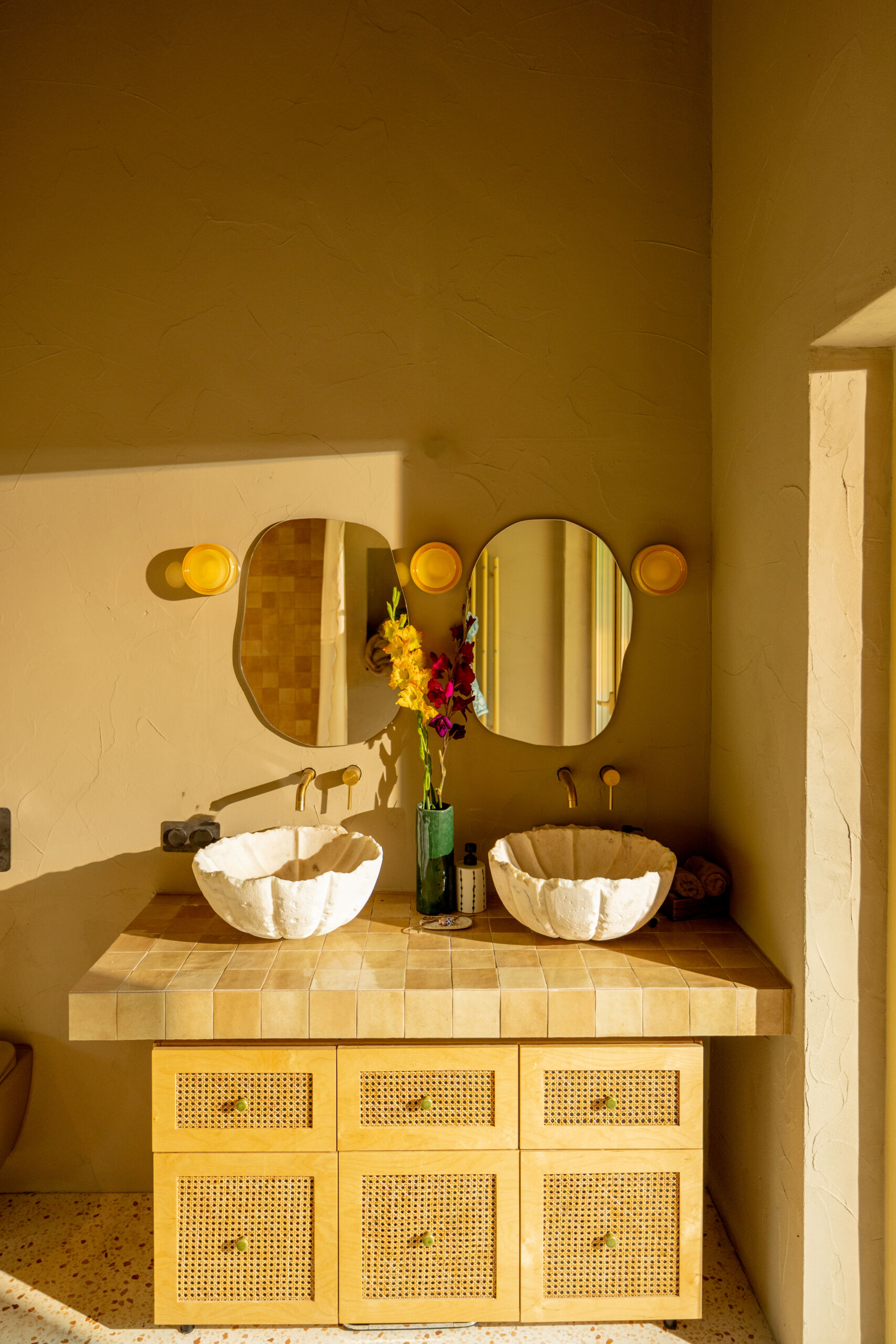
Close-up of customized microcement for bathroom walls, showing unique texture and trowel marks for an artisanal finish in Kleinburg house.
Custom-Troweled Microcement for Bathroom Walls – Artisanal Finish

Pocelain Slab vs. Microcement: Which Is Right for Your Toronto Bathroom?

Choosing between these two high-end finishes comes down to the desired aesthetic and renovation scope:

  • If you’re designing a polished, ultra-modern bathroom with high shine and durability of faux stone—porcelain slabs are a strong choice.
  • If you are after a softer, warmer, more customizable surface that exudes European spa vibes—and you want a seamless transition from microcement for bathroom floor to microcement for bathroom walls—microcement may be the clear winner.

In neighborhoods like East York, The Annex, and Leslieville, where homeowners are leaning into character and individuality, microcement offers a flexible, mood-driven solution for modern bathrooms.
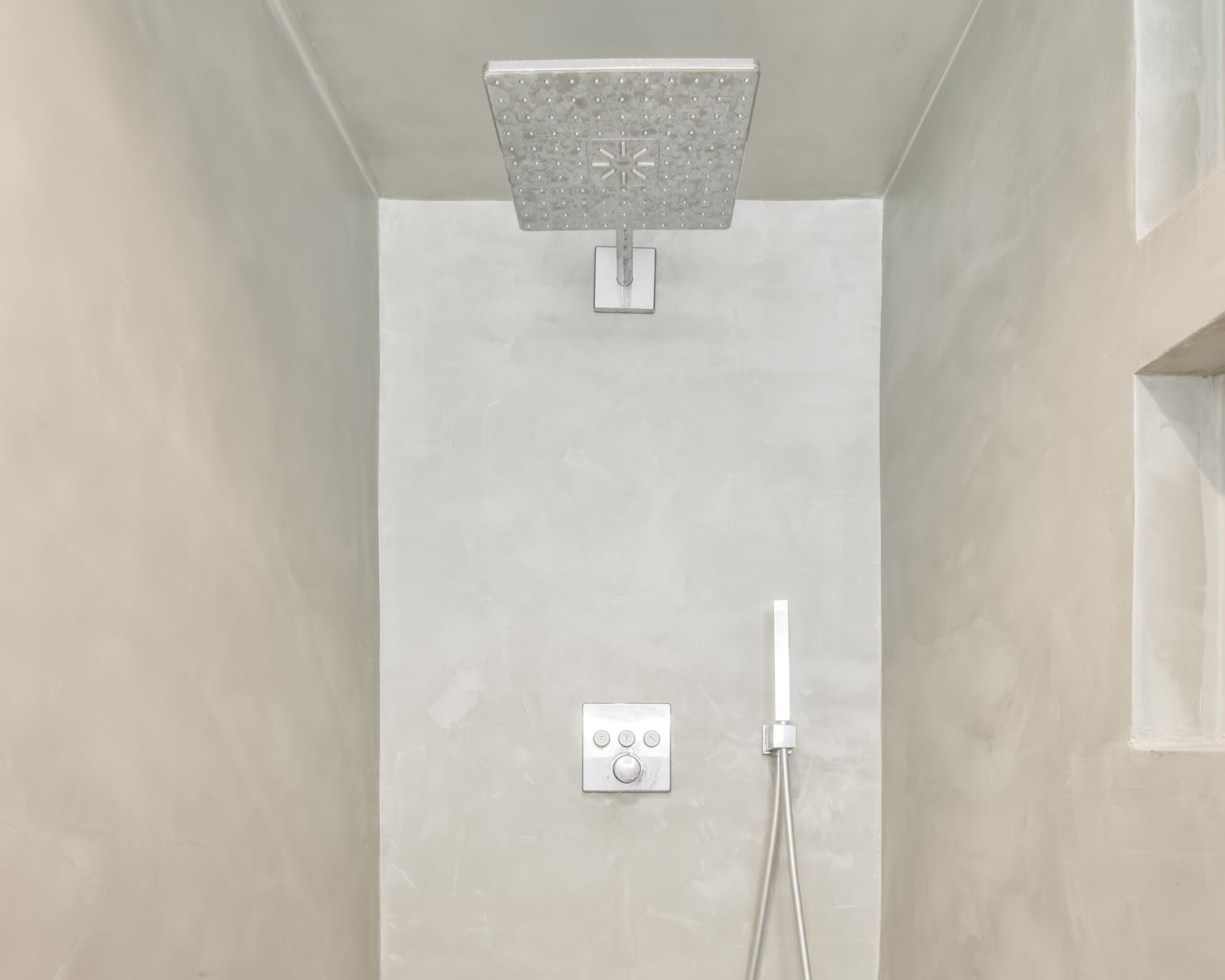
Shower interior featuring walls, floors, and ceiling all finished in a smooth beige microcement for a sleek, modern look in a house in Annex, Toronto.
Seamless Beige Microcement for Shower Interior Walls, Floors, and Ceiling
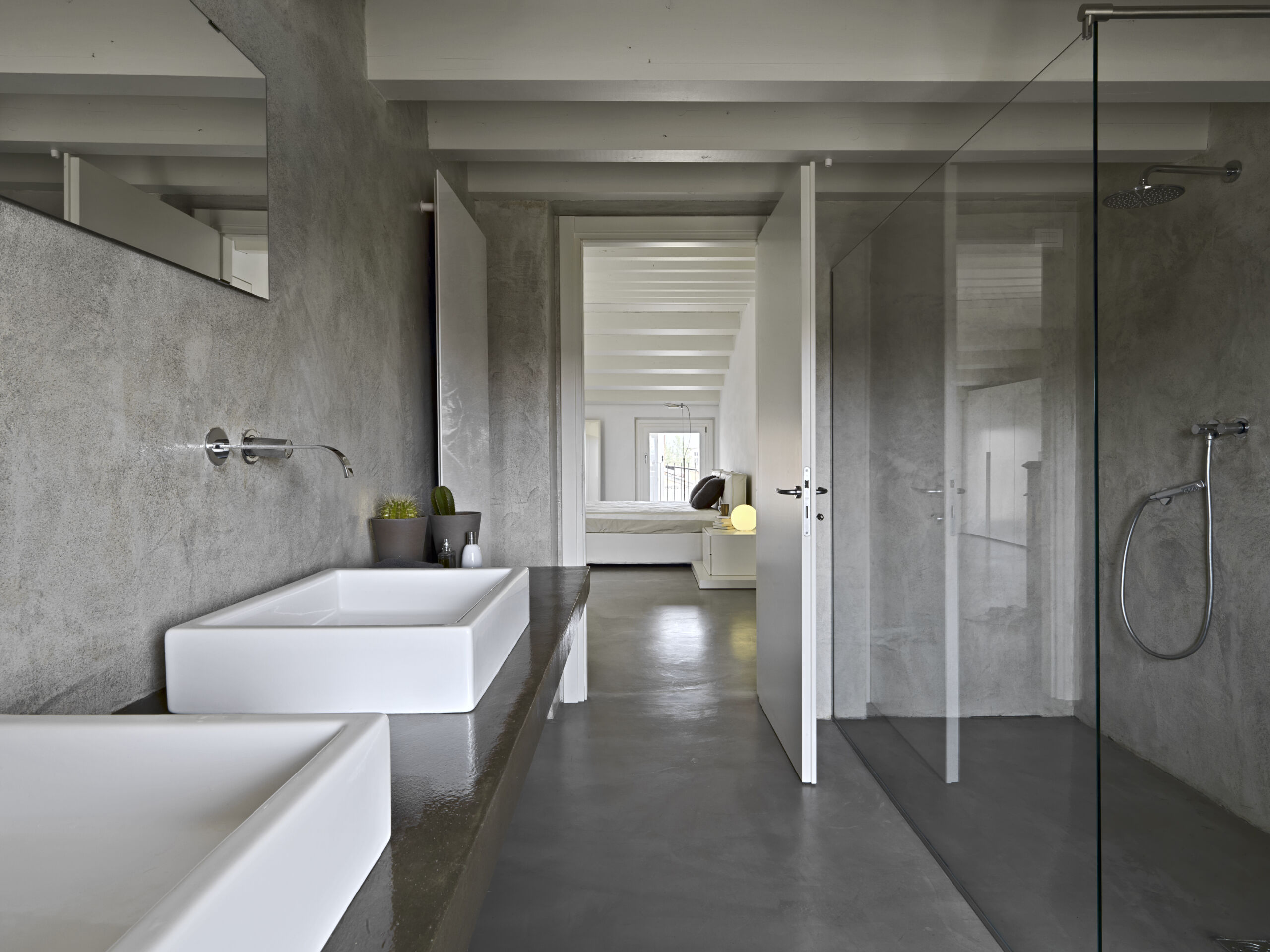
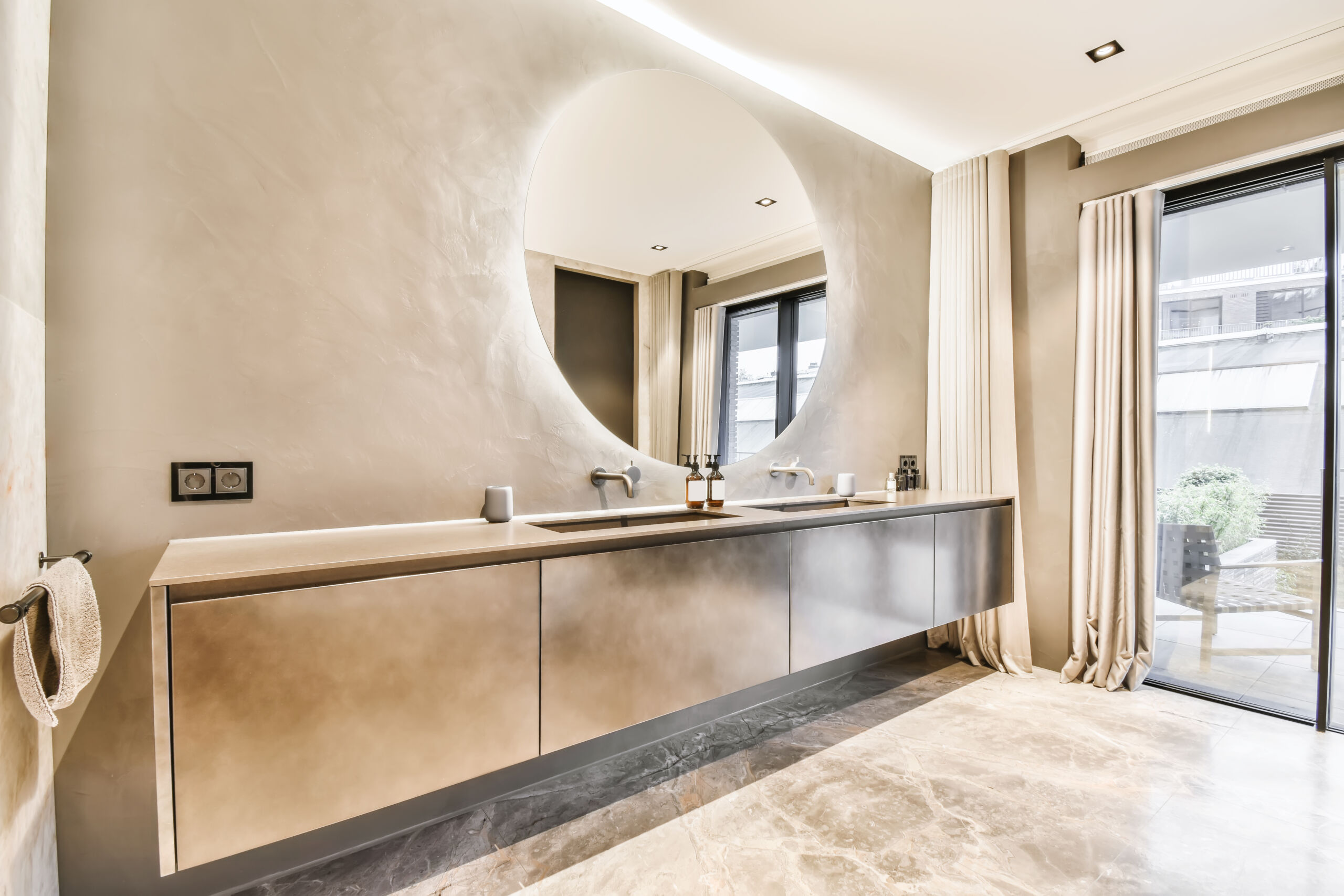
Modern en-suite bathroom with walls and floors finished in microcement, giving a sleek, contemporary look
Modern Bathroom with Seamless Microcement Floor and Walls – Etobicoke, Toronto

FAQ: Microcement in Bathroom Applications
Is microcement good for bathrooms and wet areas?2026-09-08T13:15:57-04:00

Microcement can be used in bathrooms and other wet areas when the complete system—including the substrate, preparation, waterproofing where required, microcement layers and compatible sealer—is correctly specified and installed. Suitability depends on the existing surface and how the area will be used, so we assess it before recommending a system.

Is microcement cheaper than tiling?2026-09-08T13:15:57-04:00

Not necessarily. The comparison depends on demolition, the condition of the existing surface, the tile being considered, the geometry of the room and the desired finish. Microcement may reduce demolition when the substrate is sound and suitable, but its value is primarily the seamless, hand-applied result rather than being the least expensive option.

Is it expensive to microcement a bathroom?2026-09-08T13:15:57-04:00

The investment varies with the size of the room, substrate condition, preparation, wet-area requirements, architectural details, chosen finish and sealing system. We assess those factors before preparing a project-specific quotation rather than relying on a generic square-foot figure.

Does microcement crack or go mouldy easily?2026-09-08T13:15:57-04:00

Like any applied finish, performance begins with the structure beneath it. Existing movement or cracking in an unstable substrate can transfer through a new surface, which is why assessment and preparation matter. A correctly installed and sealed, joint-free surface is straightforward to maintain, although ventilation and normal cleaning remain important in damp rooms.

Can microcement be applied directly over existing tiles or drywall?2026-09-08T13:15:57-04:00

Microcement can often be installed over existing tile or suitably prepared drywall, but it is not automatic. The substrate must be sound, stable and appropriate for the intended use. Some projects need repairs, reinforcement, levelling or a different build-up before the decorative finish can begin.

What is the lifespan of microcement?2026-09-08T13:15:58-04:00

Its service life depends on the substrate, preparation, system specification, traffic, cleaning and maintenance. Rather than promising a universal number, we recommend periodic inspection and resealing when the surface and its use call for it.

Can I DIY a microcement bathroom?2026-09-08T13:15:58-04:00

Bathrooms and showers are technically demanding because the decorative finish is only one part of the wet-area assembly. We recommend professional assessment and installation for these spaces. Professional kits may suit selected smaller projects, but wet rooms require careful substrate and waterproofing decisions.

What is the difference between Microcement, Epoxy, and Tadelakt?2026-09-08T13:15:58-04:00

Microcement is a cement-based, hand-applied finish that can be used across many floors, walls and architectural features when the system is correctly specified. Epoxy is resin-based and has a different visual and tactile character. Tadelakt is a traditional lime plaster with its own softly polished appearance and maintenance requirements. The right choice depends on the substrate, room, use and desired aesthetic.

Why has microcement become so popular in bathroom renovations recently?2026-09-08T13:15:58-04:00

Microcement creates a continuous surface without visually interrupting grout lines, while still allowing variation from the hand of the applicator. It works particularly well with curved forms, niches and integrated details, making it appealing for calm, contemporary bathrooms. Its suitability still depends on the substrate, wet-area construction and the selected sealing system.

Moody dark blue microcement for bathroom walls creating a deep, seamless, and waterproof finish in a Toronto wet room.
Moody Dark Blue Microcement for Bathroom Walls – Seamless Toronto Finish

Ready to transform your Toronto bathroom with a seamless microcement finish?

Achieve the ultimate microcement for bathroom floor and microcement for bathroom walls design. Contact us today for a consultation and quote on your microcement in bathroom project!

Project type: *
[fusion_form_honeypot name="website_url" /]

Serving Toronto, British Columbia,  Los Angeles, Florida and Texas

Toronto & GTA
  • Bridle Path
  • Rosedale
  • Forest Hill
  • Annex
  • Yorkville
  • Summerhill
  • South Hill
  • The Kingsway
  • Baby Point
  • Lawrence Park
  • Oakville (Morrison, Old Oakville)
  • Thornhill (Thornhill Woods, Uplands)
  • Mississauga (Lorne Park, Mineola, Port Credit)
  • Richmond Hill (Bayview Hill)
  • King City
  • Markham (Cachet, Angus Glen)
  • Aurora
  • Stouffville
  • Kleinburg
  • Woodbridge (Weston Downs, Pine Valley Estates)
  • Leaside
British Columbia (BC) The Okanagan Valley & Island Coast
  • West Vancouver
  • British Properties
  • Caulfeild
  • Dundarave
  • Altamont
  • Whitby Estates
  • Shaughnessy
  • Point Grey
  • Kitsilano
  • South Granville
  • North Vancouver
  • Deep Cove
  • Edgemont Village
  • Seymour
  • Whistler & Corridor
  • Kadenwood
  • Blueberry Hill
  • Alta Vista
  • Spring Creek
  • Kelowna
  • Lower Mission
  • Upper Mission
  • West Kelowna Lakefront
  • Penticton
  • Summerland
  • Naramata Bench
  • Victoria
  • Oak Bay
  • Uplands
  • Ten Mile Point
  • Cordova Bay
  • Tofino
  • Ucluelet
  • Gibsons, Sechelt
  • Halfmoon Bay
Jacksonville Tampa Miami Broward County Palm Beach County
  • Ponte Vedra Beach
  • Queens Harbour
  • Avondale
  • Riverside
  • San Marco
  • Deerwood
  • Deercreek
  • Palm Coast
  • Ormond Beach
  • Ponce Inlet
  • Hyde Park
  • Davis Islands
  • Beach Park
  • Harbour Island
  • Avila
  • Fisher Island
  • Star Island
  • Coral Gables
  • Coconut Grove
  • Brickell Key
  • Brickell
  • Pinecrest
  • Bal Harbour
  • Surfside
  • Sunny Isles Beach
  • Key Biscayne
  • Deerfield Beach
  • Lighthouse Point
  • Pompano Beach
  • Fort Lauderdale
  • Lauderdale-by-the-Sea
  • Hollywood
  • Hallandale Beach
  • Aventura
  • Jupiter
  • Palm Beach Gardens
  • North Palm Beach
  • Palm Beach
  • West Palm Beach
  • Manalapan
  • Ocean Ridge
  • Gulf Stream
  • Delray Beach
  • Boca Raton
  • Highland Beach
 Los Angeles  Sacramento  Long Beach  Santa Monica  Mission Viejo
  • Bel Air
  • Brentwood
  • Pacific Palisades
  • Holmby Hills
  • Century City
  • Hancock Park
  • Los Feliz
  • Malibu
  • Beverly crest
  • East Sacramento
  • Land Park
  • Sierra Oaks
  • Arden Park
  • Granite Bay
  • Folsom
  • The “Fabulous 40s”
  • Naples
  • Belmont Shore
  • Bixby Knolls
  • Alamitos Heights
  • Bluff Oark
  • Signal Hill
  • North of Montana
  • Wilshire-Montana
  • Ocean Park
  • Sunset Park
  • Canyon Crest
  • Pacific Hills
  • Greystone Landing
  • Madrid Del Lago
  • Melina Heights
Dallas Houston Austin San Antonio Fort Worth
  • Highland Park
  • University Park
  • Preston Hollow
  • Uptown
  • Lakewood
  • River Oaks
  • Memorial
  • West University Place
  • Tanglewood
  • The Heights
  • West Lake Hills
  • Tarrytown
  • Rollingwood
  • Barton Creek
  • Downtown / Rainey Street
  • The Dominion
  • Alamo Heights
  • Terrell Hills
  • Olmos Park
  • Stone Oak
  • Rivercrest
  • Westover Hills
  • Monticello
  • Tanglewood
Go to Top