When a Flat Wall Feels Too Quiet
Champagne off-white velvet plaster follows the curved staircase railing at Royal Bayview.
A wall can hold a room together without becoming its loudest feature. In a calm interior, a little movement across the surface changes what the light reveals: a soft nap at the turn of a staircase, a mineral pattern behind a dining table, or a brushed patina that makes a single colour feel layered.
“Textured wall paint” is often the phrase people use when they start looking for this effect. It can mean paint applied with a textured technique, but many of the finishes they have in mind are decorative plasters. Paint, limewash and plaster differ in material, depth, sheen and how the finished wall feels at close range.
The phrase can also mean painting a wall that is already textured. That is a different job. Here, we are choosing the new surface itself: a painted effect, a limewash patina or a hand-applied plaster.
Speak To Shayan 416 (606) 8060 or Request A Quote
Textured Paint or Plaster: What Changes?
Textured paint creates movement through the way a coating is brushed, rolled or otherwise worked onto the wall. Decorative plaster builds the finish through hand-applied layers. Depending on the material and technique, those layers can read as soft and fabric-like, gently stone-like, or more polished and reflective.
The right choice starts with the room. Look at daylight and evening lighting, the distance from which the wall is seen, the millwork beside it, and how often the surface will be touched. A sample viewed on the actual wall makes the differences easier to judge than a photograph alone.
| Finish | Look and practical question |
|---|---|
| Textured paint | Brush or roller work gives a coating visible movement or relief. How will the selected system wear and clean where people touch the wall? |
| Limewash | A matte, brushed patina creates soft shifts within one colour. What substrate and preparation does the chosen product require? |
| Velvet plaster | Fine, suede-like texture responds gently to light. What protection and cleaning guidance suit the room? |
| Venetian plaster or Marmorino | Hand-trowelled mineral movement can be softly burnished or more reflective. How should the wall, corners and transitions be prepared? |
| Concrete effect | Layered mineral plaster or microcement can suggest cast concrete, from quiet clouding to a more raw, trowelled surface. How much movement suits the room? |
| Rock effect | Hand-sculpted ridges and recesses create a stone-like wall with deeper light and shadow. Where can that relief become a considered focal point? |
Choosing Among Decorative Finishes
At Royal Bayview in Thornhill, the curved staircase railing has a champagne off-white velvet plaster finish. From a distance it reads as a pale architectural line. Closer in, the fine texture catches light with a restrained shimmer. It gives the railing presence without competing with the surrounding millwork. See the Royal Bayview staircase project for the finished railing and close-up details.
Venetian plaster and Marmorino offer a different kind of mineral movement. The effect depends on the plaster, trowel work and amount of burnishing. A lightly worked surface can feel soft and stone-like; a more polished treatment draws the light more strongly. The charcoal Forest Hill wall pictured below shows how that movement can give one colour depth. For a more luminous version, see our Etobicoke pearl Venetian plaster fireplace. Explore Venetian plaster walls for the service and finish options.
Limewash has a brushed variation that sits closer to the wall. For a room-led example, read The Limewash Effect. See Chromatist’s limewash wall work to compare that patina with plaster.
Concrete effect brings a different mood: a wall can read as softly clouded and architectural, or more raw with visible trowel movement. It describes the look rather than one fixed material; the surface and room use guide whether mineral plaster or microcement is suitable. See concrete-effect walls in Toronto interiors.
Rock effect is more sculptural. Hand-shaped grooves and recesses give the wall the depth of weathered stone, especially when light travels across it. In a restrained room, that relief can make one feature wall the focal point. Explore Chromatist’s rock-effect feature walls.
Velvet plaster being worked around the curve of a Thornhill staircase railing.
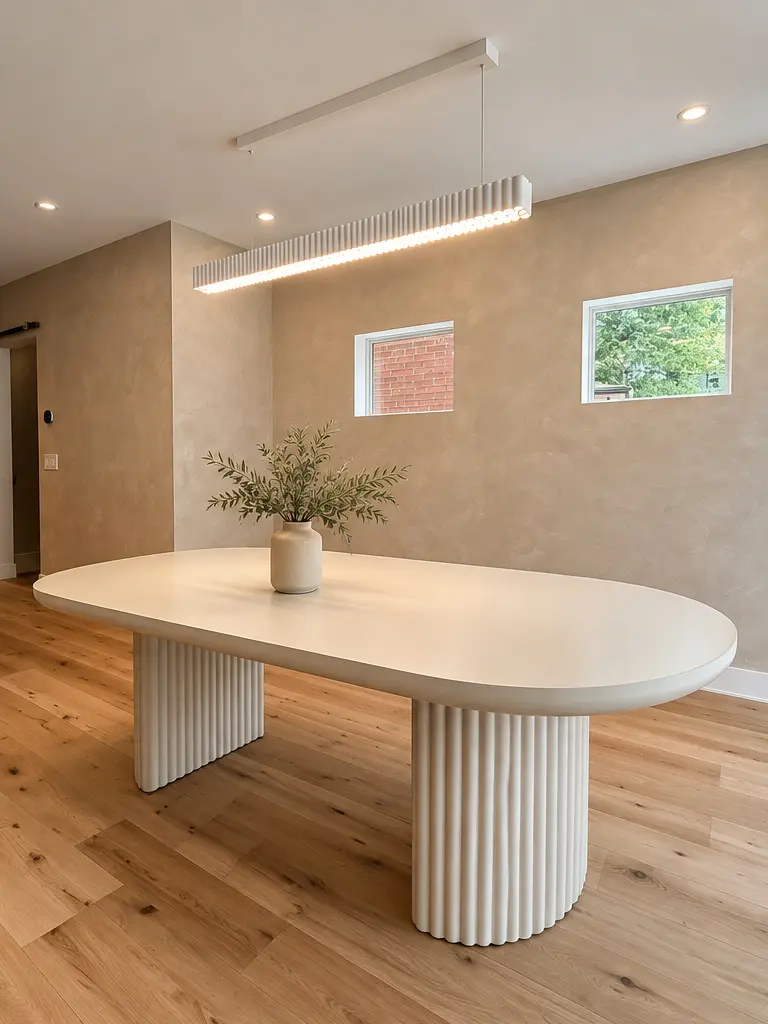
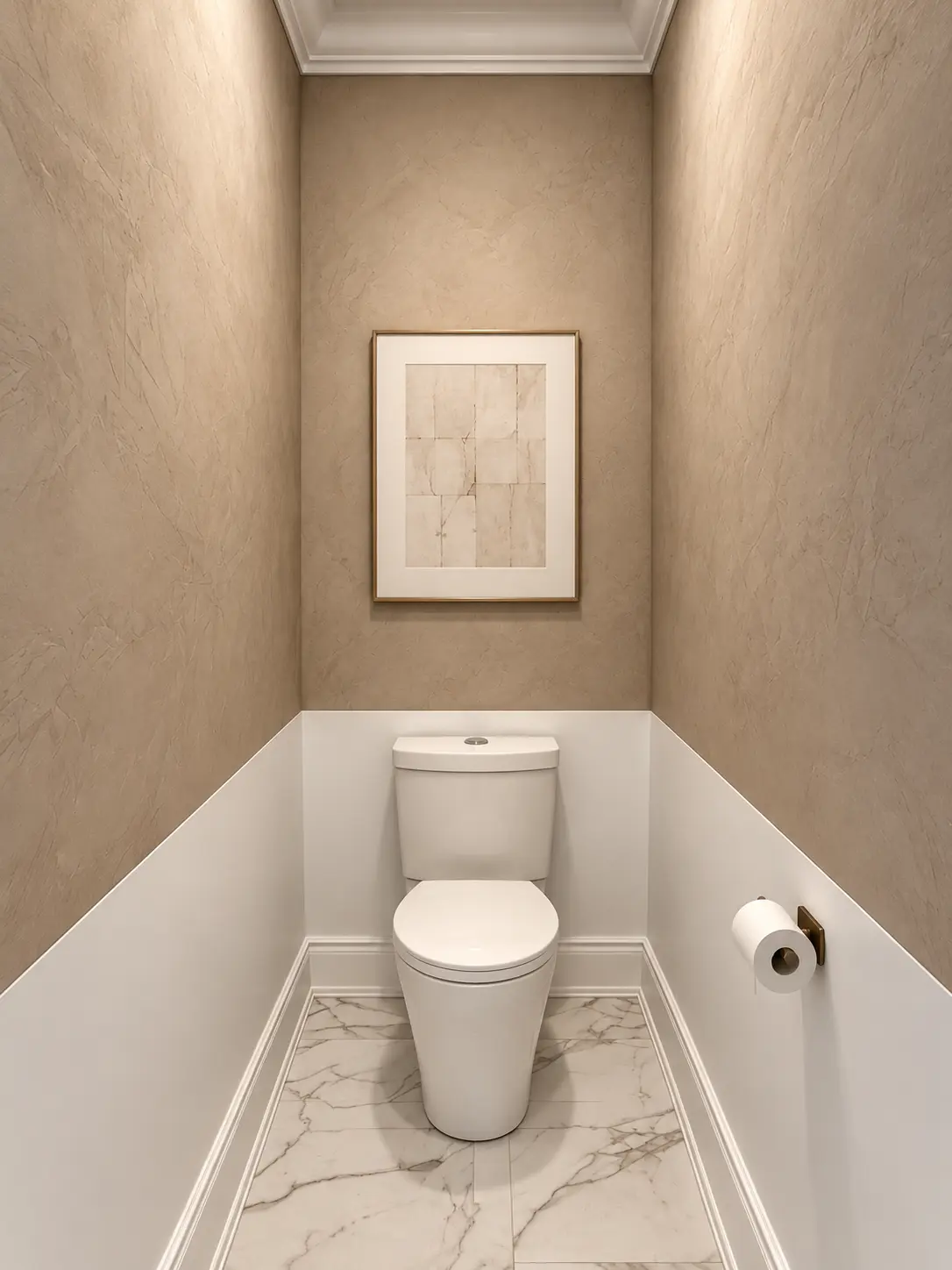
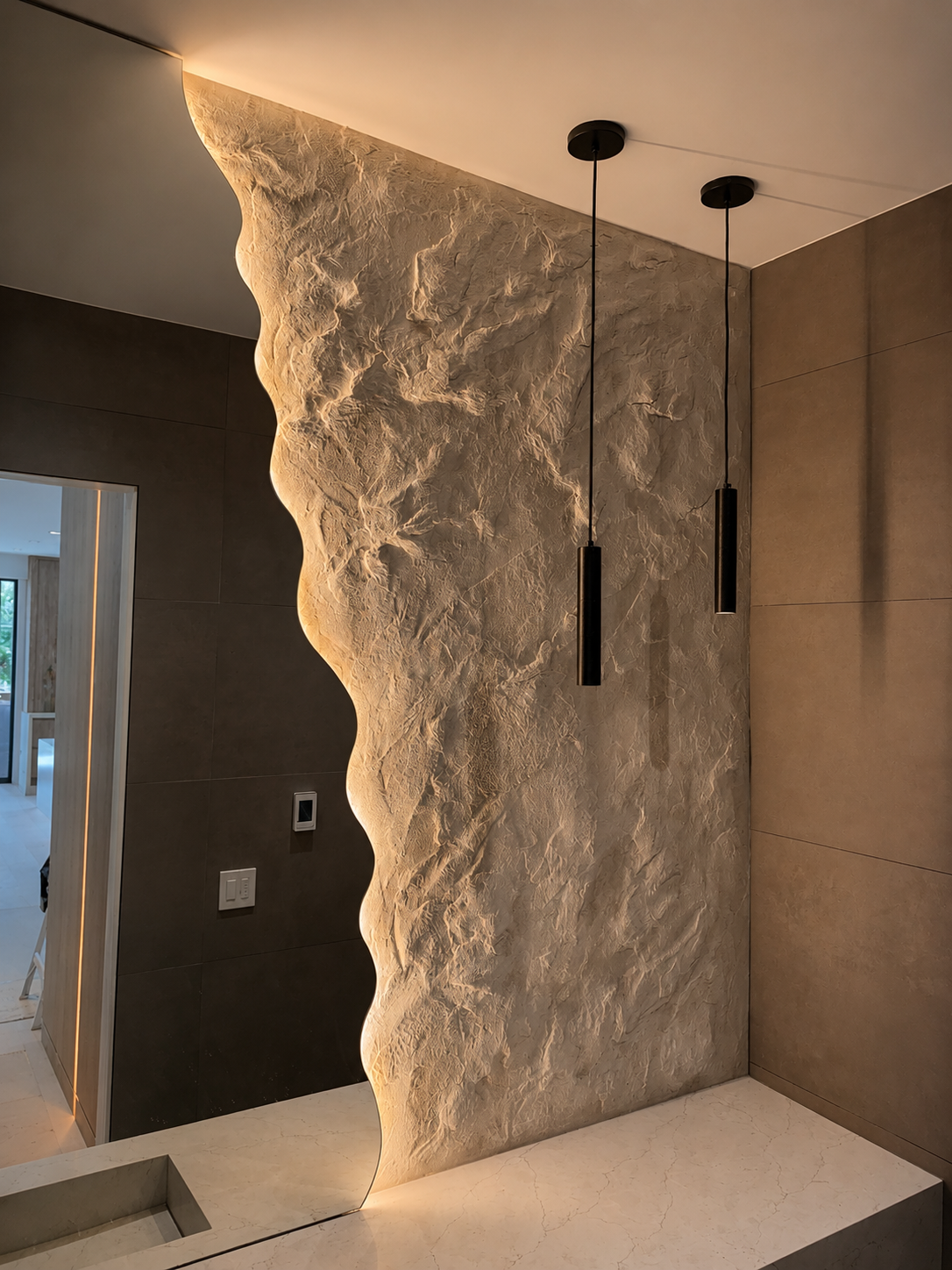
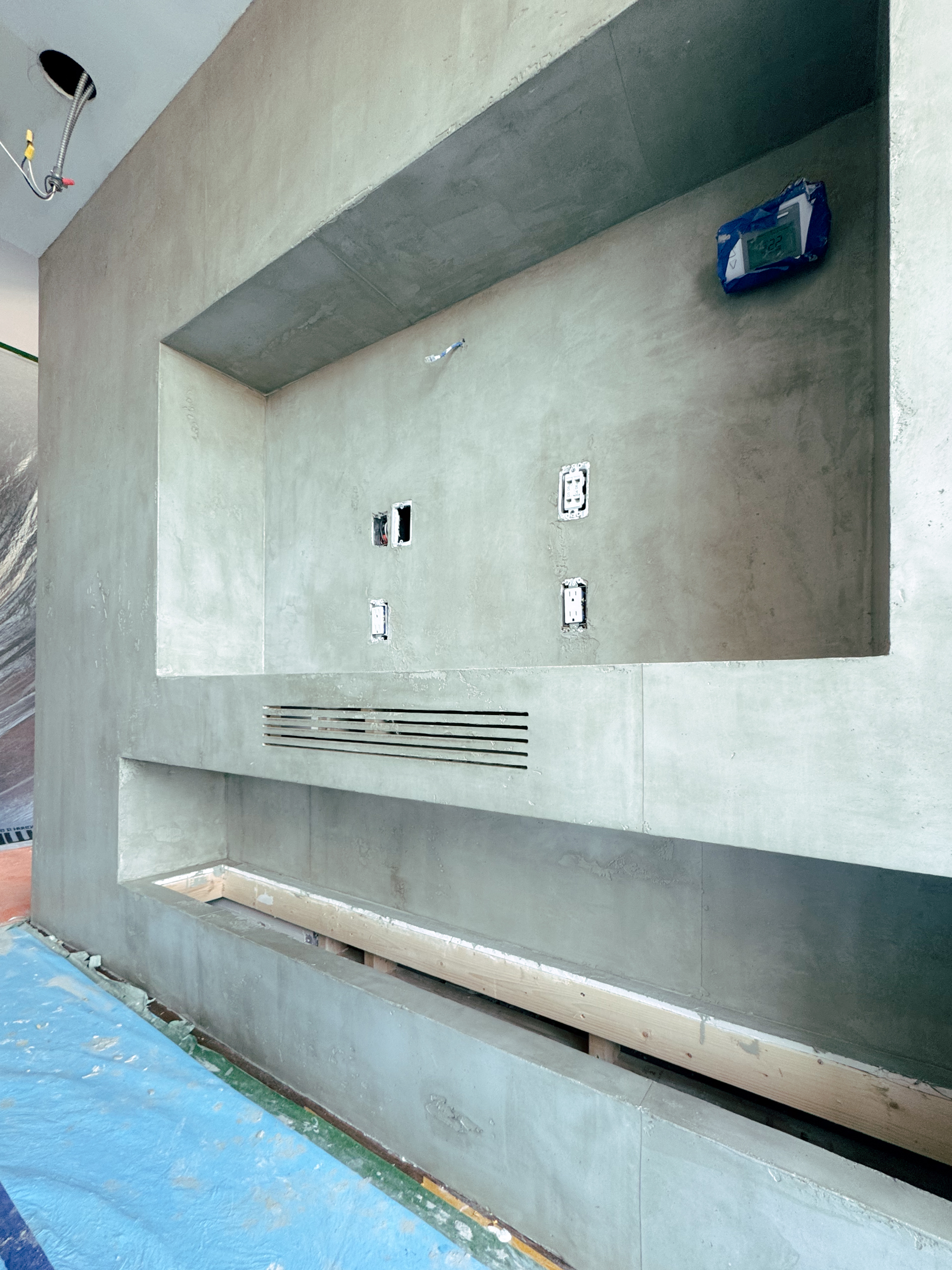
Alternatives to textured wall paint: limewash, Venetian plaster, Roman clay, rock effect and concrete effect.

Charcoal Venetian plaster gives this Forest Hill wall a deep, softly varied surface.
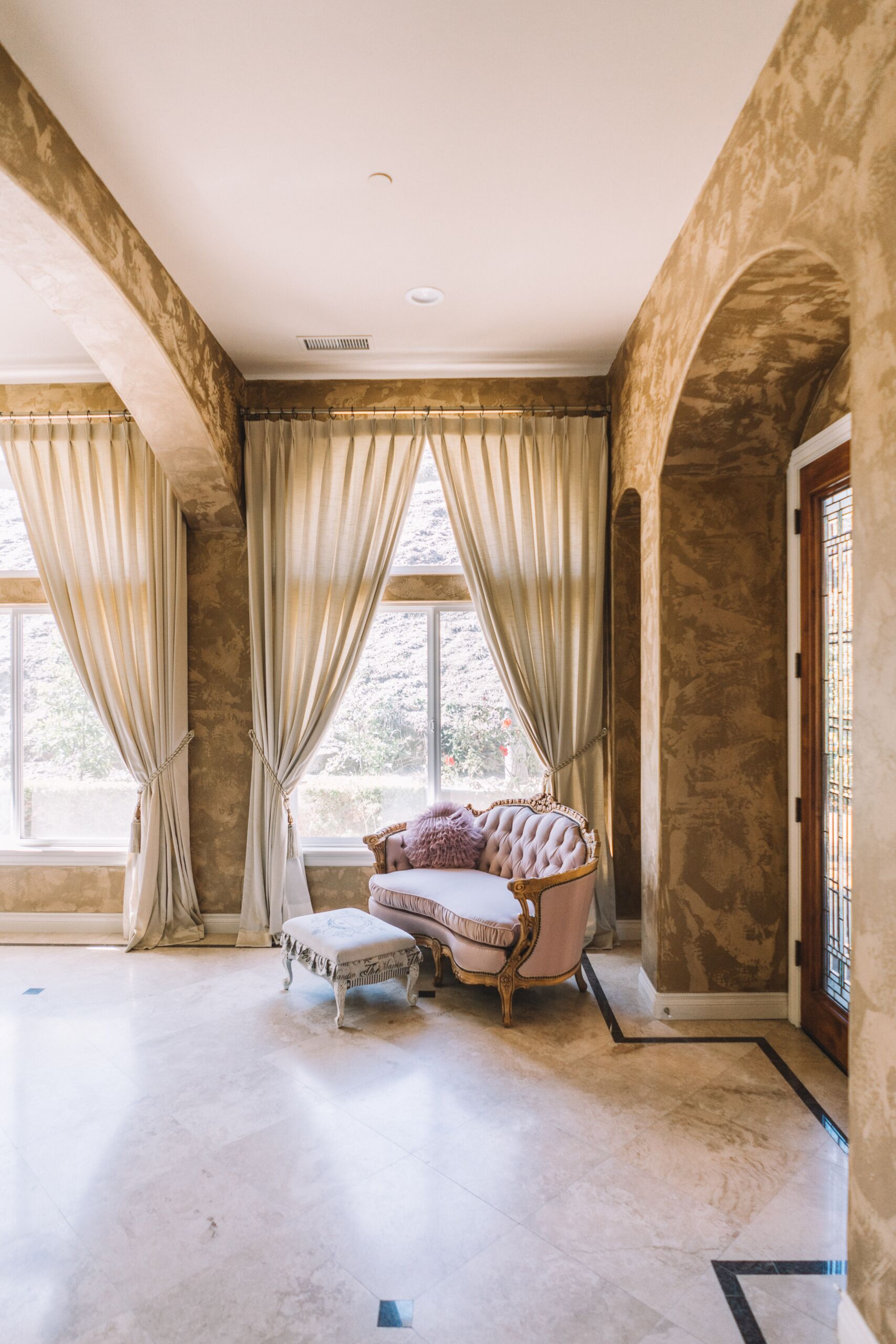
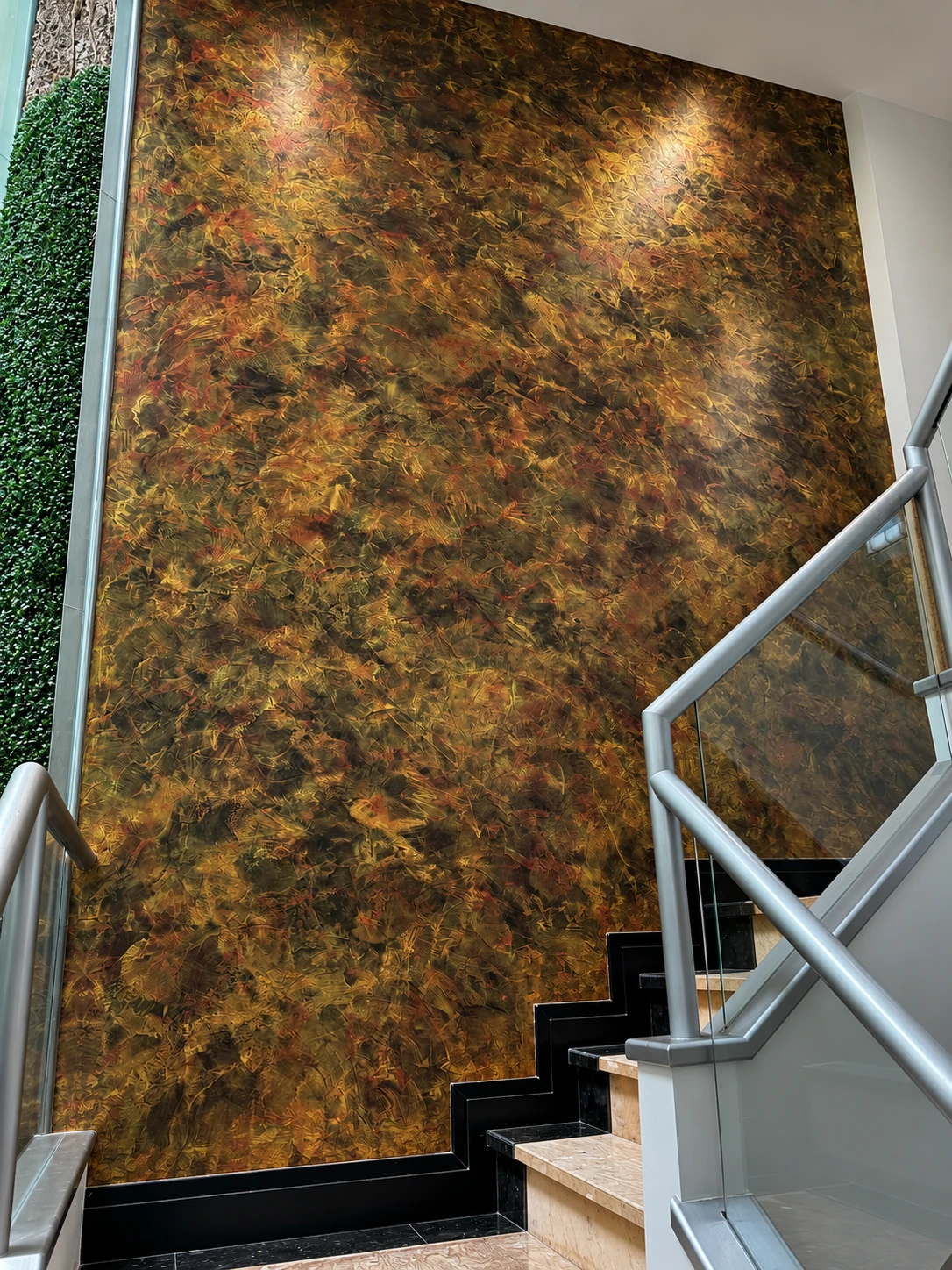
Gold Venetian plaster catches the light across this foyer wall.
Where Texture Works Best
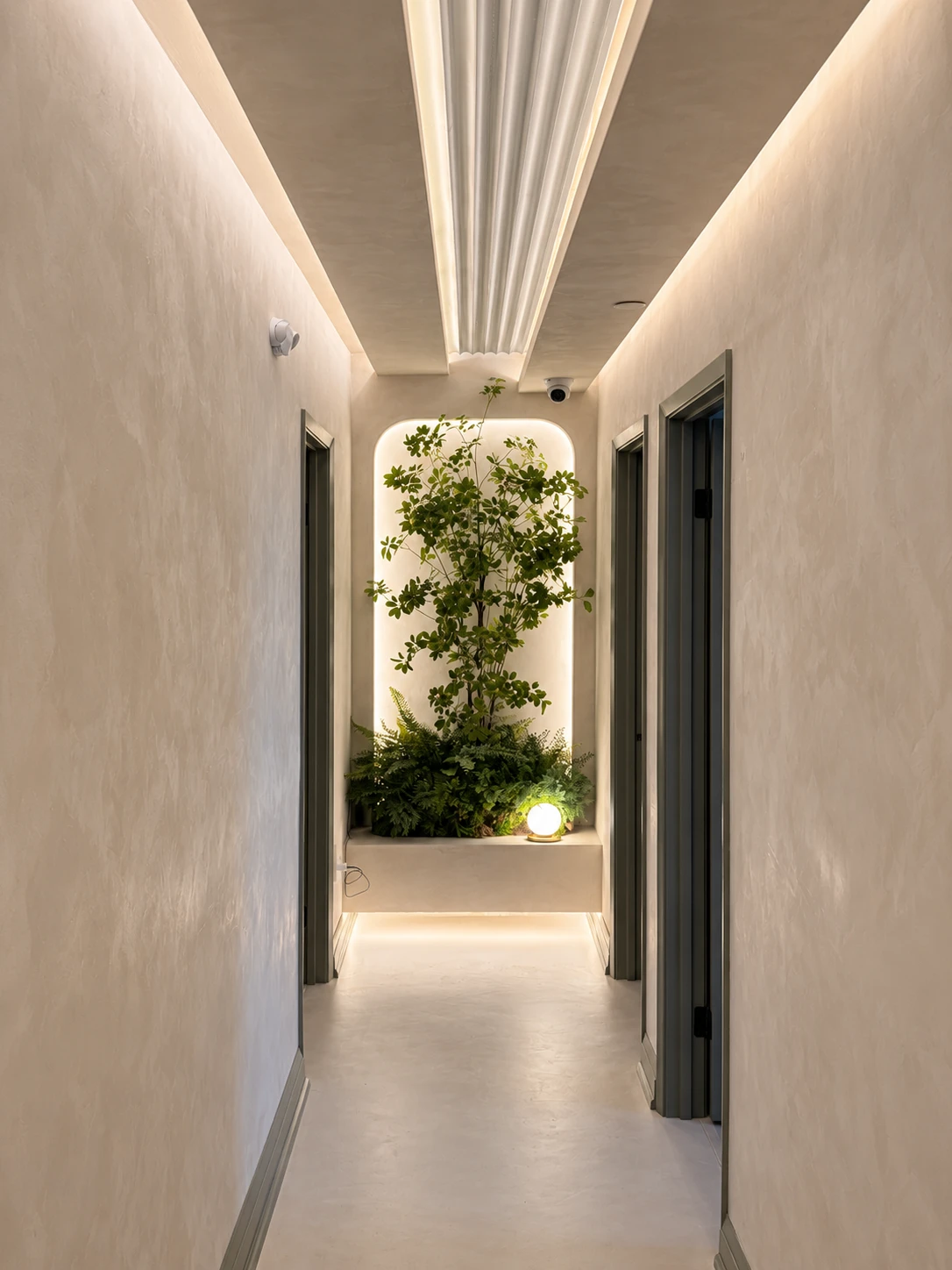
A staircase wall can reveal a finish slowly as you walk past it. In a dining room, plaster can give a single colour more depth; on a fireplace wall, a stronger mineral or metallic pattern can become the focal point. The photographs here show how texture shifts with the room and its lighting.
The finish should support the architecture and the materials around it. For a wider view of the options, explore our decorative wall finishes. For a fireplace-specific example, see our Venetian plaster fireplace work.
A close view of the finished velvet plaster railing and its soft movement in the light.

Metallic gold accents catch the light across a Venetian plaster café wall.
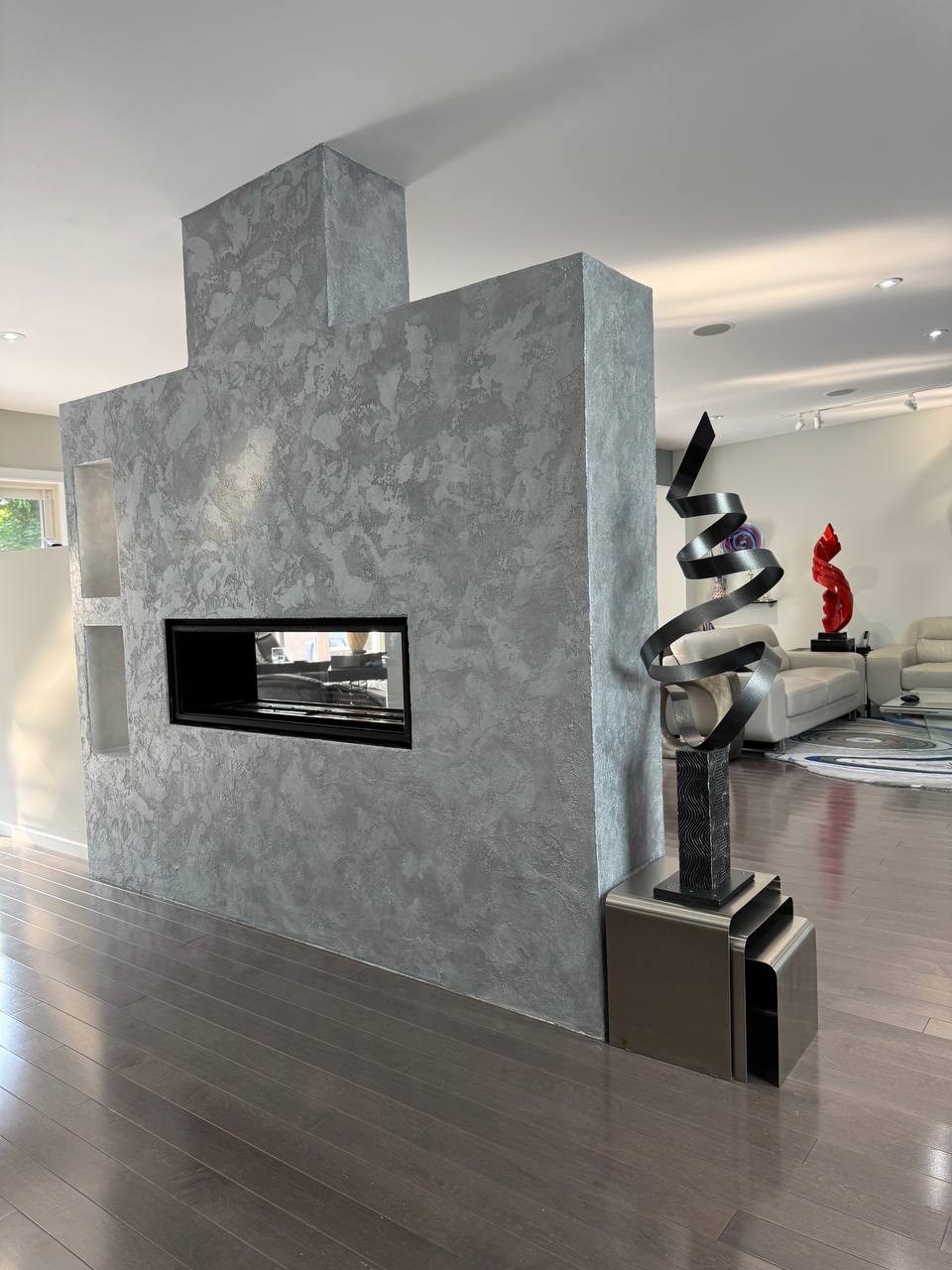
Silver metallic Venetian plaster gives this Toronto fireplace wall a softly reflective finish.
Choosing a Finish for Your Room
We begin with the wall itself and the look you want it to carry. Existing coatings, substrate condition, edges and transitions all affect preparation. We then compare colour and sheen through samples in the room’s own light before settling on the application.
Texture may soften the appearance of minor unevenness, but loose paint, cracks and an unstable substrate still need assessment and suitable preparation. If you later want a smooth wall, changing the finish can require more than repainting. A local repair or touch-up may also remain visible, depending on the material and pattern.
Care depends on the selected material and protective finish. We review the relevant cleaning guidance with the sample rather than promising the same method for every textured wall. The scope and cost also depend on wall condition, access, edge details, sampling and the chosen finish.
Textured Wall Finish FAQs
For Toronto-area homes, the choice is often about how a finish sits beside the room’s millwork, stone, textiles and lighting. Share photographs, approximate dimensions and a few finish references so we can discuss a sample that belongs in your space.
Talk Through Your Wall Finish
If you are weighing painted texture against plaster, share the wall dimensions, room photos and a few finish references through the form below. We can discuss a suitable sample and application approach for your project.
Decorative Finish Projects in Toronto and the GTA
| Toronto & GTA | |
|---|---|
|
|