

Microcement Contractors Toronto2026-10-22T12:31:00-04:00

Microcement Contractors in Toronto & the GTA

Microcement is a hand-applied finish built in thin layers to create a continuous, tactile surface without a visible grout grid. For suitable walls, floors, bathrooms and architectural features across Toronto and the GTA, we plan the system around the existing substrate, room use, light, adjoining materials, and the colour, texture and sheen the space calls for.

Hand-applied microcement project · Toronto and GTA

Microcement Contractors in Toronto & the GTA

Microcement Contractors in Toronto & the GTA

Microcement is a hand-applied finish built in thin layers to create a continuous, tactile surface without a visible grout grid. For suitable walls, floors, bathrooms and architectural features across Toronto and the GTA, we plan the system around the existing substrate, room use, light, adjoining materials, and the colour, texture and sheen the space calls for.

A view from the entrance of a high-end Yorkville, Toronto boutique, showcasing a seamless, deep emerald green microcement floor that leads towards custom brass fixtures and walnut millwork.
Microcement Floors
light gray microcement fireplace tv wall finish application in living room house
Microcement Fireplace
Soft grey microcement range hood in kleinburg, toronto
Microcement Range Hood
Shower interior featuring walls, floors, and ceiling all finished in a smooth beige microcement for a sleek, modern look in a house in Annex, Toronto.
Microcement Bathrooms & Showers
A kitchen counter and sink finished in microcement in an interior of a house in the beaches, Toronto.
Microcement Countertop & Backsplash
Decorative architectural curved media unit finished in soft organic microcement
Microcement Walls

Microcement for Homes & Selected Commercial Interiors

Microcement for Homes & Selected Commercial Interiors

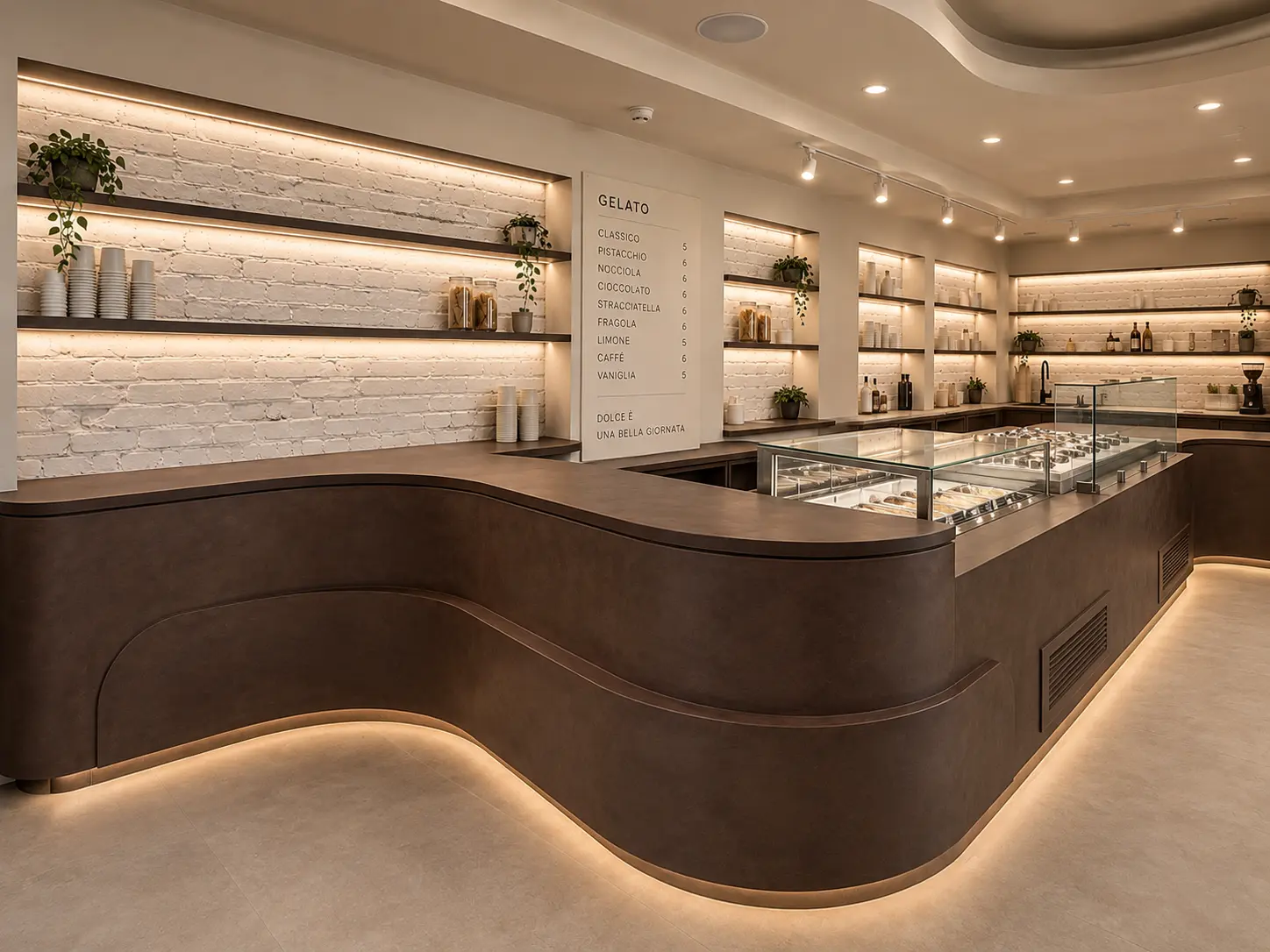
Microcement projects are planned for homes and selected commercial interiors, including boutiques, wellness spaces, cafés and reception areas. Each is assessed around the existing substrate, use, adjacent materials and the finish direction.

See recent microcement projects across Toronto and the GTA. Explore our Microcement Projects.

How We Plan a Microcement Finish

The finished appearance depends on decisions made before the first coat: the surface beneath it, the sequence of preparation, and the intended level of movement, texture and sheen.

  • Surface assessment: We assess movement, condition and intended use before recommending a system.

  • Continuous visual language: The detail plan considers transitions, edges, fixtures and adjacent materials.

  • Wet-area suitability: Bathrooms and showers are considered only where the complete substrate, preparation and sealer system suit the intended use.

  • Colour, texture and sheen: We review the desired movement, tone and surface character with the room’s light and surrounding materials.

  • Sealer and care: The selected sealer and care approach are matched to the surface and intended use.

  • Renovation context: Where the existing surface is suitable, preparation can be planned around it.

  • Selected applications: We review walls, floors, bathrooms and built details case by case.

Microcement Over Existing Tile

Microcement can sometimes be specified over existing tile when the tile is stable, the substrate is sound, and the height, transitions and wet-area details can be resolved. We check cracks, movement, bond, grout lines, moisture and clearances before recommending a preparation and coating system. If the tile is unsuitable, the substrate work is planned first.

What Affects a Microcement Quote?

A microcement quote is prepared around the actual surface and the system it calls for. We confirm the scope once the surface, preparation and finish direction are understood.

Factors that affect the estimate include:

  • Substrate and repairs: Condition, movement, levels, moisture and any required preparation.
  • Surface and detail complexity: Areas such as stairs, shower niches, range hoods and built-ins require their own detail plan.
  • Access and coordination: Room access, sequencing with other trades and protection of adjacent finishes.
  • Finish and protection: The selected texture, colour direction and protective system for the intended use.

Speak To Shayan 416 (606) 8060 or Request A Quote

How Our Microcement Installation Process Works

We follow a clear sequence for design direction, surface assessment, preparation, hand application and final protection.

1. Design Consultation

We begin with the atmosphere you want to create—quiet and mineral, softly clouded, architectural or more expressive—then consider colour, texture, sheen and how the surface will be used.

2. Substrate Assessment

Every project starts with the surface beneath the finish. We assess its condition, stability and construction before confirming whether repair, reinforcement or other preparation is needed.

3. Preparation Strategy

The preparation is tailored to the substrate and the demands of the room. Some surfaces can be retained; others need additional work to create a sturdy foundation for the finish.

4. Hand-Applied Finish

The finish is built by hand to create the chosen degree of movement and texture. This is where each installation develops its individual, crafted character.

5. Curing

The completed layers are given the appropriate time to settle and cure before the protective finish is applied.

6. Sealing and Final Review

The selected sealer and care approach are confirmed for the surface, room use and project conditions.

Custom Media Wall Microcement Installation for a Seamless Look in Kleinburg

FAQs: Microcement in Toronto

Is microcement good for bathrooms and wet areas?2026-09-08T13:15:57-04:00

Microcement can be used in bathrooms and other wet areas when the complete system—including the substrate, preparation, waterproofing where required, microcement layers and compatible sealer—is correctly specified and installed. Suitability depends on the existing surface and how the area will be used, so we assess it before recommending a system.

Is microcement cheaper than tiling?2026-09-08T13:15:57-04:00

Not necessarily. The comparison depends on demolition, the condition of the existing surface, the tile being considered, the geometry of the room and the desired finish. Microcement may reduce demolition when the substrate is sound and suitable, but its value is primarily the seamless, hand-applied result rather than being the least expensive option.

Is it expensive to microcement a bathroom?2026-09-08T13:15:57-04:00

The investment varies with the size of the room, substrate condition, preparation, wet-area requirements, architectural details, chosen finish and sealing system. We assess those factors before preparing a project-specific quotation rather than relying on a generic square-foot figure.

Does microcement crack or go mouldy easily?2026-09-08T13:15:57-04:00

Like any applied finish, performance begins with the structure beneath it. Existing movement or cracking in an unstable substrate can transfer through a new surface, which is why assessment and preparation matter. A correctly installed and sealed, joint-free surface is straightforward to maintain, although ventilation and normal cleaning remain important in damp rooms.

Can microcement be applied directly over existing tiles or drywall?2026-09-08T13:15:57-04:00

Microcement can often be installed over existing tile or suitably prepared drywall, but it is not automatic. The substrate must be sound, stable and appropriate for the intended use. Some projects need repairs, reinforcement, levelling or a different build-up before the decorative finish can begin.

What is the lifespan of microcement?2026-09-08T13:15:58-04:00

Its service life depends on the substrate, preparation, system specification, traffic, cleaning and maintenance. Rather than promising a universal number, we recommend periodic inspection and resealing when the surface and its use call for it.

Can I DIY a microcement bathroom?2026-09-08T13:15:58-04:00

Bathrooms and showers are technically demanding because the decorative finish is only one part of the wet-area assembly. We recommend professional assessment and installation for these spaces. Professional kits may suit selected smaller projects, but wet rooms require careful substrate and waterproofing decisions.

What is the difference between Microcement, Epoxy, and Tadelakt?2026-09-08T13:15:58-04:00

Microcement is a cement-based, hand-applied finish that can be used across many floors, walls and architectural features when the system is correctly specified. Epoxy is resin-based and has a different visual and tactile character. Tadelakt is a traditional lime plaster with its own softly polished appearance and maintenance requirements. The right choice depends on the substrate, room, use and desired aesthetic.

Why has microcement become so popular in bathroom renovations recently?2026-09-08T13:15:58-04:00

Microcement creates a continuous surface without visually interrupting grout lines, while still allowing variation from the hand of the applicator. It works particularly well with curved forms, niches and integrated details, making it appealing for calm, contemporary bathrooms. Its suitability still depends on the substrate, wet-area construction and the selected sealing system.

What colour options are available for microcement for my project?2026-09-08T13:15:58-04:00

Microcement is available in a broad range of colours, from warm mineral neutrals and soft sands to architectural greys and deeper statement tones. During consultation, we consider the surrounding stone, wood, lighting and cabinetry so the finish feels integrated with the room rather than selected in isolation.

Get A Free Quote

Create a seamless, tactile surface shaped around your space. Speak with our Toronto microcement team about the design, substrate and intended use of your project.

Tel: 416-606-8060

Email: shayan@chromatist.com

Project type:
Go to Top