A Limestone Look for the Kitchen’s Architectural Anchor
A limestone range hood brings a quiet sense of weight to a kitchen: soft colour, subtle grain and a surface that catches light without becoming glossy. The appeal lies in how the hood belongs to the room, sitting comfortably beside cabinetry, worktops and the cooking area.
A limestone-look range hood uses a decorative plaster finish on a suitable enclosure to suggest the colour and texture of limestone. It offers a hand-applied way to explore a stone-inspired surface; the enclosure is not carved or assembled from solid limestone.
The examples below show three related Venetian plaster treatments: pearlescent plaster in Kleinburg, untinted plaster with a matte sealer in Forest Hill, and soft beige plaster with a two-part sealer in Collingwood. Each illustrates a different relationship between colour, burnishing and the finished surface.
What Makes a Range Hood Look Like Limestone?
The effect depends on more than a beige colour. Undertone, texture, sheen and the shape of the enclosure work together. A sample should be considered beside the kitchen’s actual materials, with daylight and task lighting both in view.
| Design detail | What to consider | Why it matters |
|---|---|---|
| Undertone | Warm white, cream or sandy neutral | Relates the hood to cabinetry and stone. |
| Texture | Fine grain or more visible movement | Controls how the surface catches light. |
| Sheen | The sample’s appearance in different light | Changes how softly the hood reads. |
| Edges | Curves, returns and transitions | Gives the enclosure a coherent architectural shape. |
| Construction and preparation | A suitable enclosure, stable joints and carefully prepared transitions | A decorative finish follows the base beneath it; solid limestone requires a different fabrication approach. |
| Care | The specified plaster and protective treatment | A matte or burnished appearance alone does not establish grease resistance or a cleaning method. |
| Cost drivers | Size, shape, access, preparation and sample development | The quote should reflect the enclosure and finish system rather than appearance alone. |
Choosing Colour and Texture in the Room
A warm white can appear creamy beside oak and cooler against a grey worktop. A sandy neutral may feel grounded in a bright kitchen but noticeably deeper beneath evening lighting. The right sample is the one that sits naturally within the whole palette.
Texture needs the same care. Fine, restrained movement can let a curved hood read as one sculptural form; more visible grain gives the surface a stronger stone-like character. We would resolve that balance through samples before settling on the finish direction.
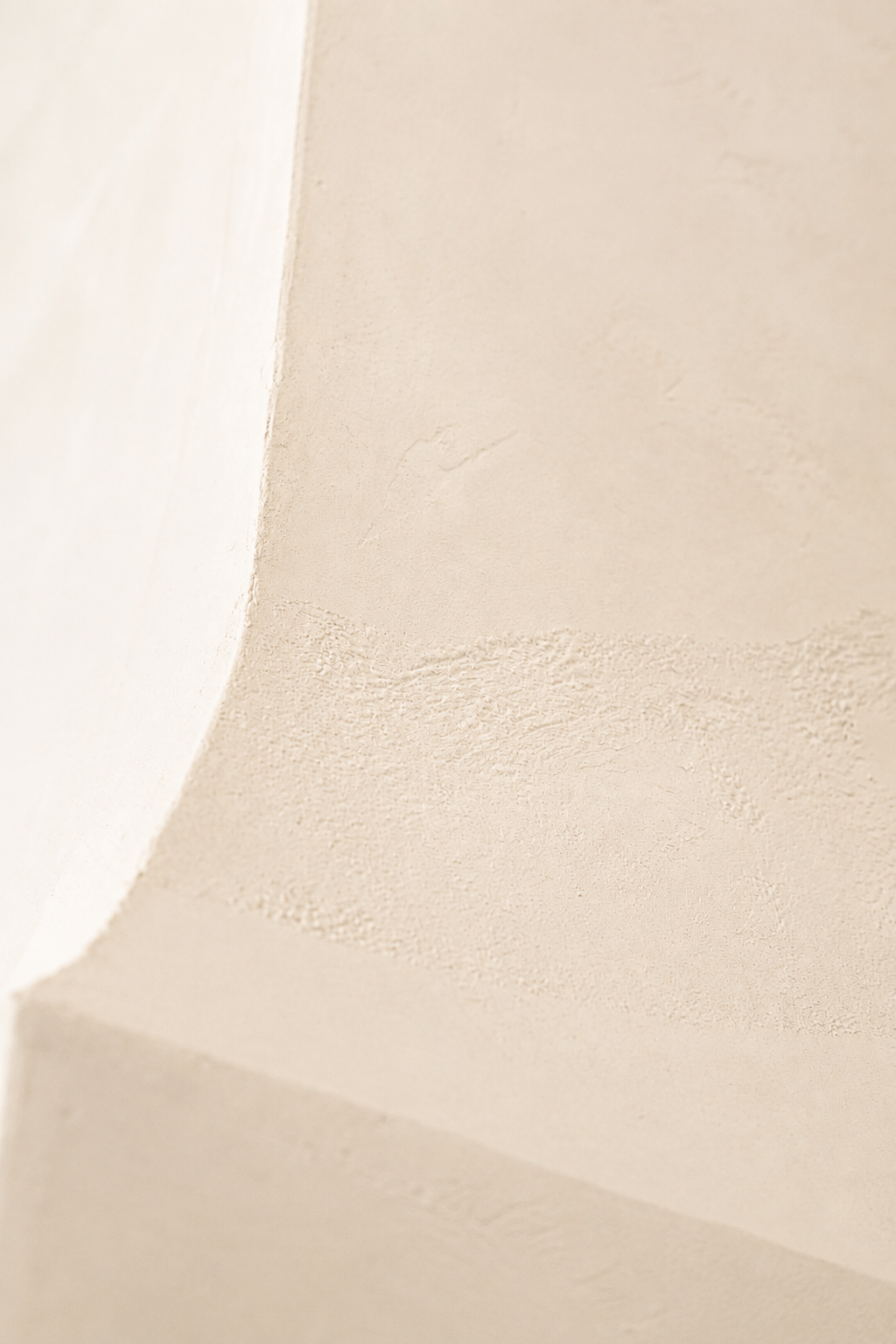
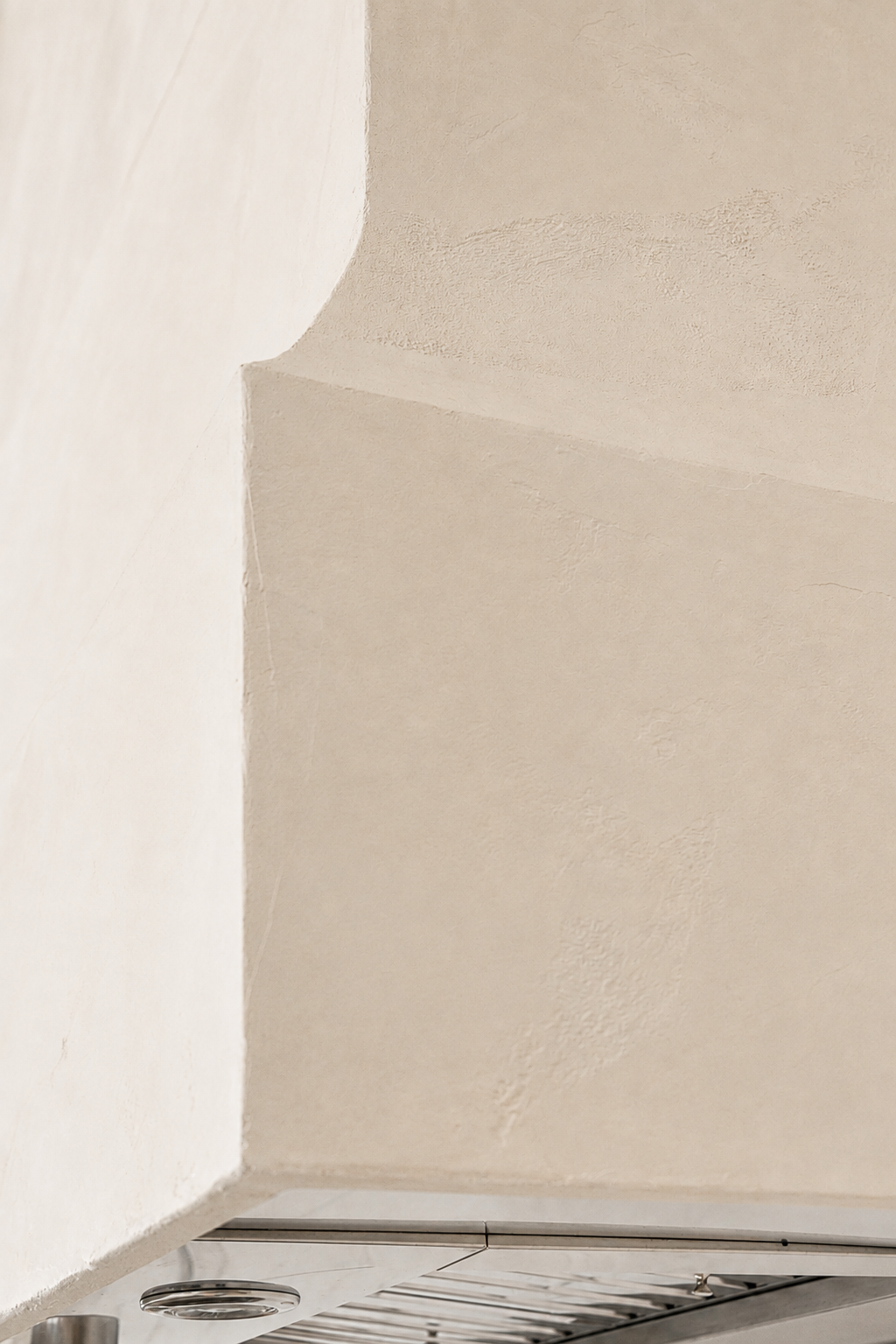
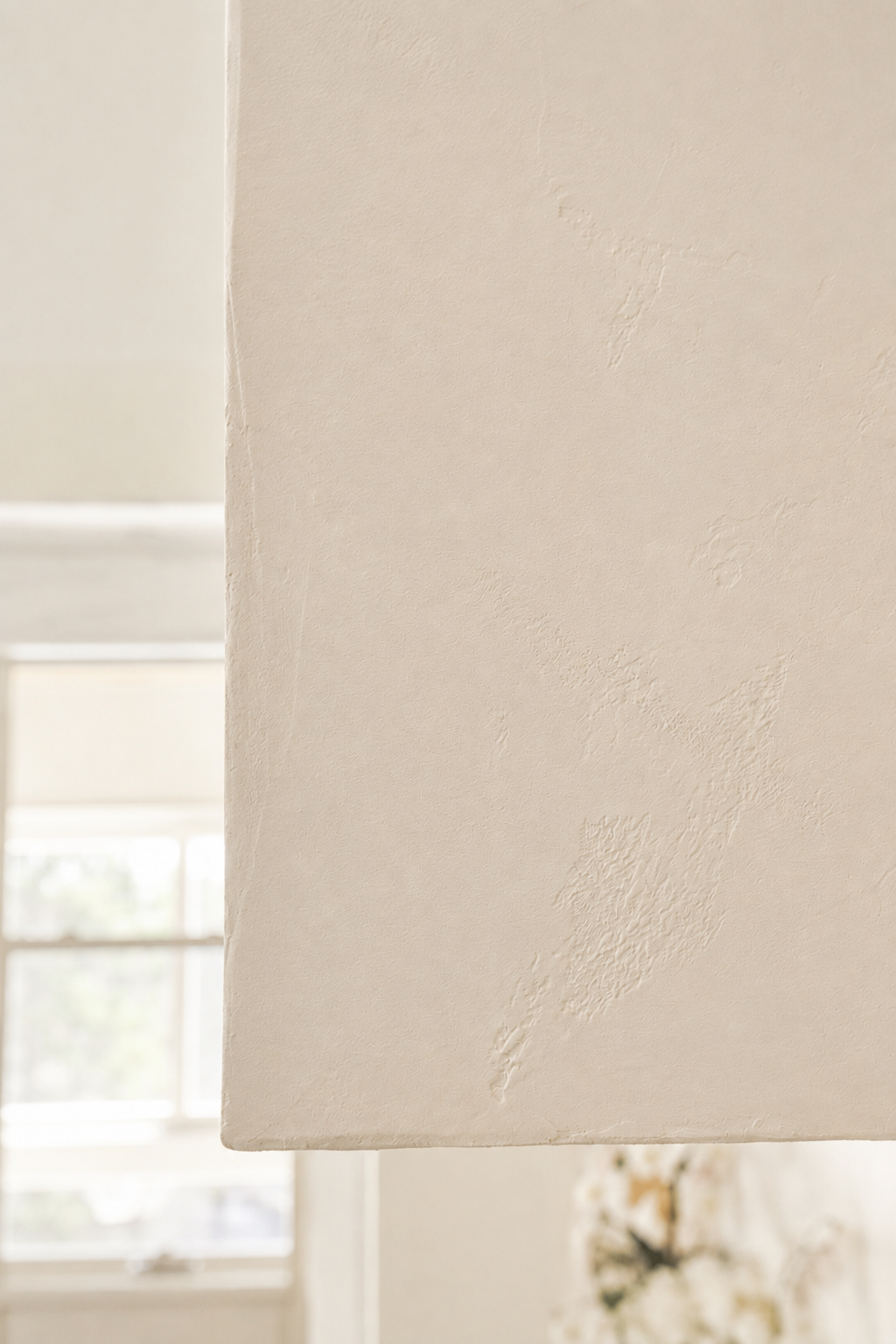
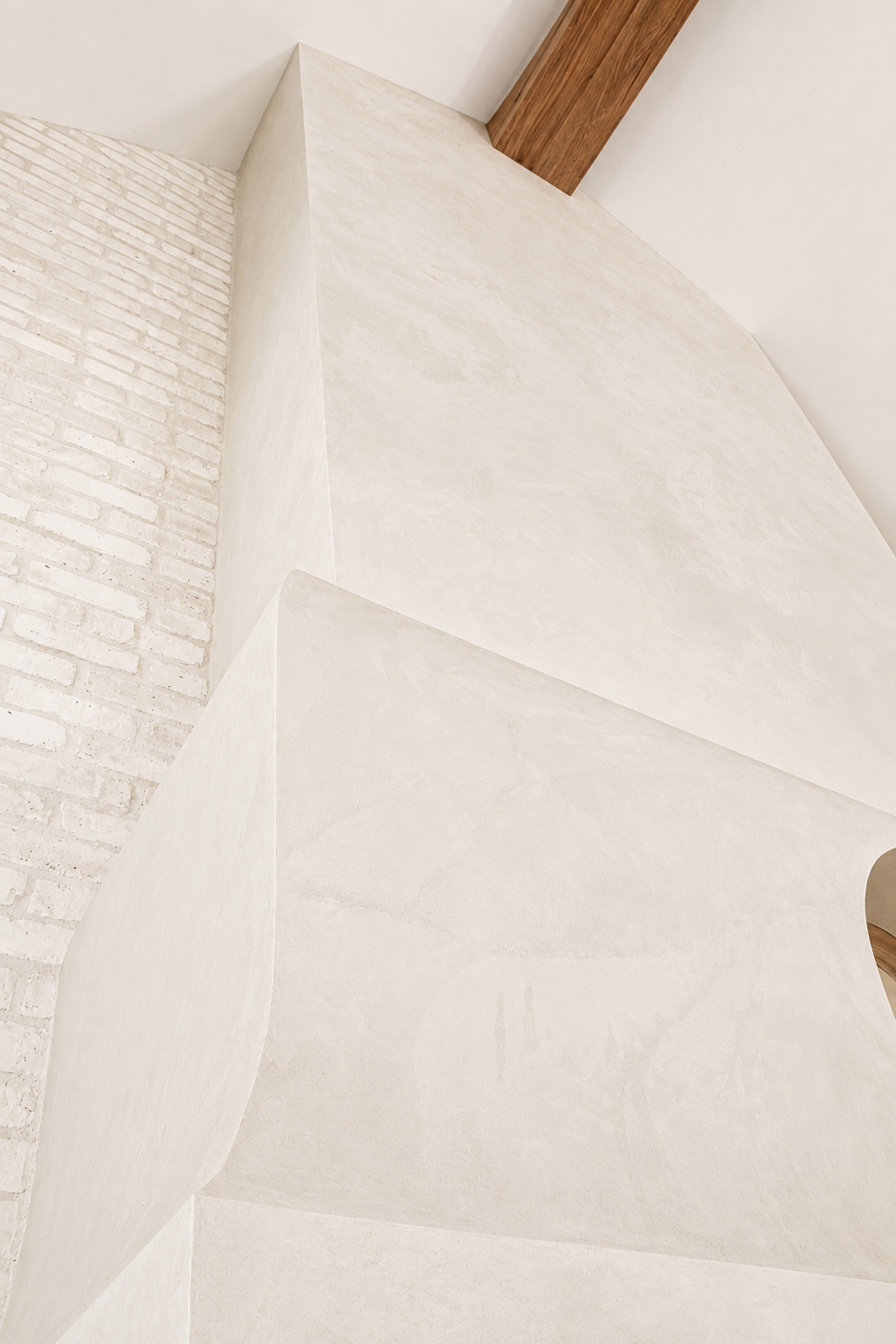
Kleinburg: this tall range hood draws the eye toward the vaulted ceiling. We used pearlescent Venetian plaster, half-burnished for a subtle shimmer. The close views show its pale surface and curved transitions, giving the hood a quiet, sculptural presence in the kitchen.
A Stone Look, Hand Applied
A limestone-look finish describes an appearance, not a promise that the hood is made from solid limestone. Decorative plaster is applied to a prepared enclosure; natural-stone construction involves a different material and fabrication approach.
For the broader finish options, see our plaster range hood service. For further inspiration, explore our Venetian plaster range hood design ideas.
A close view of hand-trowelling across a curved range hood shows how the applicator develops the surface’s subtle texture and movement.
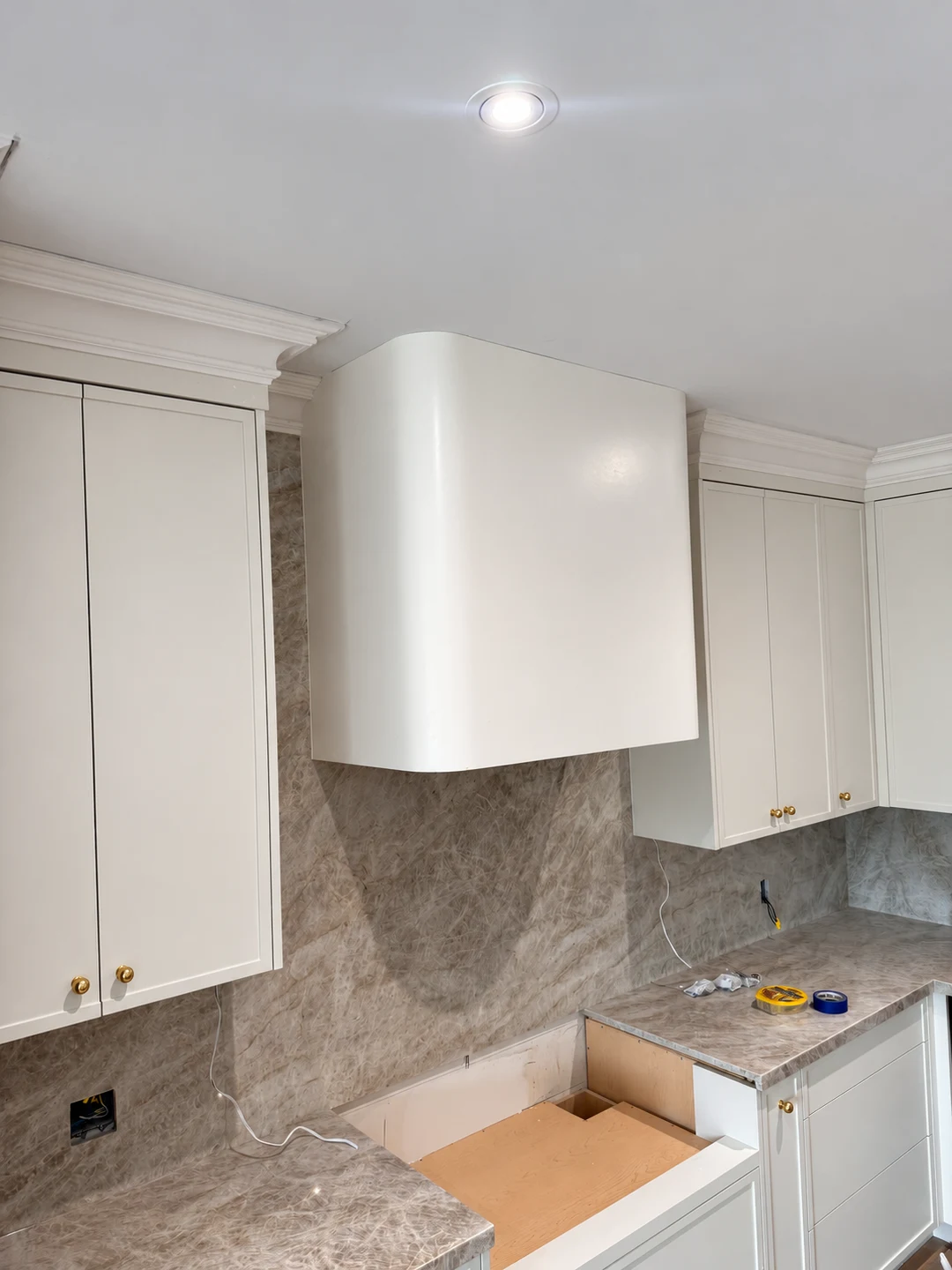
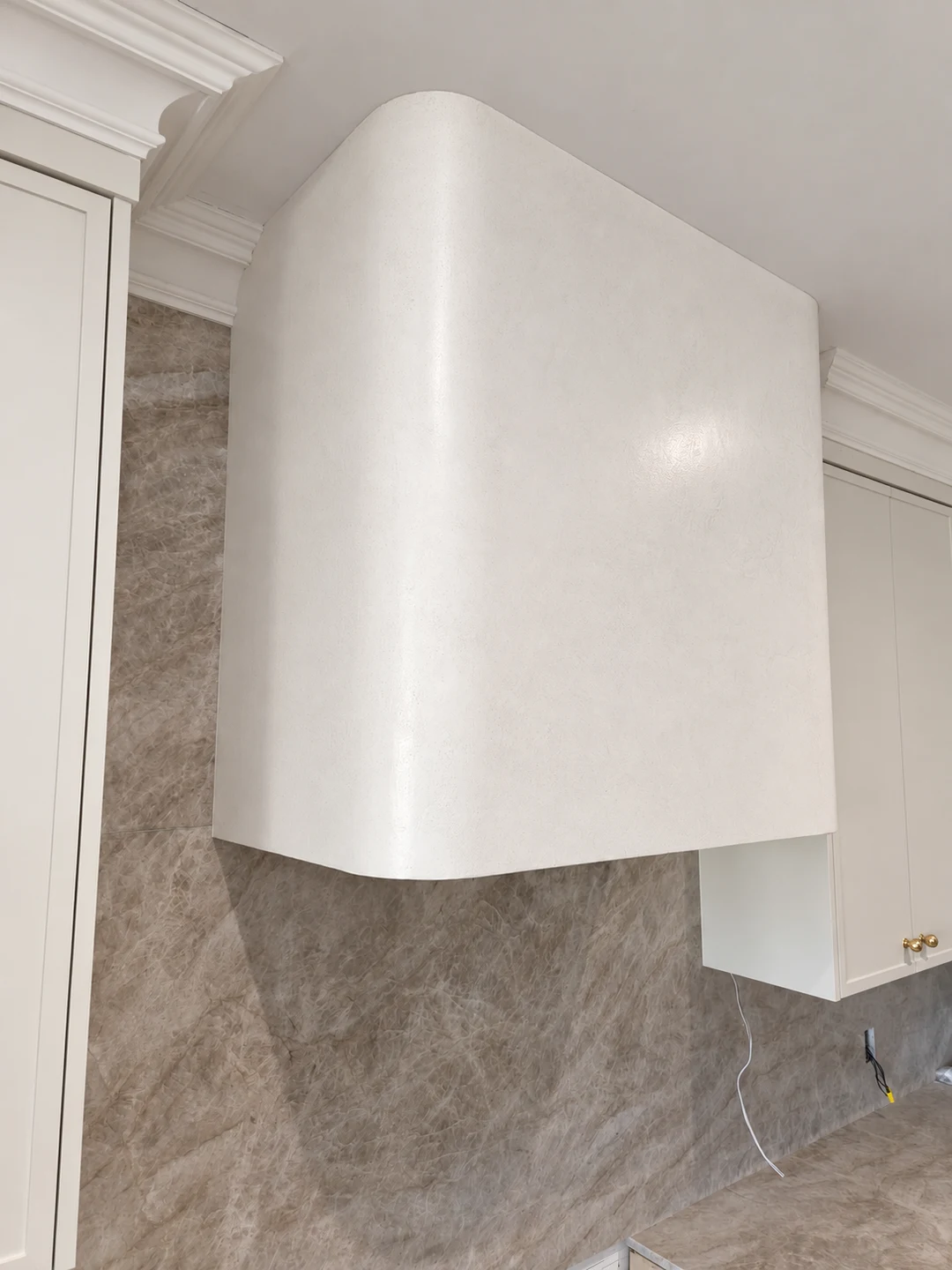
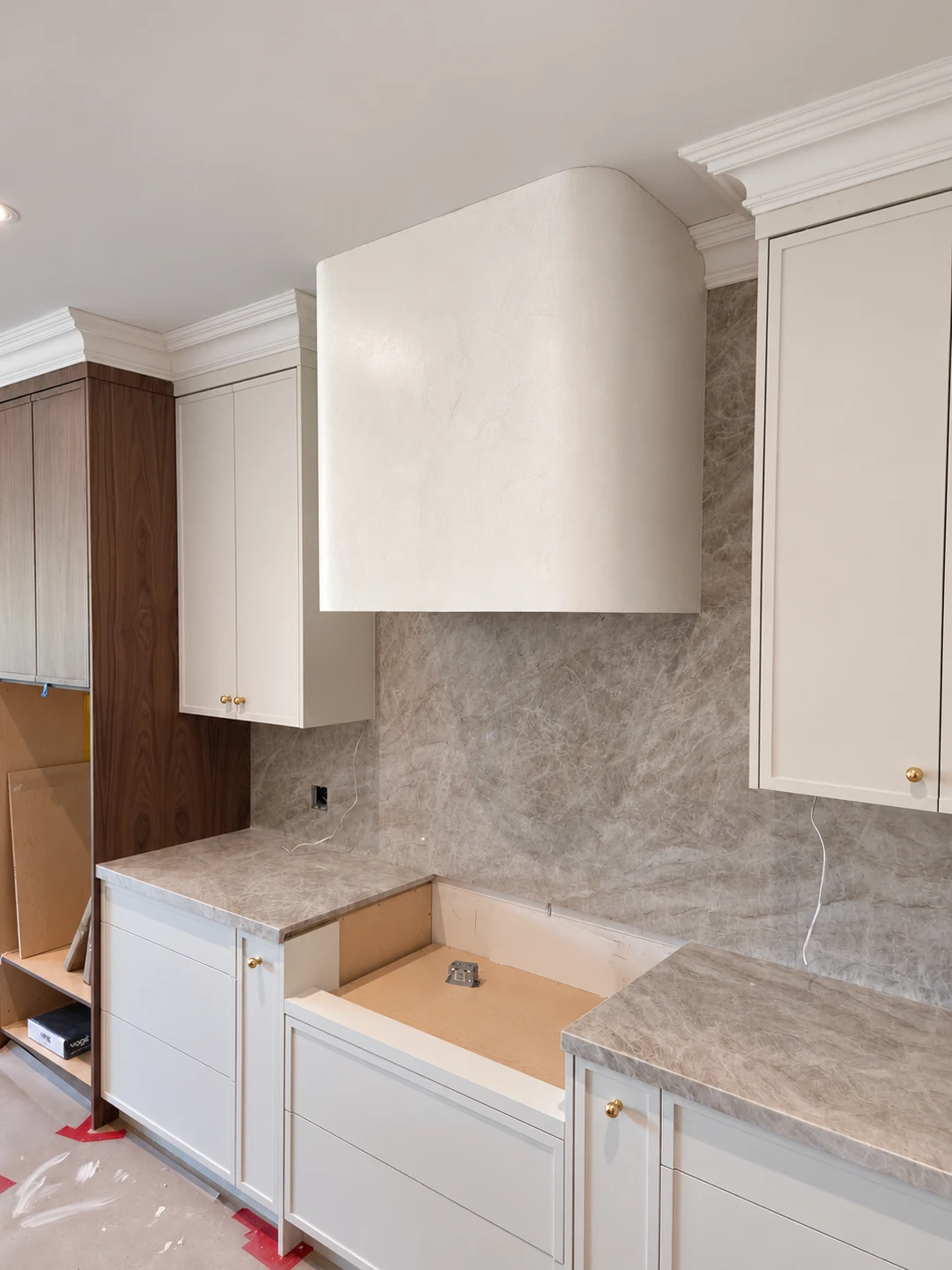
Forest Hill: we finished this softly curved range hood in untinted Venetian plaster, keeping the plaster’s natural colour. The surface was half-burnished and finished with a matte sealer. Beside white cabinetry and grey veined surfaces, its gentle tonal variation brings depth to the restrained kitchen palette.
Living With a Limestone-Look Finish
A kitchen hood is a working part of the room. The selected finish and any protective treatment should be reviewed for the enclosure’s conditions and the care it will need. A matte appearance alone does not establish stain resistance or washability.
Ask for care instructions for the exact system before choosing cleaning products. Manufacturer guidance varies by material and sealer; Vasari’s maintenance guidance, for example, treats different protective finishes separately. Use the guidance for your specified product and protective treatment.
What shapes the quote? Enclosure size and geometry, substrate condition, access, edge details, sample development and the chosen finish system all contribute. A useful starting brief includes photographs, approximate dimensions and the intended colour and texture.
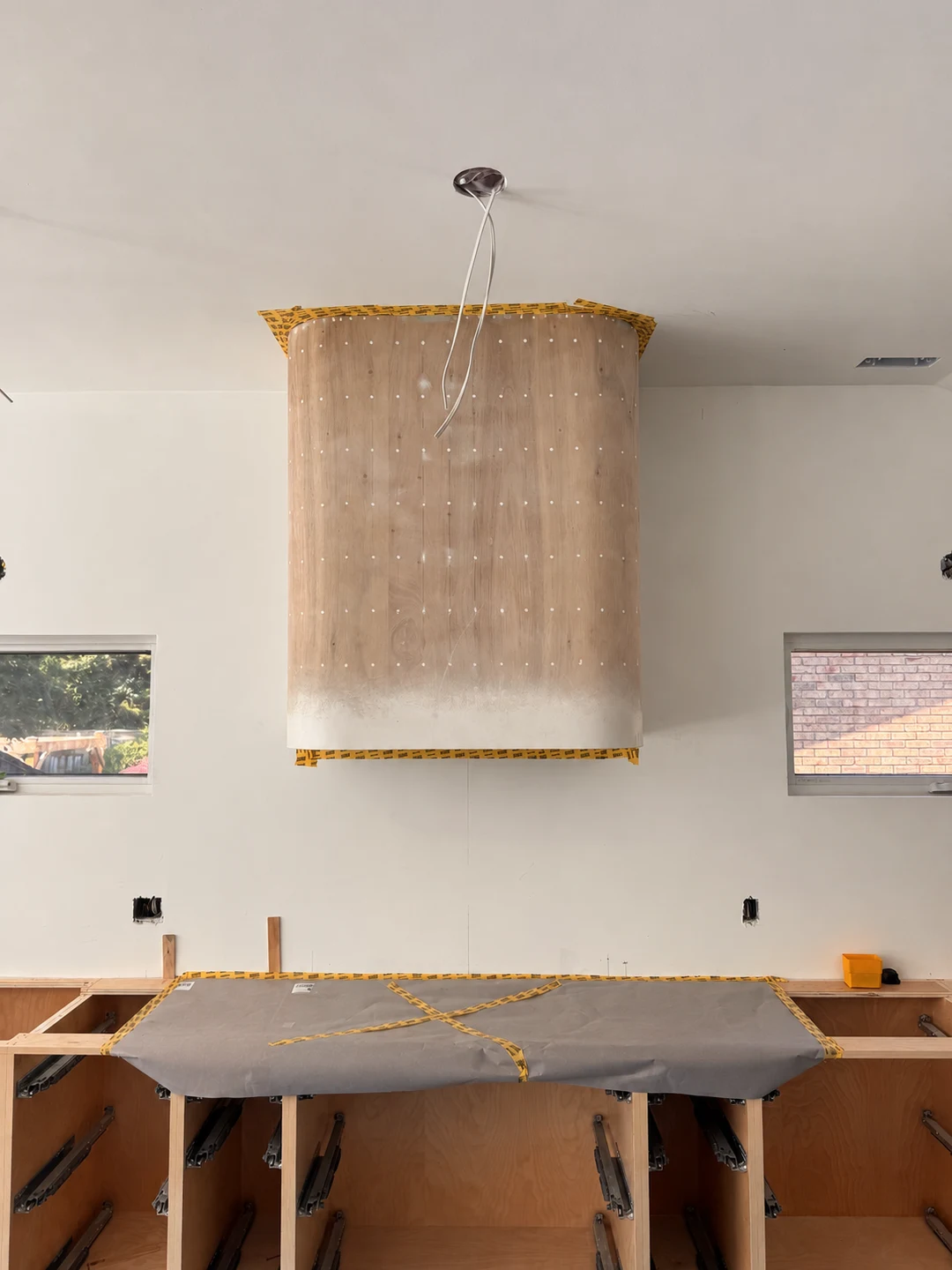
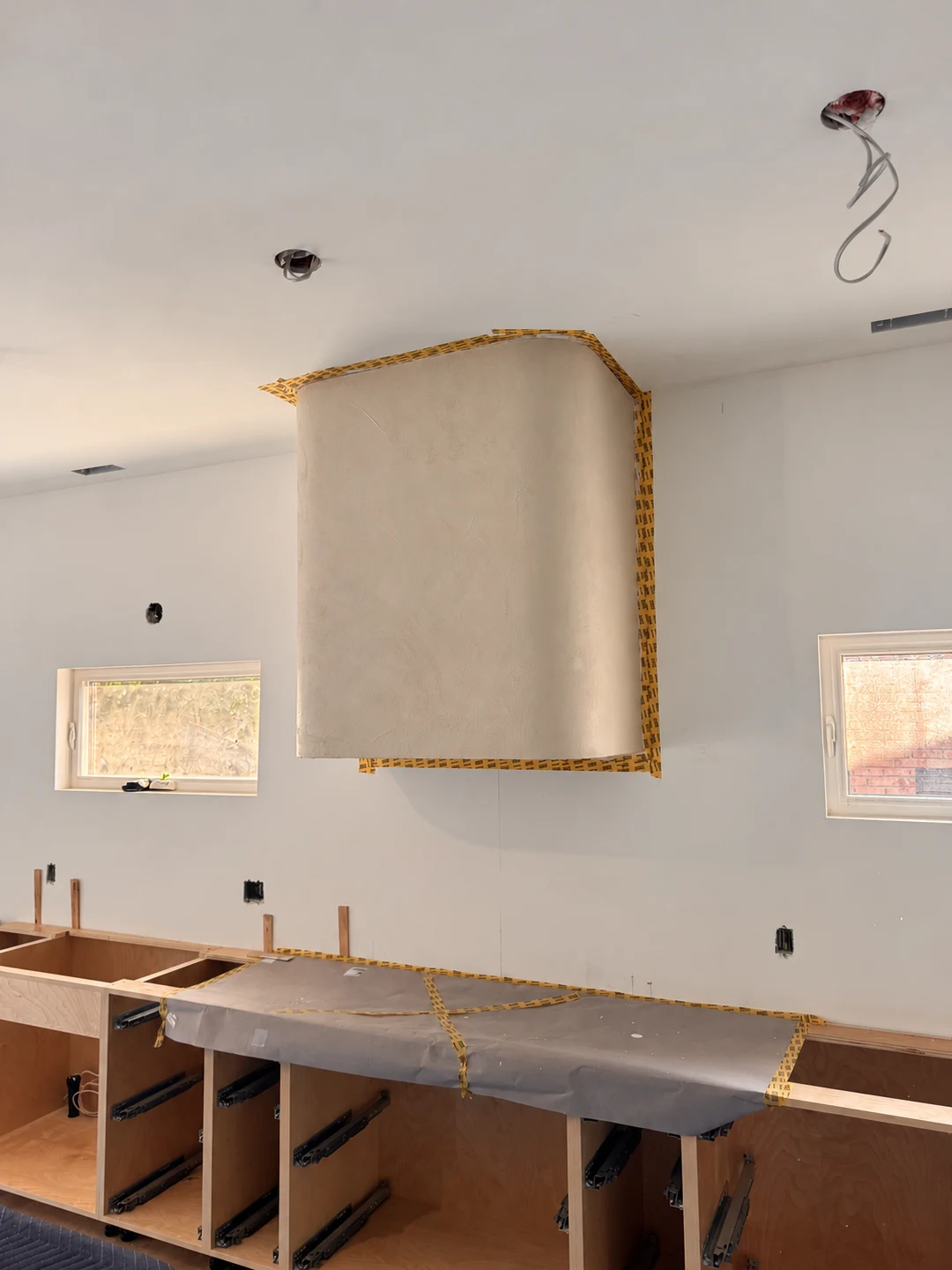
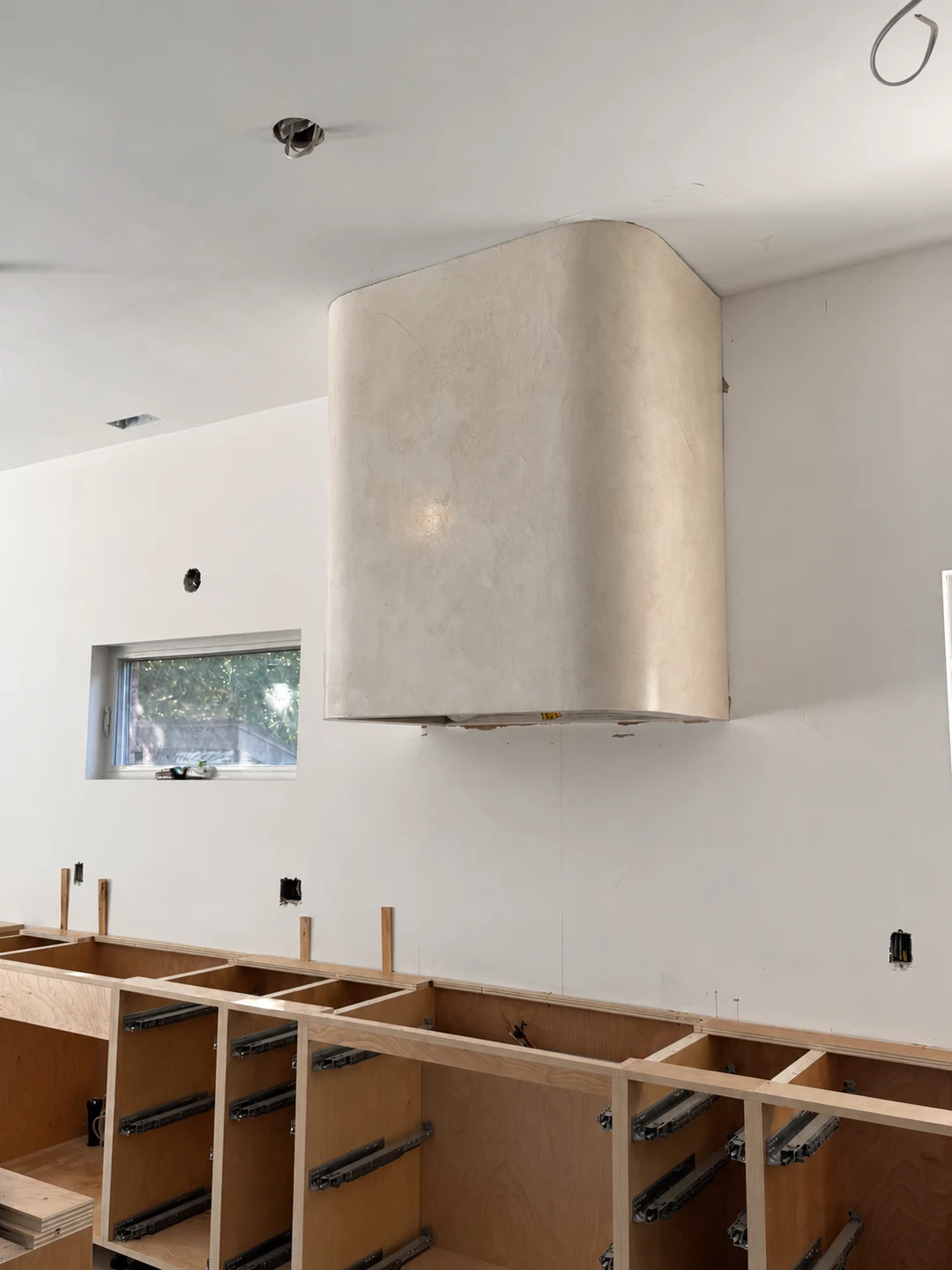
Collingwood: this before, during and after sequence follows a curved range hood through its decorative finishing stages. We used Venetian plaster in a soft beige colour, half-burnished and finished with a two-part sealer. The completed surface shows gentle stone-like movement while the surrounding kitchen is still being fitted out.
Discuss Your Limestone-Look Range Hood
Considering a limestone-inspired kitchen hood in Toronto or the GTA? Share photographs of the enclosure, its dimensions and the materials around it. We can discuss the finish direction and the preparation that needs assessment.
Tel: 416-606-8060
Email: shayan@chromatist.com
FAQ: Limestone-Look Range Hoods in Toronto & the GTA
Working along the upper edge of the range hood, the applicator follows the enclosure’s shape with a hand trowel to develop a continuous plaster finish.
Bring the hood into the same conversation as the cabinetry, worktop and lighting. Discuss your limestone-look range hood project with Chromatist.