

What is Microcement?
Microcement is a high-performance, cement-based decorative coating that is hand-applied in several thin layers—usually totaling only 2mm to 3mm in thickness. Known for its incredible adhesion, it can be applied over almost any stable surface, including drywall, tile, and wood, allowing for a “stone-like” finish without the weight or seams of traditional slabs.
Why Microcement is Trending in 2026
In 2026, microcement has surged in popularity as homeowners and designers move away from sterile, mass-produced finishes toward “quiet luxury” and artisanal craftsmanship. Its dominance this year is driven by a demand for highly durable, low-maintenance surfaces that don’t sacrifice style. Furthermore, its ability to create a seamless flow between floors and walls—and even into wet areas—meets the current architectural trend of “monolithic design,” where rooms feel like they have been carved from a single piece of stone.
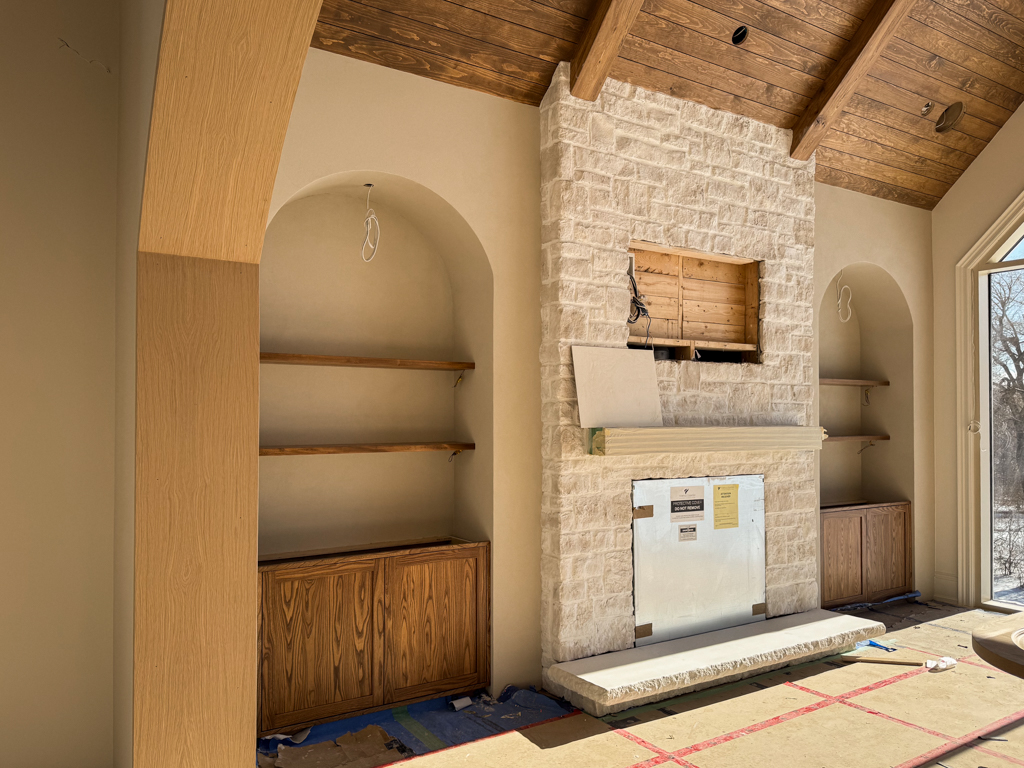
Curved Microcement Media Unit Wall in Kleinburg, Toronto
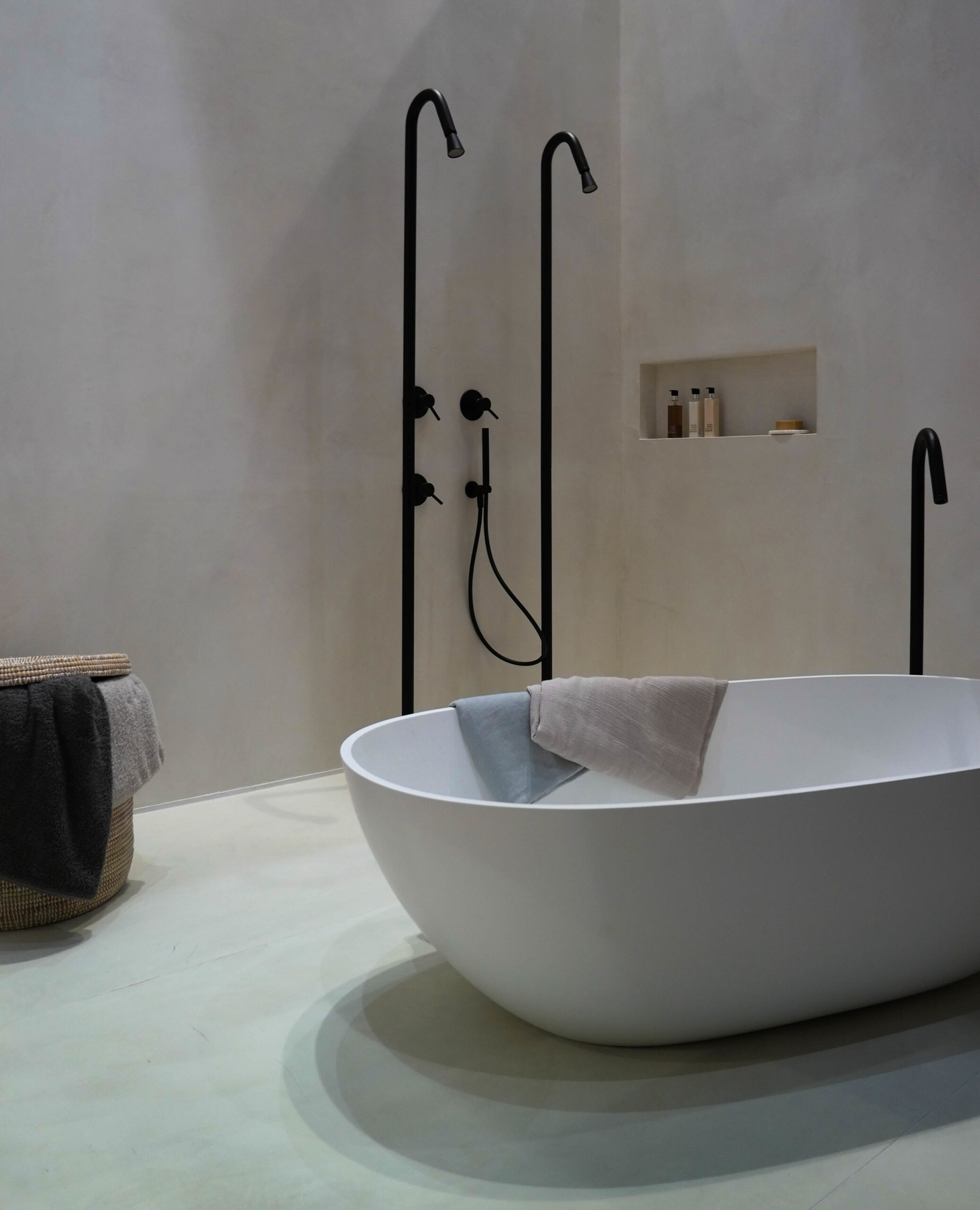
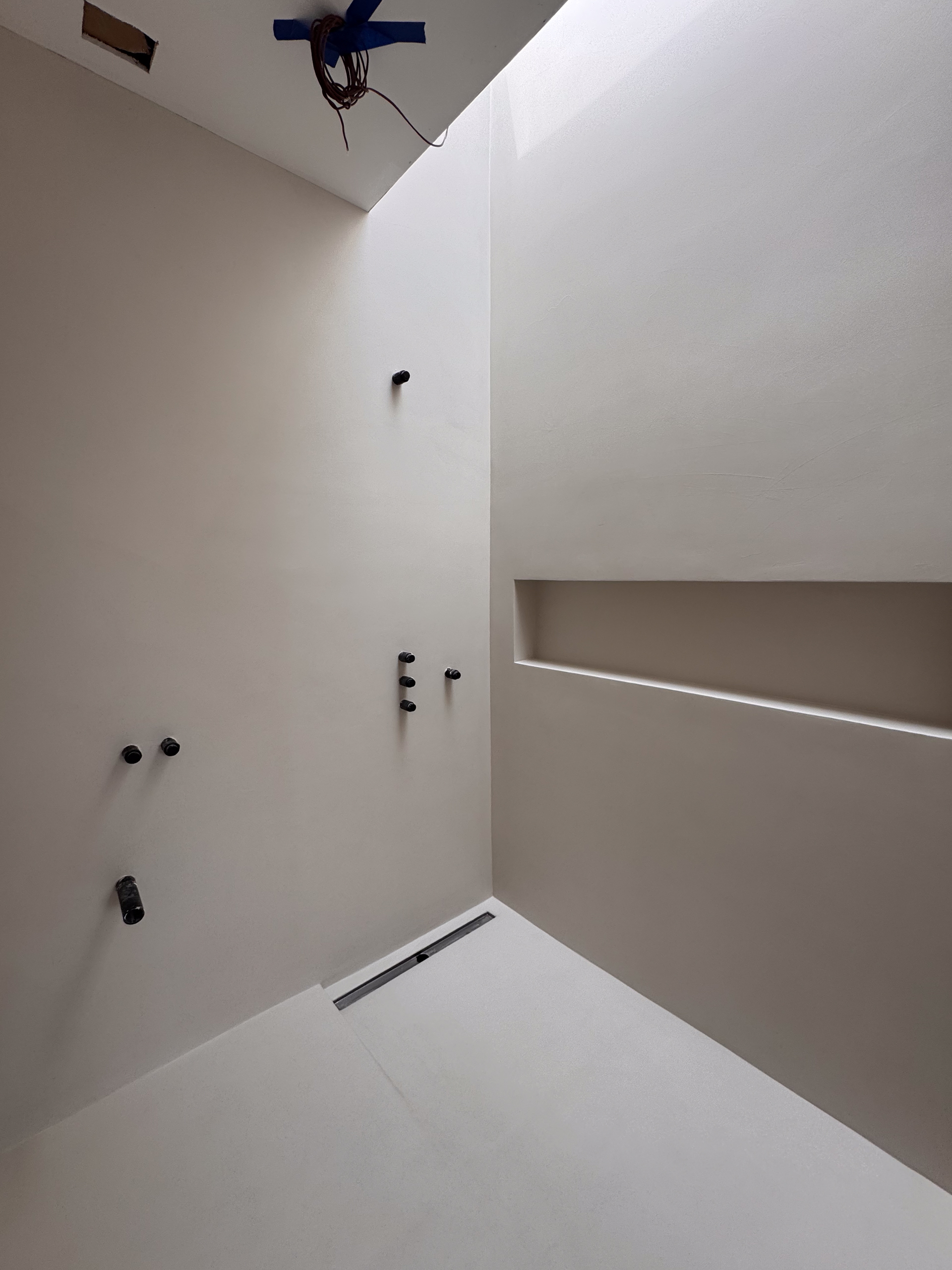
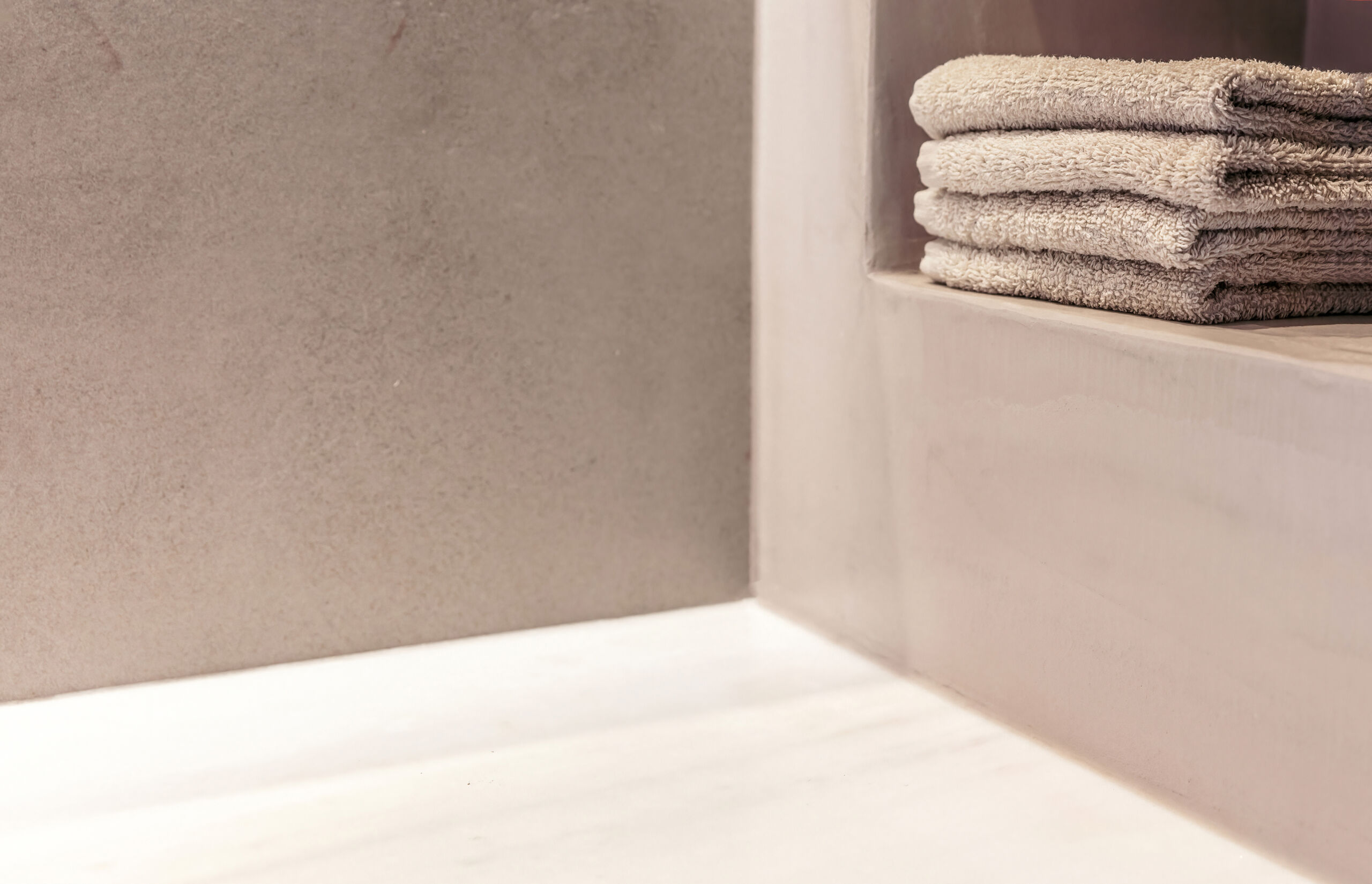
Waterproof Microcement Bathroom Finishes: Seamless & Grout-Free Shower Walls
Top microcement design ideas for any home
Microcement is no longer just an industrial floor finish; it has evolved into a high-end medium for artistic expression. In our latest project at Kleins Ridge in Kleinburg, we used this versatility to create a striking focal point in the dining area.
The Bamboo Zen Accent Wall
For our project at Mimico in Etobicoke, we used this versatility to create a striking focal point in the dining area. We implemented a specialized “Bamboo” or “Zen” design, featuring vertical textures that mimic the organic rhythm of natural stalks. This transforms a flat partition wall into a tactile masterpiece.
Zen-inspired design focuses on minimalism, tranquility, nature, and the “Wabi-Sabi” philosophy of finding beauty in imperfection. Its continuous, seamless application on floors, walls, and ceilings eliminates visual clutter (grout lines), creating a serene, uninterrupted, and airy environment.
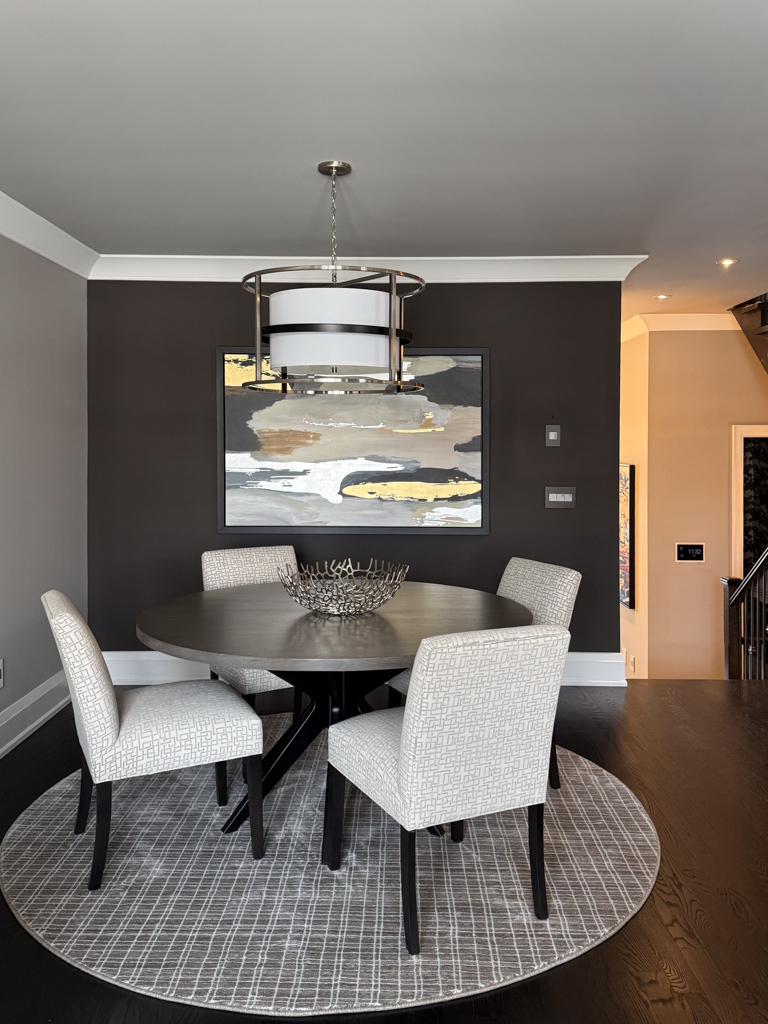
From Bare Paint to Zen Sanctuary: A Microcement Transformation in Etobicoke
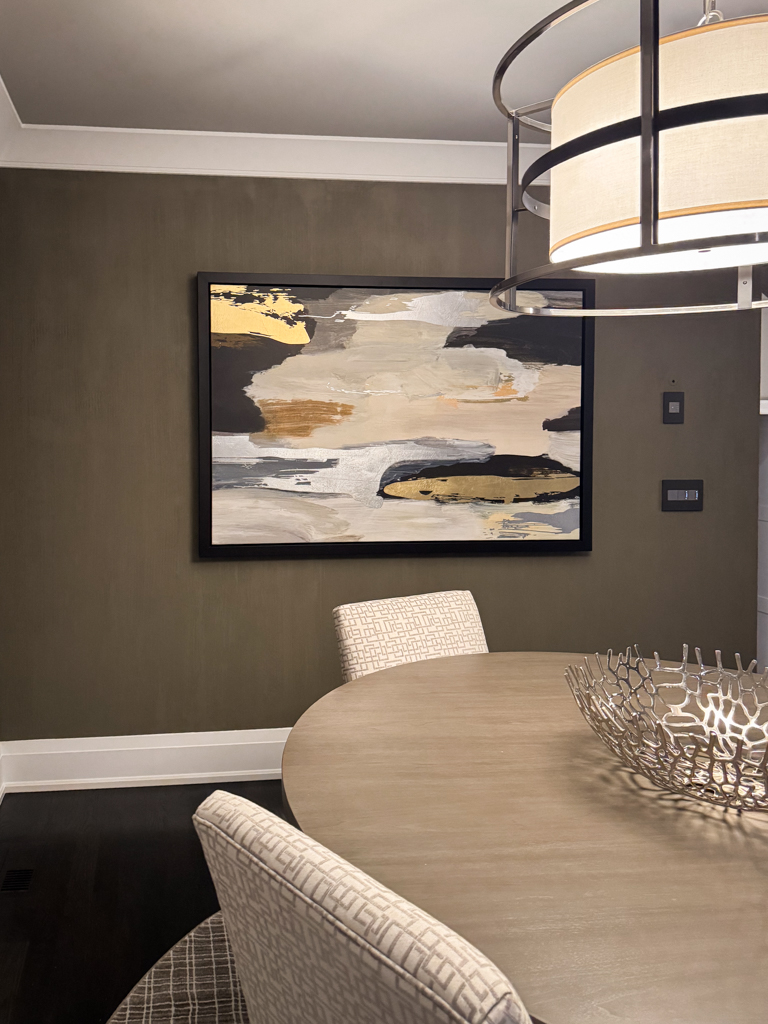
Dining Room Glow-Up: Modern Bamboo-Texture Microcement Accent Wall
Microcement and Tonal Harmony
To anchor the room, we pulled a sophisticated palette from the adjacent walls, finished in Benjamin Moore’s Stardust. This soft, earthy greige acts as the perfect companion to the microcement, highlighting its natural “movement” and character. By accenting the surrounding walls in this specific tone, the dining room gained a sense of depth and architectural intent that standard paint simply cannot achieve.
The result is a space that feels both grounded and ethereal—a true testament to how much character a textured microcement wall adds to a modern home. Learn more about ways to use microcement to style bathrooms, kitchens, and more in this article, 10 stylish ways to use microcement in your home and garden.
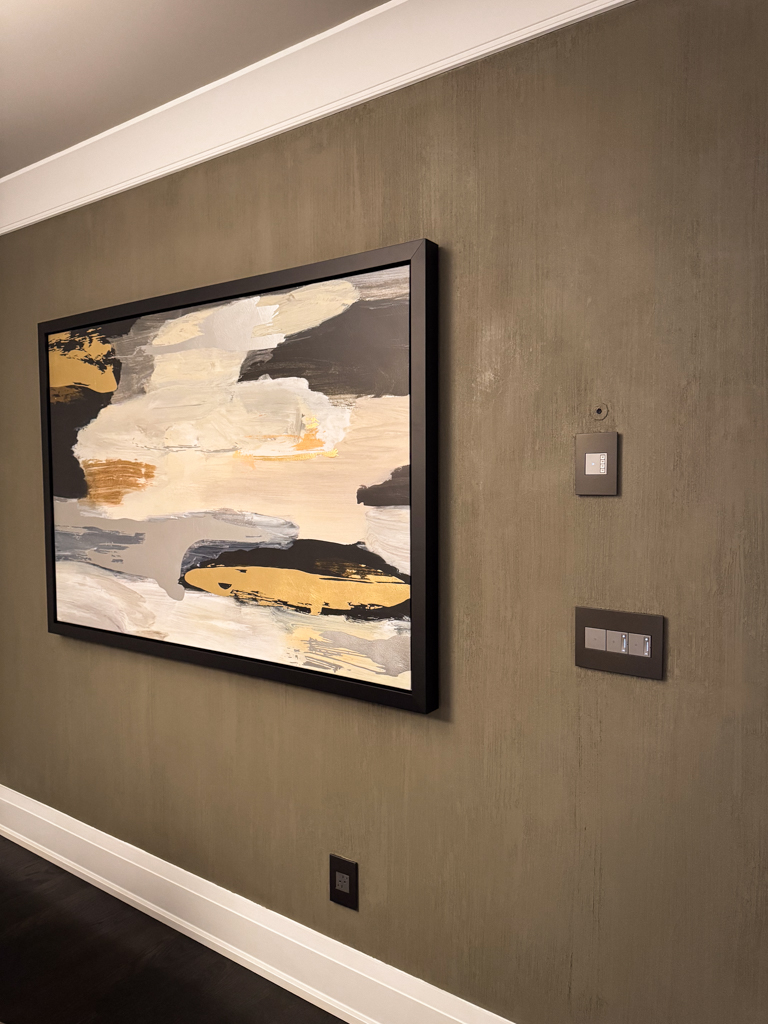
Dining Room Glow-Up: Modern Bamboo-Texture Microcement Accent Wall
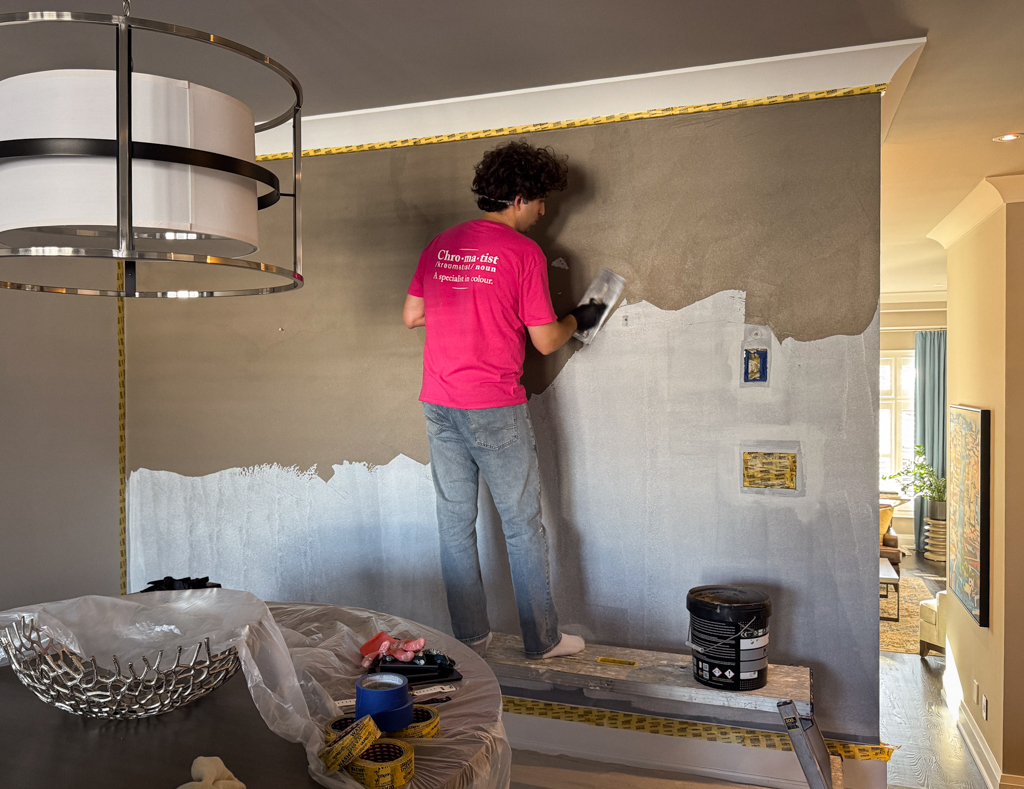
BrowMicrocement Accent Wall Ideas
Where Microcement Can Be Used
The versatility of microcement allows it to be applied in nearly every corner of your home. Common applications include:
- Floors: New concrete, existing tile, plywood, OSB, and self-leveling compounds.
- Walls: Drywall, plaster, existing paint, and tile.
- Wet Areas: Bathrooms, Showers, and Sinks/Vanities (due to its excellent waterproofing properties when sealed).
- Architectural Features: Fireplaces and Hearths, Reception Desks, and Stairs (including risers and treads).
- Countertops & Furniture: Kitchen and bathroom Countertops (non-commercial kitchen use), Tables, and other fixed Furniture (e.g., shelving units).
- Exterior Surfaces: Patios, Terraces, Balconies, and Pool Surrounds (when properly prepared and sealed for outdoor use).
- Miscellaneous: Backsplashes and Columns.
To explore more about microcement finish and the costs associated to it, refere to our microcement finish page.
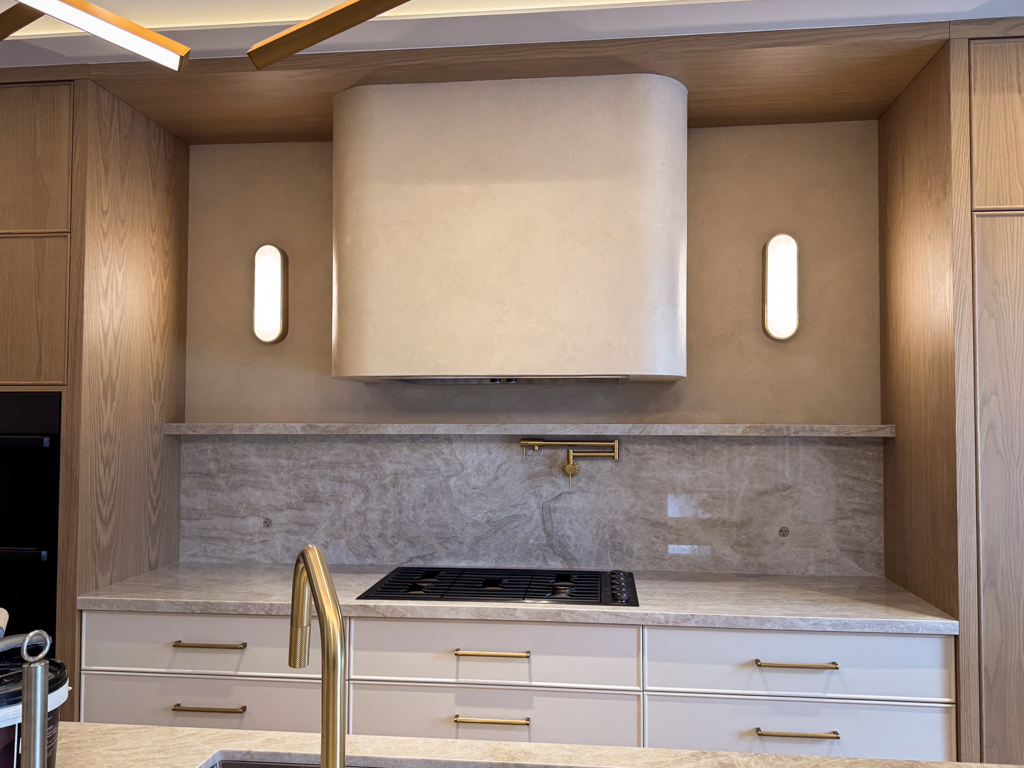
Tonal Continuity: Curved Microcement Hood and Matching Kitchen Walls
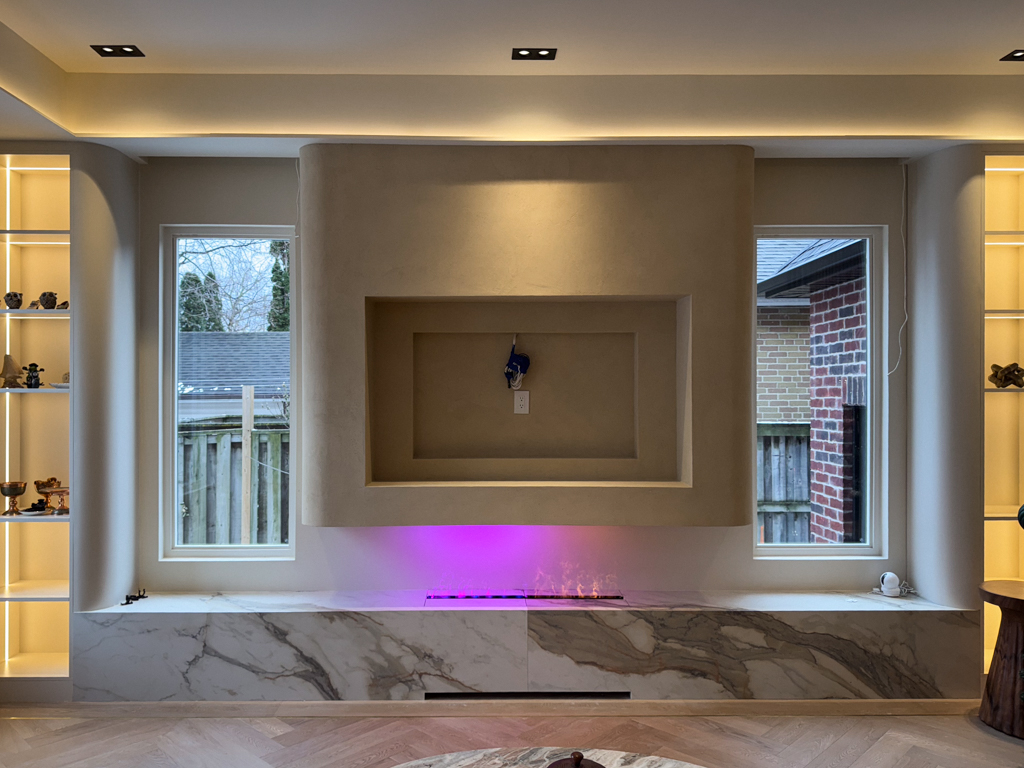
Seamless Curved Microcement Fireplace: Modern Minimalist Design in Etobicoke
Common Microcement Problems & Why Hiring a Professional Matters
The application process of microcement involves specific steps. Any deviation from the prescribed order or errors during crucial stages, particularly during priming and sealing, can result in undesirable outcomes. This underscores the importance of entrusting the installation of microcement to a professional applicator.
It’s essential to note that the following problems may manifest when microcement is improperly applied, inferior quality materials are used, or the applicator lacks the necessary expertise:
- Visible Tile Joint Marks: Variations in absorption between tiles and joints can cause “ghosting.” Proper joint filling and a suitable bonding bridge are essential to prevent this. Learn more about microcement installation over tile in our recent article Can you microcement over tiles?.
- Relief Due to Trowel Application: Unevenness can appear if not meticulously hand-sanded between layers.
- Stains and Marks: Rushing drying times or incorrect polyurethane application with a roller can lead to water absorption, unsightly stains, or roller marks. Patience is key.
- Changes in Tonality: Inaccurate measurements during separate mixing processes can lead to inconsistent colors across a single surface.
Hiring a professional ensures the technical precision required for a flawless, long-lasting finish that avoids these common pitfalls. Learn more about microcement installation steps and the cost to install microcement on our service page.
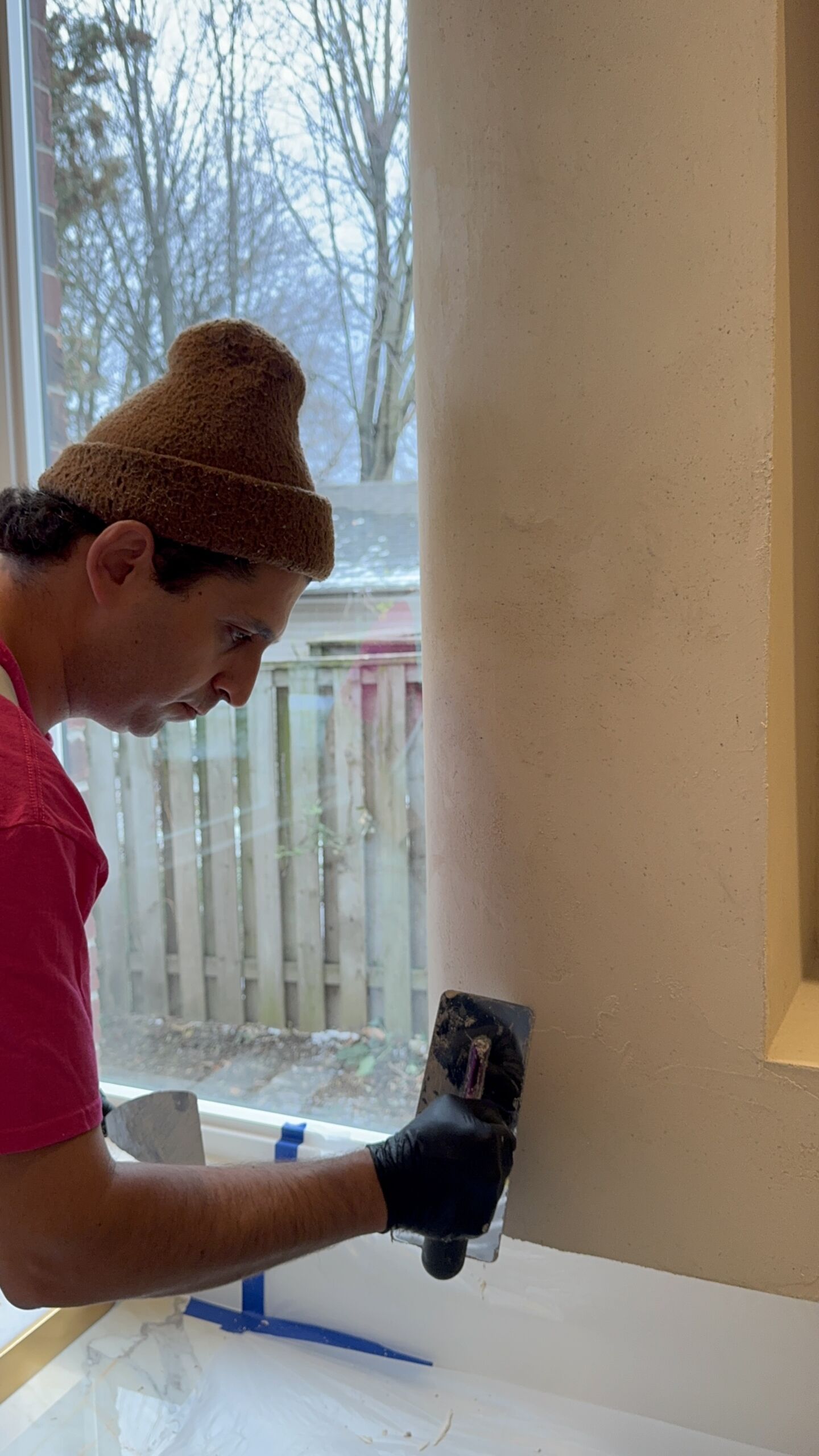
Microcement Walls FAQ: Everything You Need to Know
Make a Lasting Impression.
Microcement isn’t just a finish—it’s a statement of quality and durability. Contact us today to discuss specifications for your next commercial development or residential masterpiece.
Tel: 416-606-8060
Email: shayan@chromatist.com