European Farmhouse Style: Crafting the Perfect Earthy Range Hood in Uxbridge

The Rise of the Artisanal Range Hood

The classic farmhouse kitchen is undergoing a sophisticated evolution in Toronto and across the GTA. Homeowners are moving away from the stark, cold whites of the past decade and leaning heavily into “organic modernism”—a design philosophy that prioritizes raw textures, soft warmth, and tactile surfaces.

In a luxury farmhouse design, the range hood is no longer just a functional appliance hidden behind standard cabinetry. It is the architectural anchor of the entire room.

By utilizing artisan decorative plasters and specialized paint finishes, a custom-built range hood can be transformed into a living piece of sculptural art.

The Palette of Earthy Textures: Venetian Plaster, Limewash, and Microcement

To achieve an organic, centuries-old texture that feels grounded yet airy, designers are turning to three key artisanal mediums. Each brings a completely distinct personality to a focal-point kitchen hood:

Material The Texture The Aesthetic Vibe
Roman Clay Smooth, velvety, with low-contrast warmth Intimate and clay-based, offering a soft, plaster-like look with subtle plaster blade marks that add effortless warmth.
Venetian Plaster Smooth, multi-tonal, subtly polished Classic European elegance with a soft, marble-like depth that reflects light beautifully.
Microcement Matte, monolithic, slightly industrial Sleek, seamless, and structural. Perfect for a modern farmhouse look that needs a stone-like anchor.
Limewash Chalky, suede-like, highly breathable Soft, velvety, and deeply organic with natural, cloud-like movement across the surface.

Inside Our Process: The Design and Colour Consultation

Because these hand-applied finishes possess so much natural variation, no two projects are ever identical. For our recent farmhouse project just outside Toronto, we didn’t just show up with a bucket of paint—we began at the drawing board.

We collaborated closely with the homeowners through an intensive design and colour consultation. Together, we reviewed an array of custom sample boards to evaluate different textures, aggregate sizes, finish sheen levels, and undertones under the specific lighting of their kitchen.

Every detail matters: how the morning light hits the curve of the hood, and how the texture complements the surrounding raw wood beams and soapstone countertops.

The Winner: A Three-Day Journey into Clay-Infused Limewash

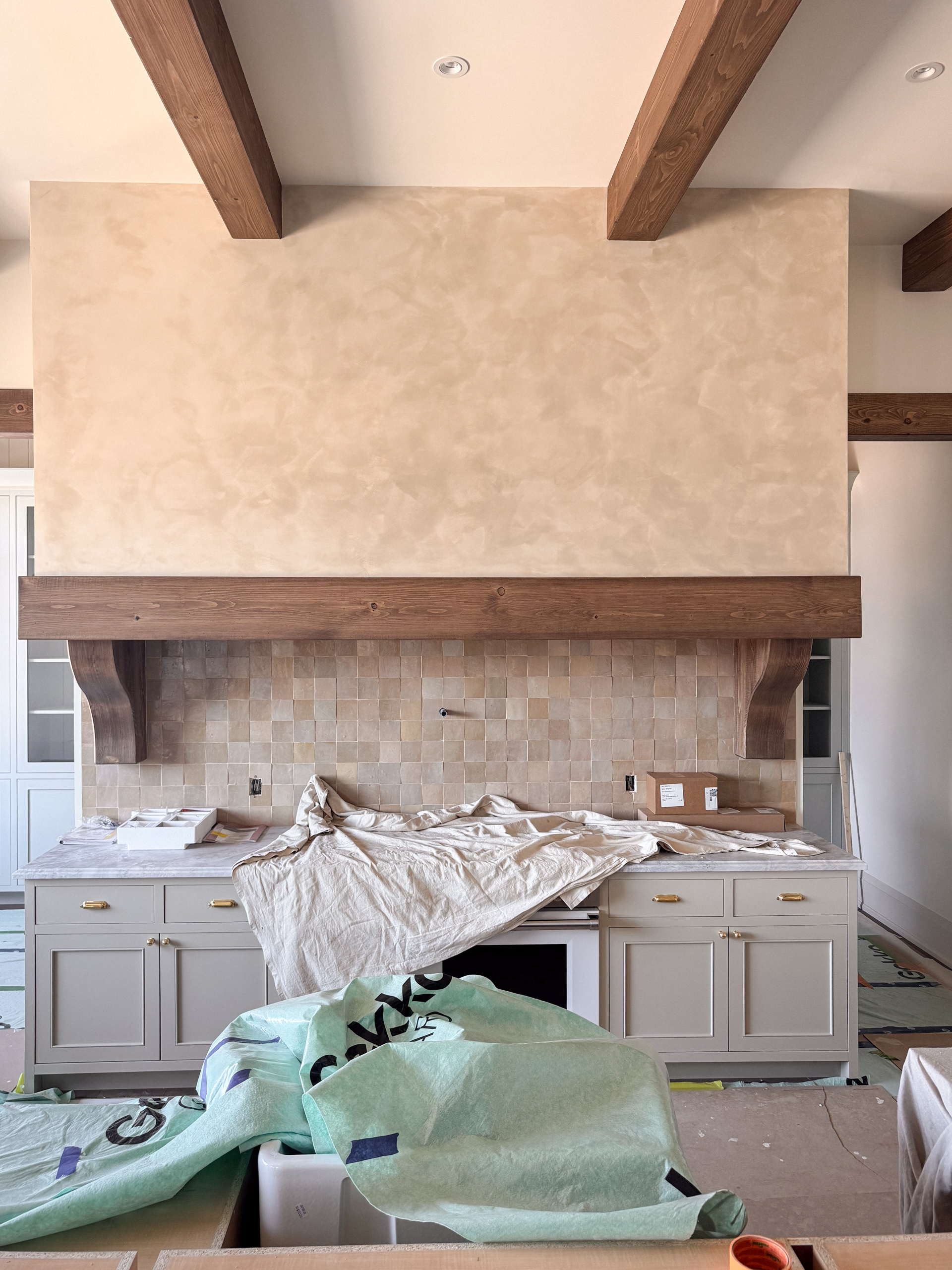
After testing various finishes, the vision became crystal clear. The space called for a massive, statement range hood that felt both earthy and completely weightless. The choice? A premium, clay-infused limewash.

The clay content adds subtle body and structural depth to the limewash, while the lime provides that signature, cloud-like mineral movement.

  • 1.Day 1: Substrate Prep & Mineral Priming:Foundation Build.

    We meticulously prepped the custom drywall hood shroud, sealing all joints and applying a specialized mineral quartz primer. This gives the authentic limewash the perfect “tooth” to grab onto and ensures an even chemical bond.

  • 2.Day 2: Artistic Layering:Hand-Brushed Movement.

    Using a traditional, long-bristle block brush, our artisans hand-applied multiple coats of the clay-infused limewash. By using dynamic cross-hatch strokes, we built up a soft, multi-dimensional texture that looks completely native to the structure.

  • 3.Day 3: Curing & Matte Preservation Seal:Locking in the Finish.

    After allowing the mineral layers to breathe and fully cure into their signature chalky, suede-like state, we applied an ultra-matte, breathable protective sealer. This ensures the hood is completely safe from kitchen steam and grease splatter without altering its organic texture.

The 3-Day Process: Limewash Plaster Range Hood for Uxbridge Farmhouse Kitchen
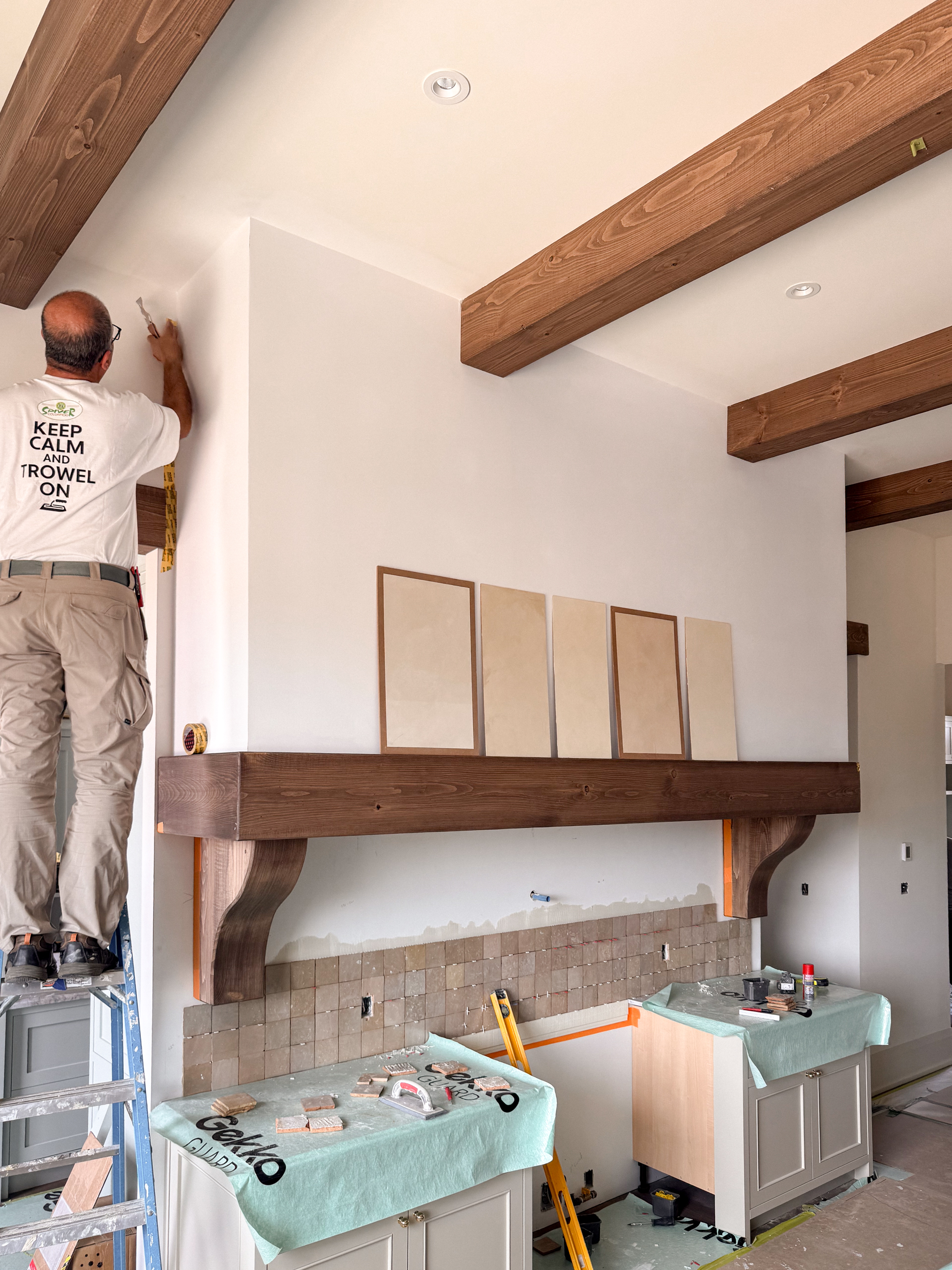
From Consultation to Curing: The Making of an Artisanal Limewash Hood for Uxbridge Farmhouse Kitchen
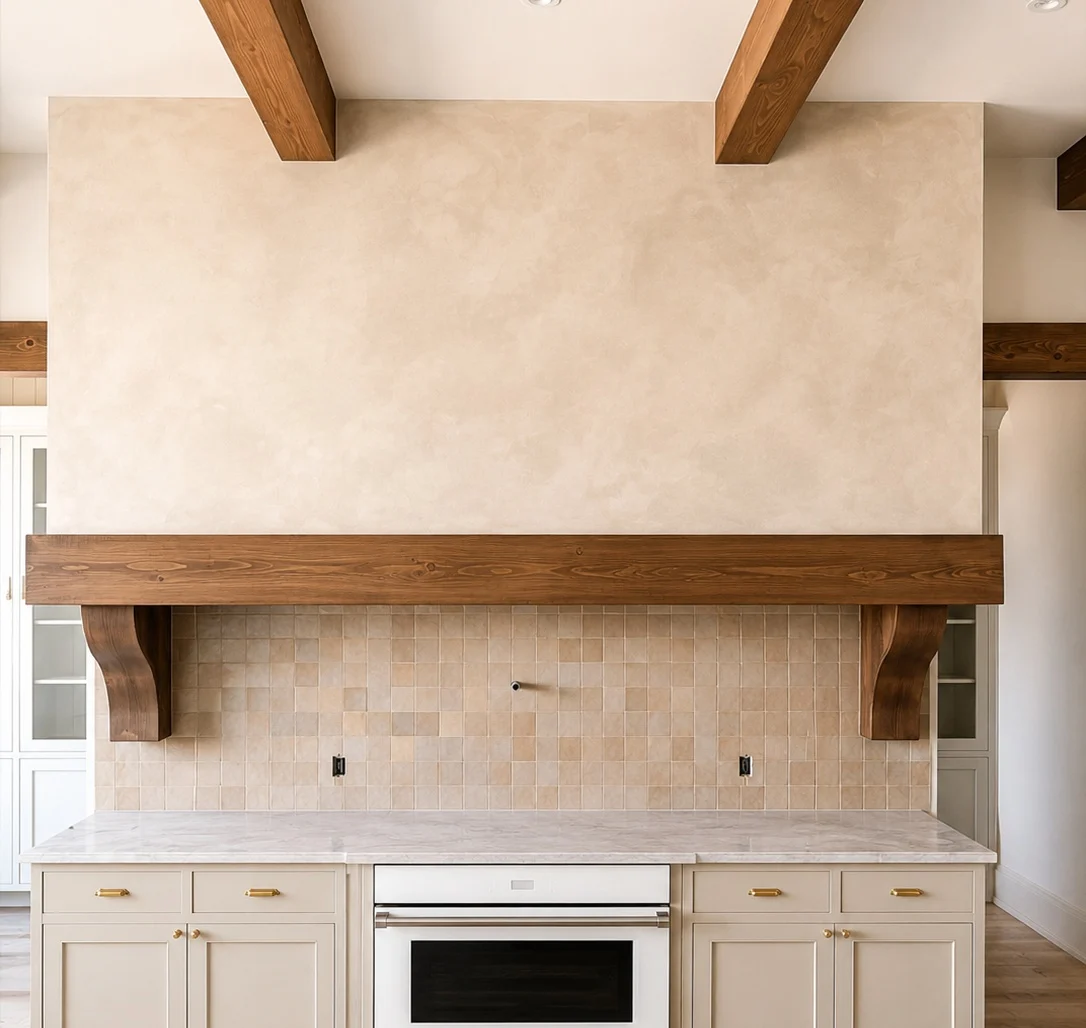
The Result: An Earthy, Airy Sanctuary

The massive range hood now dictates the entire tone of this Toronto farmhouse kitchen. It balances the weight of the heavy oak cabinetry and anchors the room with a soft, glowing warmth. It doesn’t look like a painted box; it looks like a timeless architectural element that has been part of the home for generations.

By choosing an artisan mineral finish over standard latex paint, this kitchen achieves a rare equilibrium—undeniably high-end, yet deeply connected to the textures of the earth.

Reimagining your kitchen? Contact our GTA studio today to book your custom plaster or limewash design consultation
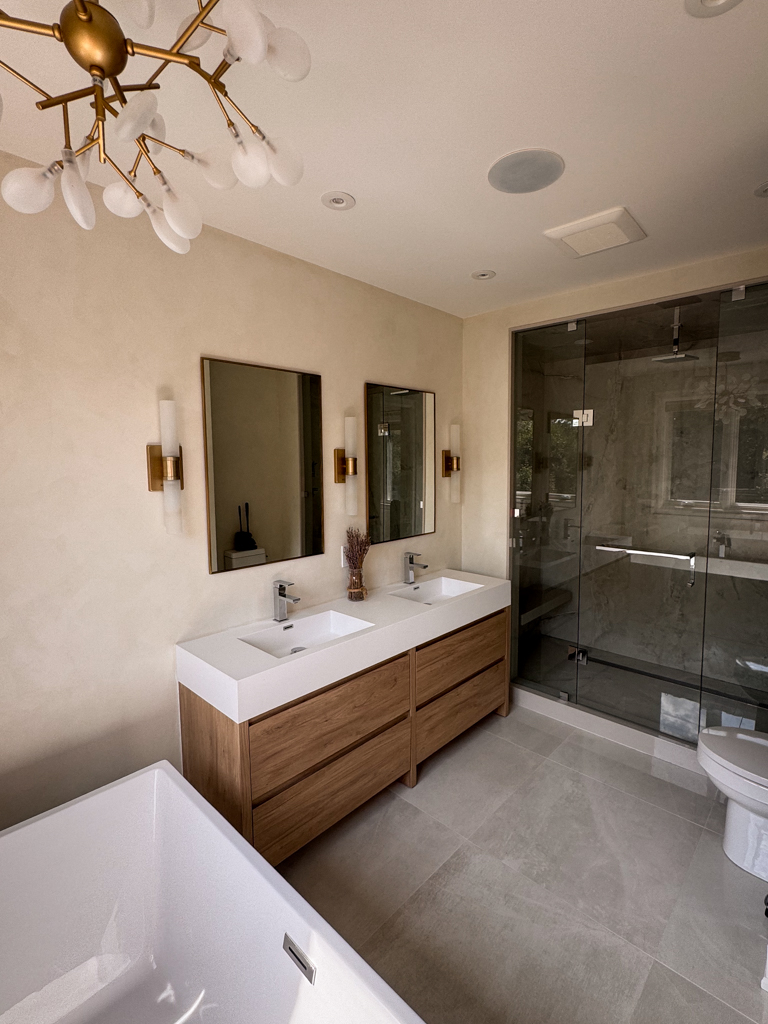
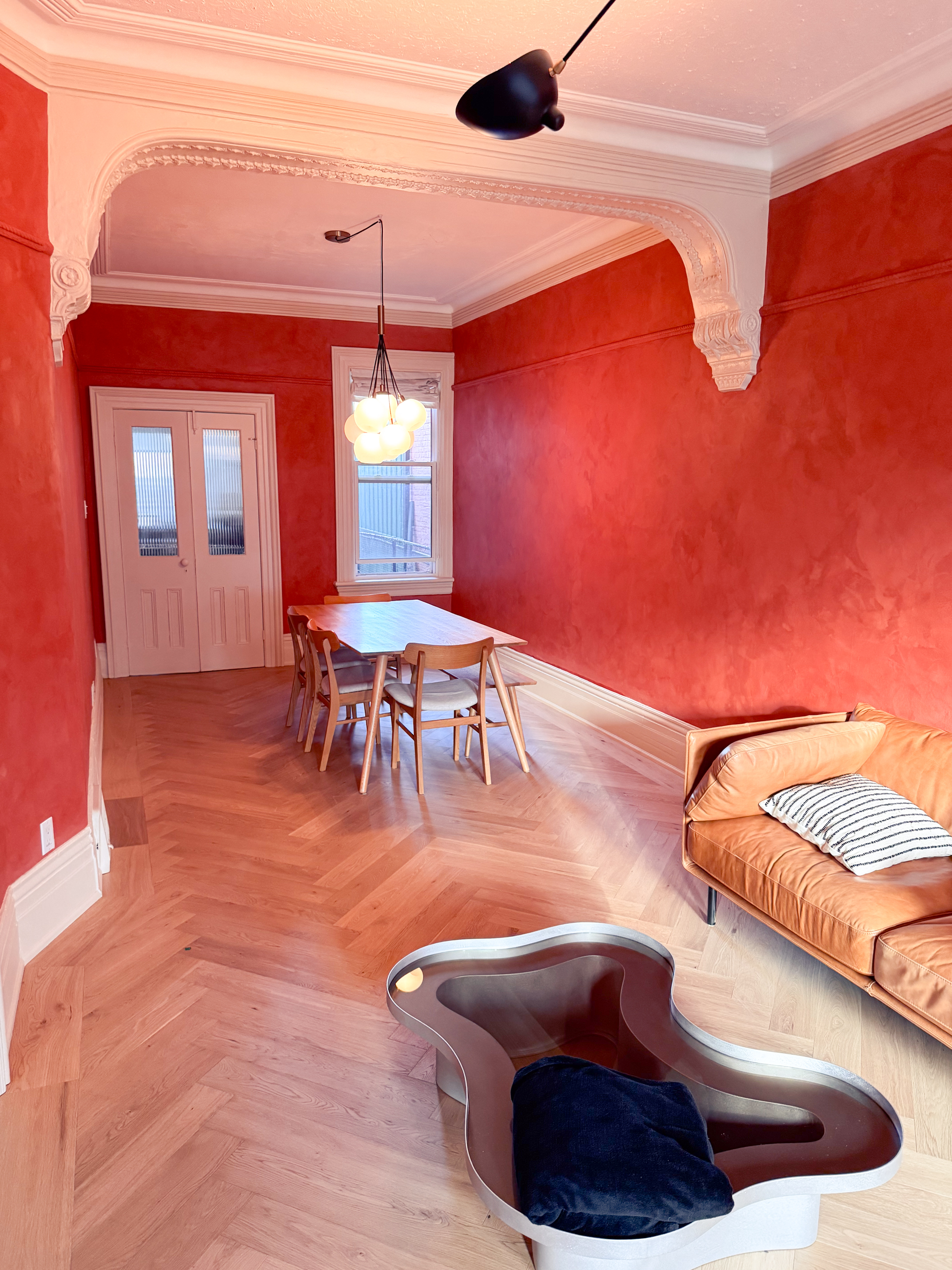
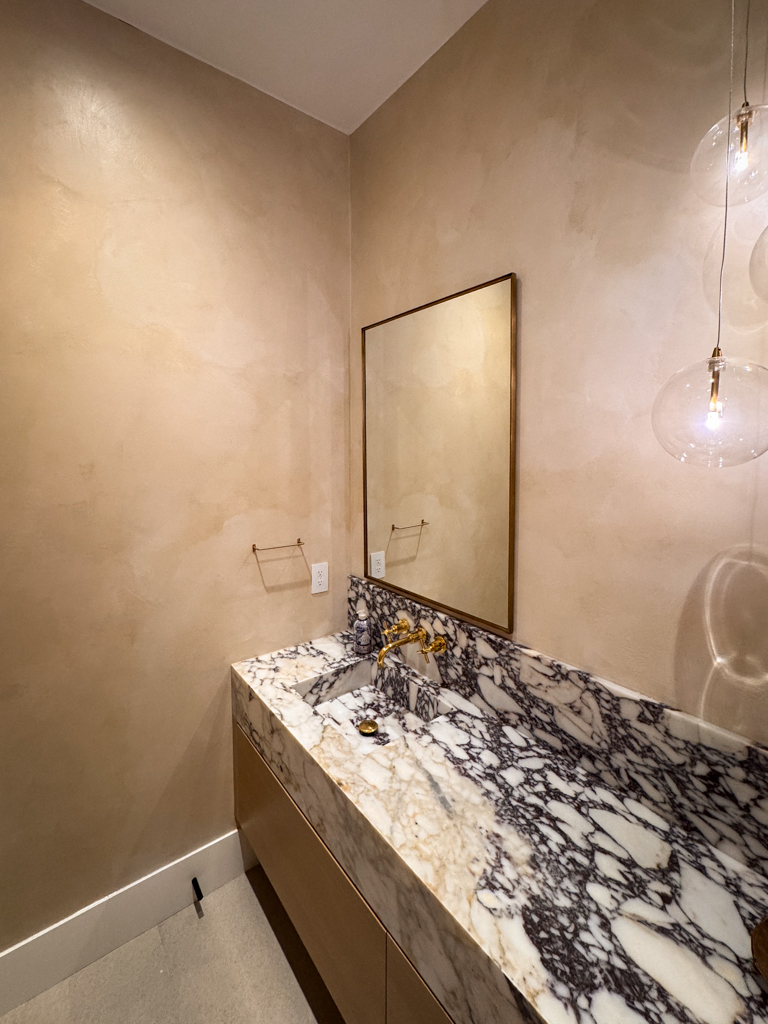
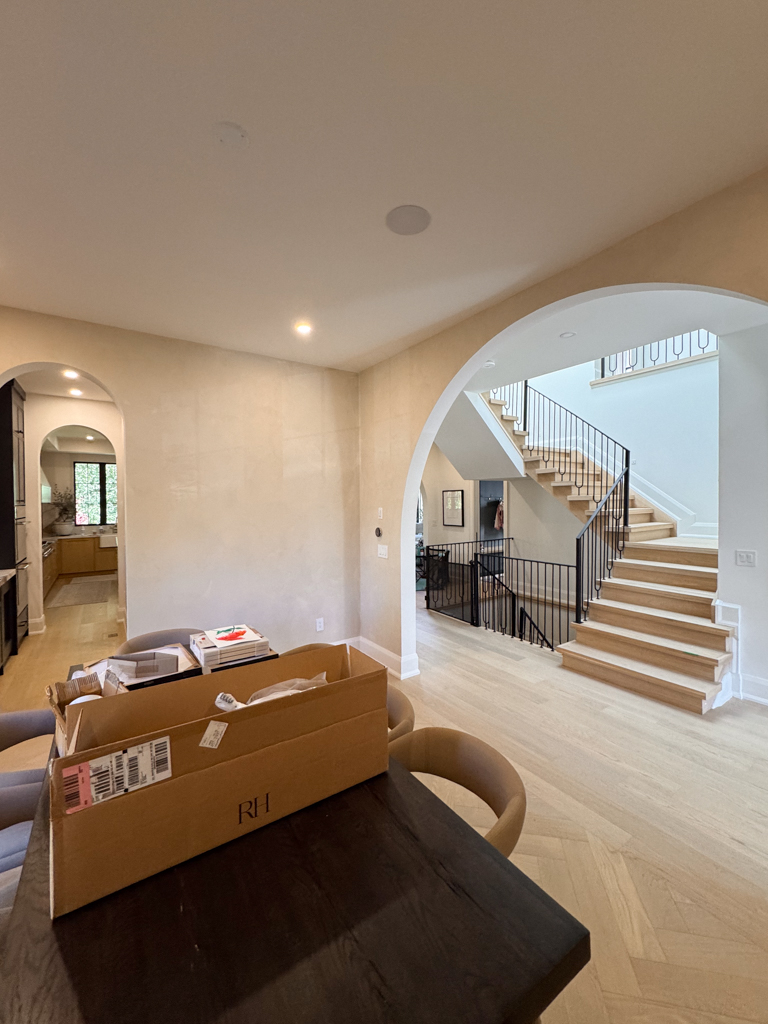
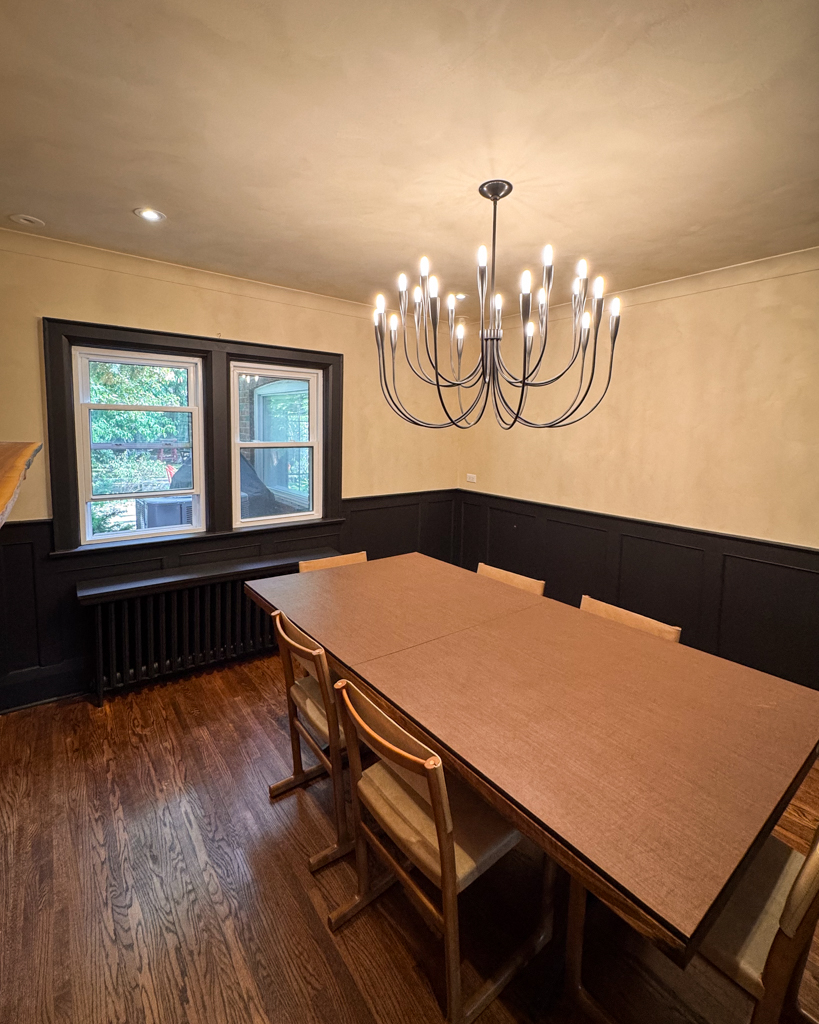
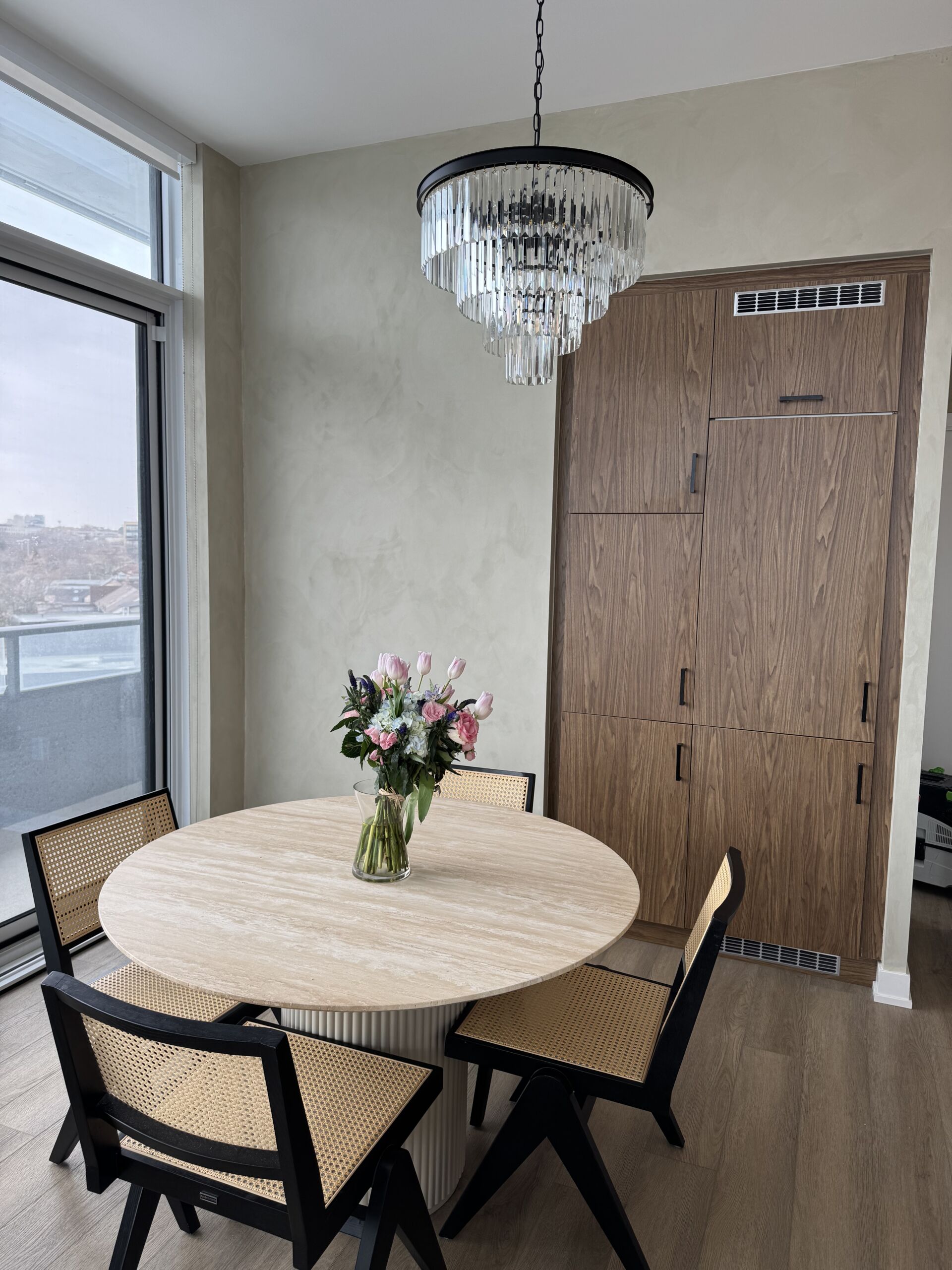
Airy, fluffy, cloudy, velvety feel of limewash in different rooms: Bathroom, powderroom, living room, and dining room

Get A Free Quote

Don’t just paint—invest in an architectural finish. Ready to redefine your space with a custom decorative plaster application? Don’t just paint—invest in an architectural finish.

Tel: 416-606-8060

Email: shayan@chromatist.com

Project: *
Limewash Paint FAQ | Your Questions Answered by Toronto Pros
What is the difference between limewash and regular paint?2025-09-17T15:53:57-04:00

Limewash is a mineral-based paint that is absorbed into the wall, creating a matte, breathable finish with natural movement. Regular paint creates a solid film on the surface and has a more uniform, flat appearance.

How do you clean a limewash wall?2025-09-18T11:16:55-04:00

For regular cleaning, simply dust the surface with a soft, dry cloth. For smudges, a slightly damp, pH-neutral cloth can be used. Avoid harsh chemicals or aggressive scrubbing, as they can damage the finish.

Can you use limewash in any room?2025-09-17T15:53:37-04:00

Limewash is highly versatile and can be used in almost any room. For the interiors it’s particularly popular for living rooms, dining rooms, and bedrooms where its soft, calming effect is most appreciated. While it’s breathable, it can also be sealed for use in certain kitchens or bathrooms.

How to Achieve that Soft, Cloud-like Texture through Limewashing?2025-09-18T11:16:31-04:00

The soft, cloud-like texture is the result of a specialized hand-applied technique that leverages the unique composition of limewash. Unlike regular paint, which is rolled on in a flat, uniform layer, limewash is applied in multiple thin coats using broad brushstrokes. This process creates subtle variations in tone and opacity, allowing the finish to have a natural, organic movement that is unique to each surface.

Is Limewash Durable and Resistant to Moisture?2025-09-17T16:01:26-04:00

Yes, a properly applied limewash finish is very durable. Over time, the lime in the paint absorbs carbon dioxide from the air, causing it to harden and become highly resistant to chipping. While it is naturally breathable, it can be made resistant to moisture with the correct sealant, making it a viable option for bathrooms and other high-humidity areas.

How Does Limewash Compare to Regular Paint in Terms of Cost?2025-09-17T16:02:10-04:00

Limewash is generally three times more expensive than regular paint, and the cost difference is due to the specialized product and the hand-applied technique. A limewash project requires multiple layers and is a slow, meticulous process that depends on the skill of an artisan. The cost reflects this dedicated craftsmanship and the time required to create a unique, high-end finish. It’s an investment in a custom surface rather than a standard paint job.

Can limewash be applied to any surface?2025-09-25T14:14:25-04:00

Limewash works best on porous surfaces like brick, stone, plaster, and unsealed drywall. It does not adhere well to sealed, glossy, or synthetic surfaces without proper priming.

Does limewash require special maintenance?2025-09-25T14:16:25-04:00

Limewash is low-maintenance and does not require frequent repainting. It naturally resists mold and mildew due to its high pH. If cleaning is needed, a gentle damp cloth is usually sufficient—avoid harsh chemicals that could alter the finish.


Can limewash be applied in different colors?2025-09-25T14:15:41-04:00

Yes! Limewash can be tinted with natural pigments to create a variety of colours. From warm neutrals and soft beiges to moody charcoals and deep earthy tones, we offer a colour and design consultation to match your design vision.


Why should I hire a professional limewash painter instead of doing it myself?2025-09-25T14:16:15-04:00

Limewash application requires specific techniques, such as layering, brush strokes, and colour blending, to achieve the desired cloudy, textural effect. DIY attempts can lead to uneven coverage and patchy results. Our Toronto limewash experts ensure a seamless, professional finish tailored to your space.

Limewash Finish Explained

Decorative Wall Finishes for Toronto and Surrounding Areas

Areas We Service in Greater Toronto Area

Areas of Service

  • Forest Hill
  • Rosedale
  • Leaside
  • Chaplin Estates
  • Moore Park
  • Deer Park
  • Lawrence Park
  • Lytton Park
  • Ajax
  • Alliston
  • Aurora
  • Barrie
  • Bowmanville
  • Bracebridge
  • Bradford
  • Brampton
  • Burlington
  • Caledon
  • Hoggs Hollow
  • Governor’s Bridge
  • St. Andrew-Windfields
  • Sunnybrook
  • Yorkville
  • Annex
  • Summerhill
  • Casa Loma
  • Concord
  • Durham Region
  • Etobicoke
  • Georgina
  • Innisfil
  • Keswick
  • King
  • Scarborough
  • Schomberg
  • Simcoe
  • King West
  • Queen’s Park & University Avenue Area
  • St. Lawrence Market District
  • Harbourfront
  • Distillery District
  • he Bridle Path
  • Banbury-Don Mills
  • Kleinburg
  • Maple
  • Markham
  • Mississauga
  • Newmarket
  • Oak Ridges
  • Oakville
  • Peel Region
  • Rexdale
  • Richmond Hill
  • York Mills
  • The Kingsway
  • Baby Point
  • High Park North
  • Swansea
  • Bayview Village

  • Sutton
  • Thornhill
  • Toronto
  • Unionville
  • Uxbridge
  • Vaughan
  • Whitby
  • Witchurch-Stoufville
  • Woodbridge
  • York Region

Don’t See Your City? Contact us

Go to Top