

Is Venetian plastered hallways dated?
Venetian Plaster mimics natural stone—marble, limestone, and travertine—which never goes out of style. This is why marble-white neutrals and soft mineral tones remain in demand. Homeowners want finishes that will still look elegant in 2030—not just 2026. While fast-moving trends often fade within a few seasons, mineral-based plaster offers an enduring quality that feels like a permanent part of the home’s architecture rather than a temporary surface treatment.
In a recent project for a Rustic European Farmhouse in Kleinburg, we took on the challenge of defining the home’s transitional spaces. For the foyer walls, main hallways, and expansive ceilings, we applied a half-burnished Marmorino Venetian Plaster. This mineral finish was chosen because lime is a “living” material that breathes and ages gracefully over time, gaining more character and depth as it matures within the home.
What is Venetian Plaster?
Venetian plaster is a traditional wall finish made from fired limestone combined with water and, frequently, ground marble or stone dust. This mineral-based composition allows the material to “breathe,” making it naturally resistant to mold and mildew while aging beautifully over time. Unlike standard paint, it is applied by hand in multiple thin, translucent layers using a trowel. As these layers dry, the calcium carbonate in the plaster undergoes a chemical reaction with carbon dioxide in the air, effectively turning the finish back into a thin, durable layer of stone. This process results in a surface with deep visual texture and a tactile, stone-like feel that can be polished to a mirror-like shine or left with a soft, matte “Marmorino” patina.
Marmorino Walls and Ceilings in the Hallway Close-Up – Kleinburg, Toronto
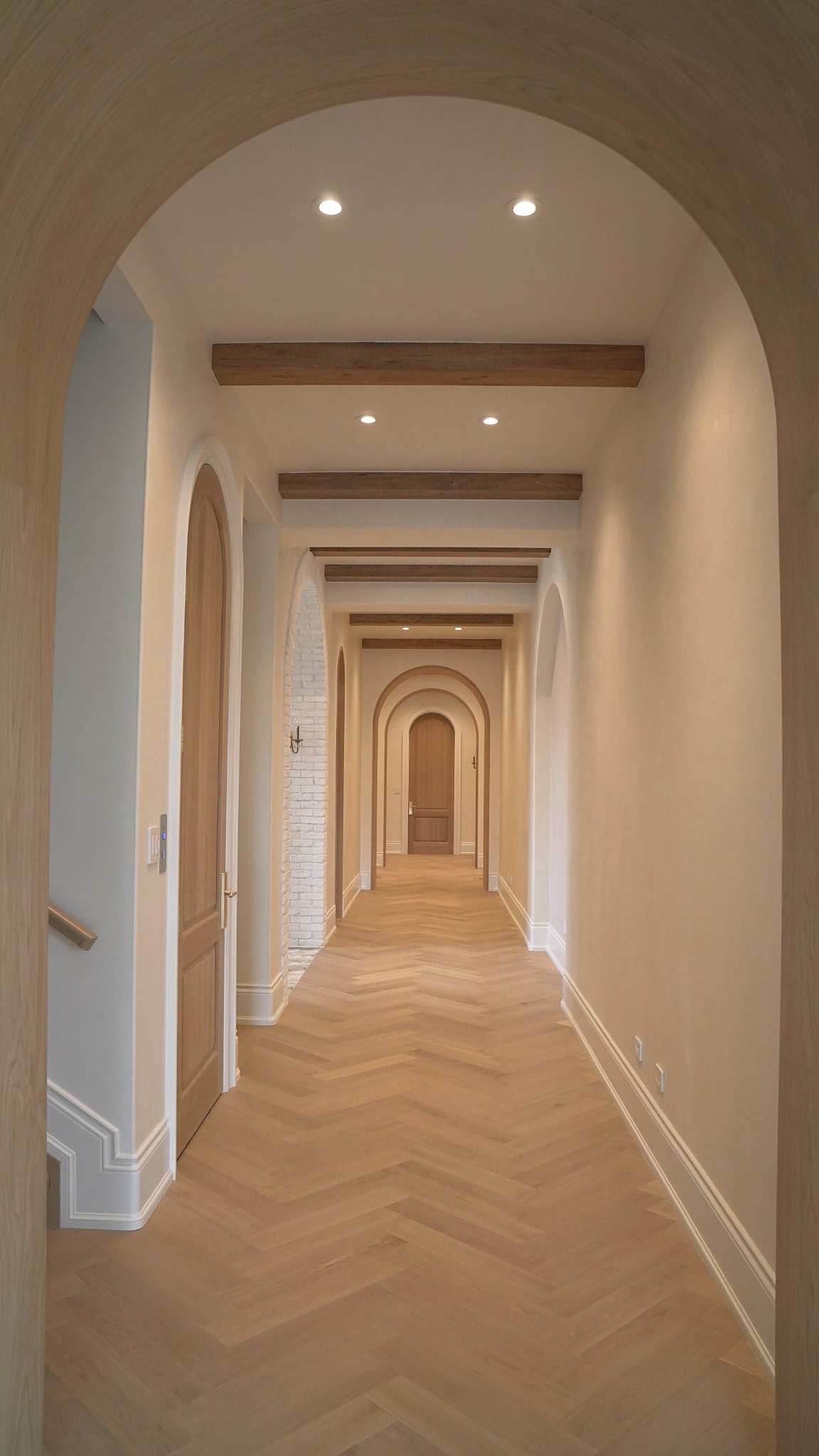
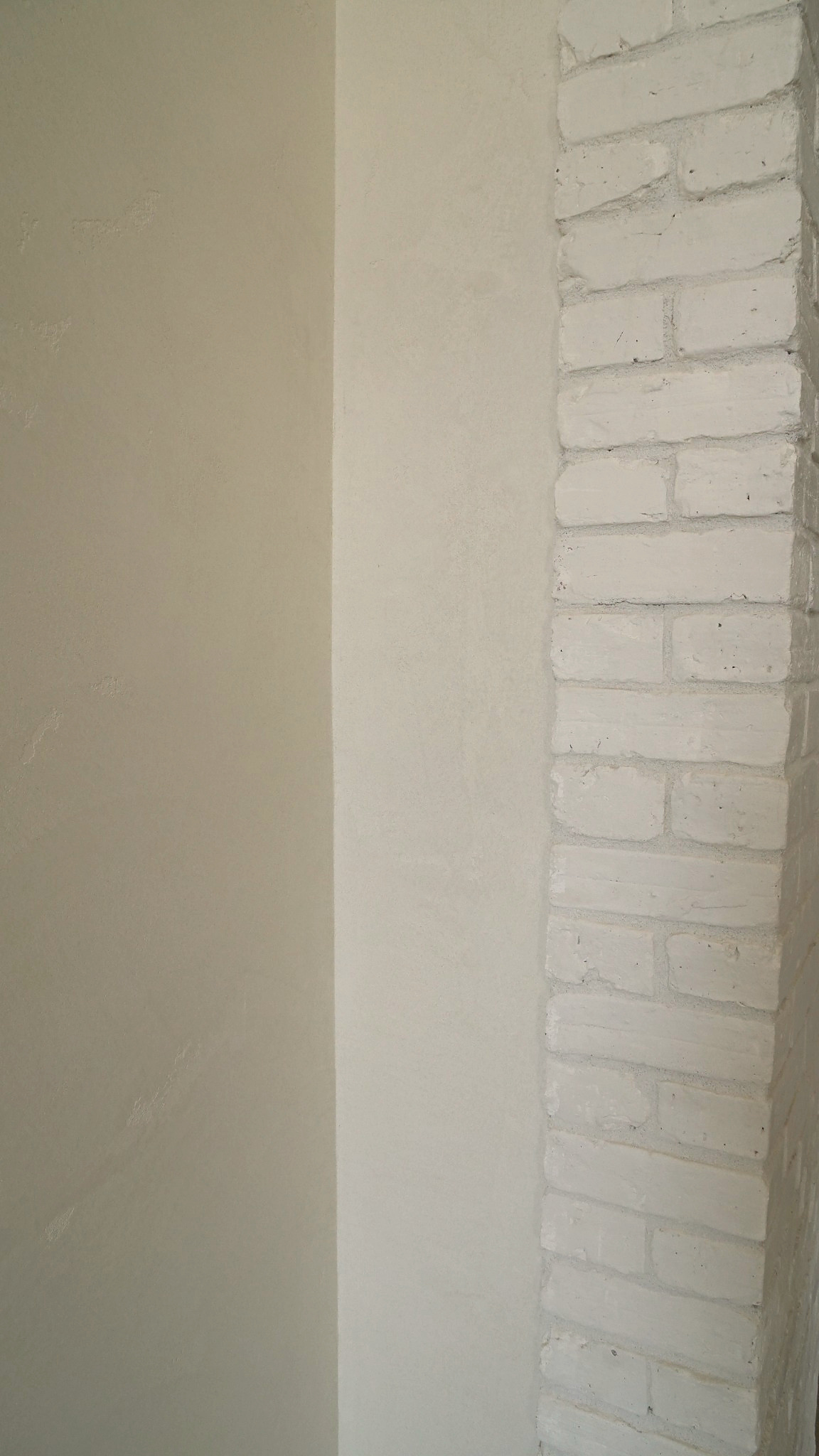
The final half-burnished finish cured into a stone-like canopy. Its soft, warm white tone provides a luminous backdrop that allows the rich grain of the walnut beams to pop.
The Artisanal Application: A Hand-Crafted Legacy
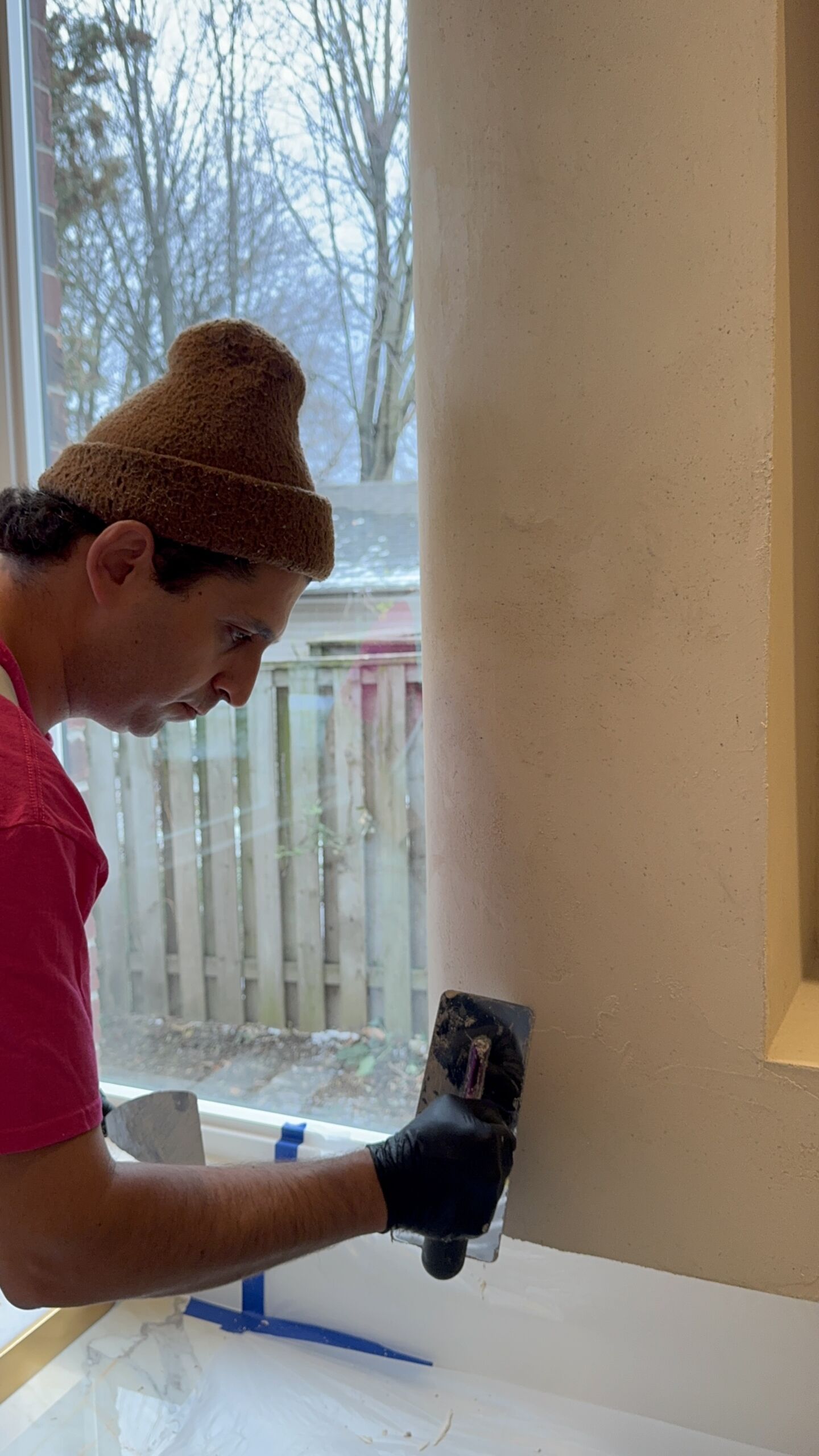
The application of Marmorino at Kleins Ridge was a labor-intensive, multi-step process that required the steady hand of a master artisan. Unlike industrial finishes, this Venetian Plaster was hand-troweled in successive, translucent layers, where the applicator carefully managed the “open time” of the lime to create the specific minimum trowel skip aesthetic requested for the project. By varying the angle and pressure of the trowel, we were able to embed a unique architectural rhythm into the walls and ceilings—a process that cannot be replicated by machines. This artisanal approach ensures that no two square feet are identical, embodying the Wabi-Sabi principle of finding perfection in hand-crafted variation.
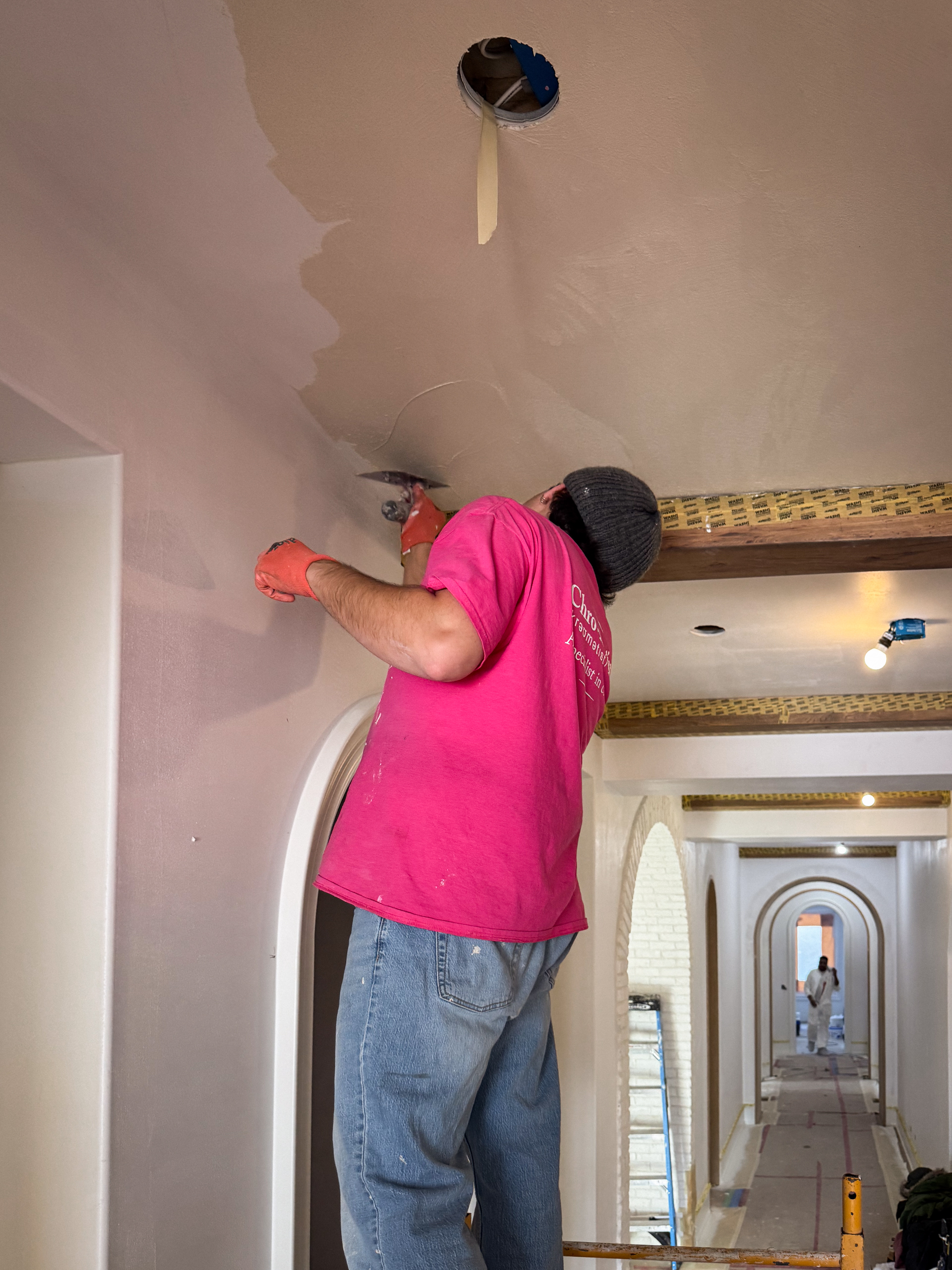
Our artisan hand-troweling a thin, translucent layer of Marmorino Venetian Plaster onto hallways ceiling to achieve a soft limestone texture.
Design Harmony: Stone, Wood, and Light
The goal at Kleins Ridge was to create a “silent hallway”—a space that feels tranquil and grand without being loud. The design highlights include:
- The Limestone Aesthetic: We utilized a soft, warm white palette designed to mimic the look of aged, elegant limestone.
- Artisanal Texture: By utilizing minimum trowel skips, the surface retains a subtle, hand-crafted movement that invites the touch without overwhelming the eye.
- Architectural Contrast: The luminous, mineral surface of the plaster creates a striking counterpoint to the home’s rugged warm walnut beams and sophisticated arches.
- Monolithic Flow: Carrying the plaster from the foyer walls up onto the ceiling creates a seamless, monolithic environment that echoes the timelessness of a European villa.
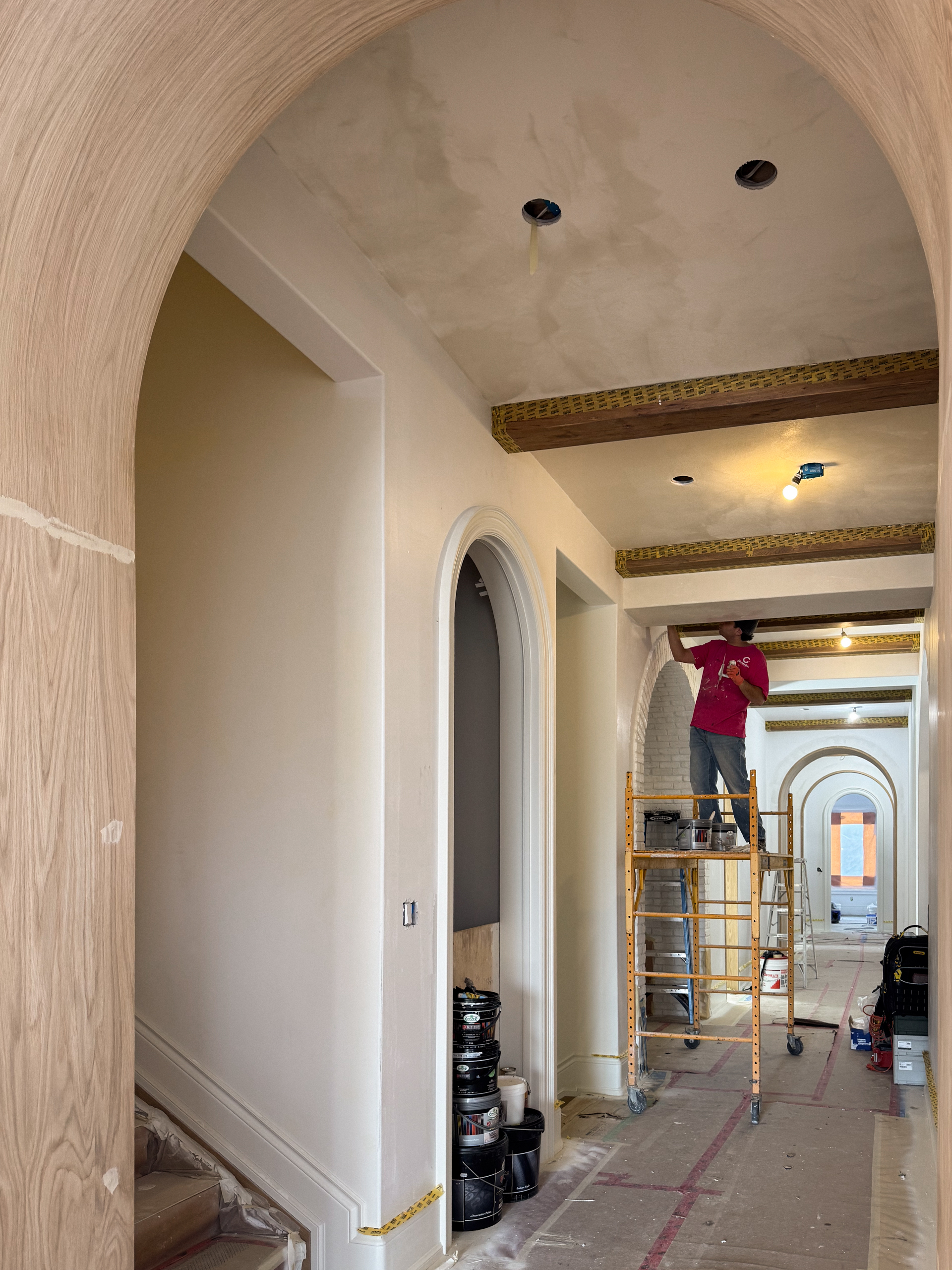
Applying Venetian plaster to the ceiling requires expert control to ensure the lime finish ages with consistent character.
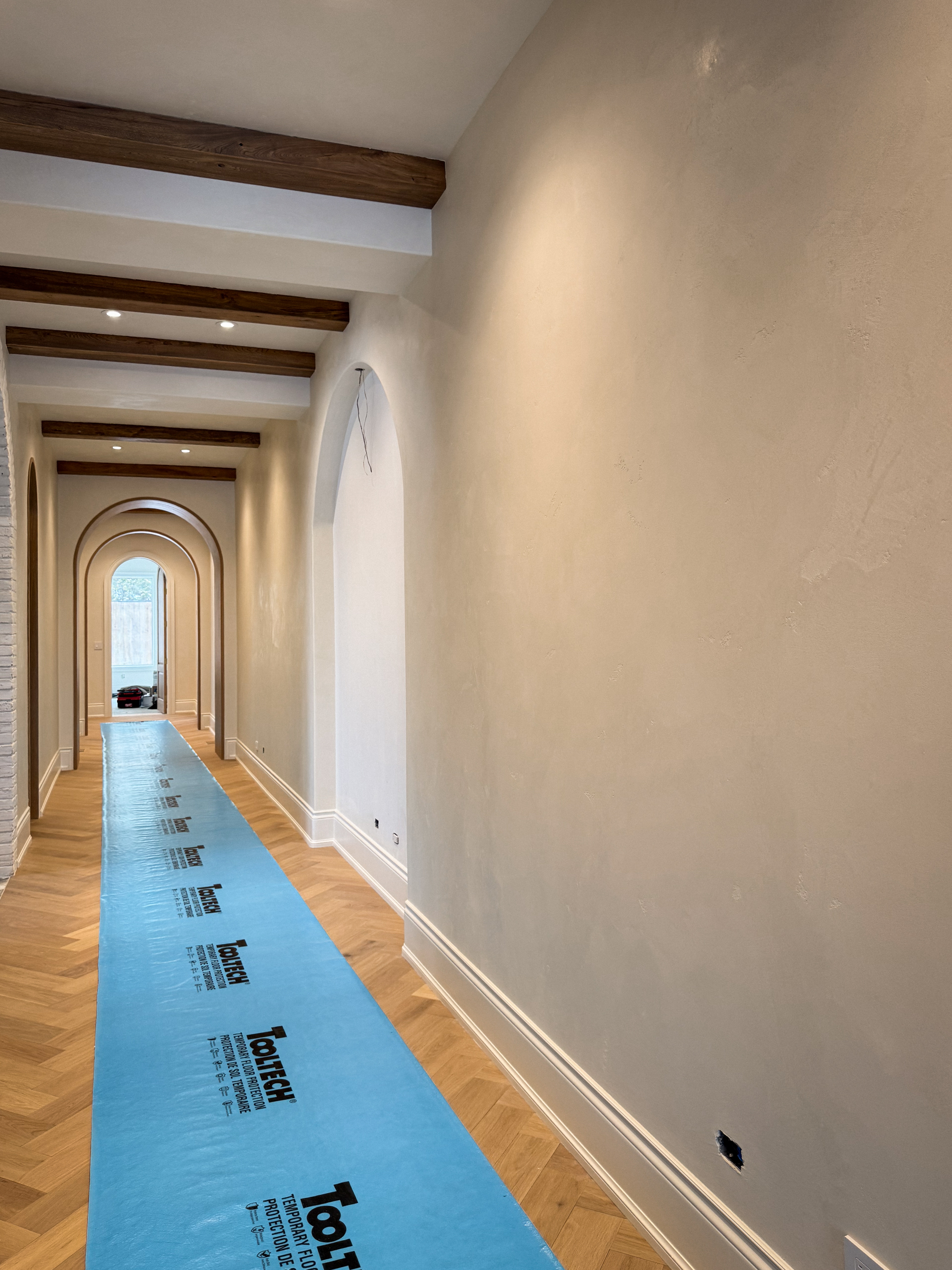
The finished walls and ceilings stand as a stone-like monolith that anchors the modern European farmhouse residence, perfectly complementing the rustic ceiling beams.
Microcement and Tonal Harmony
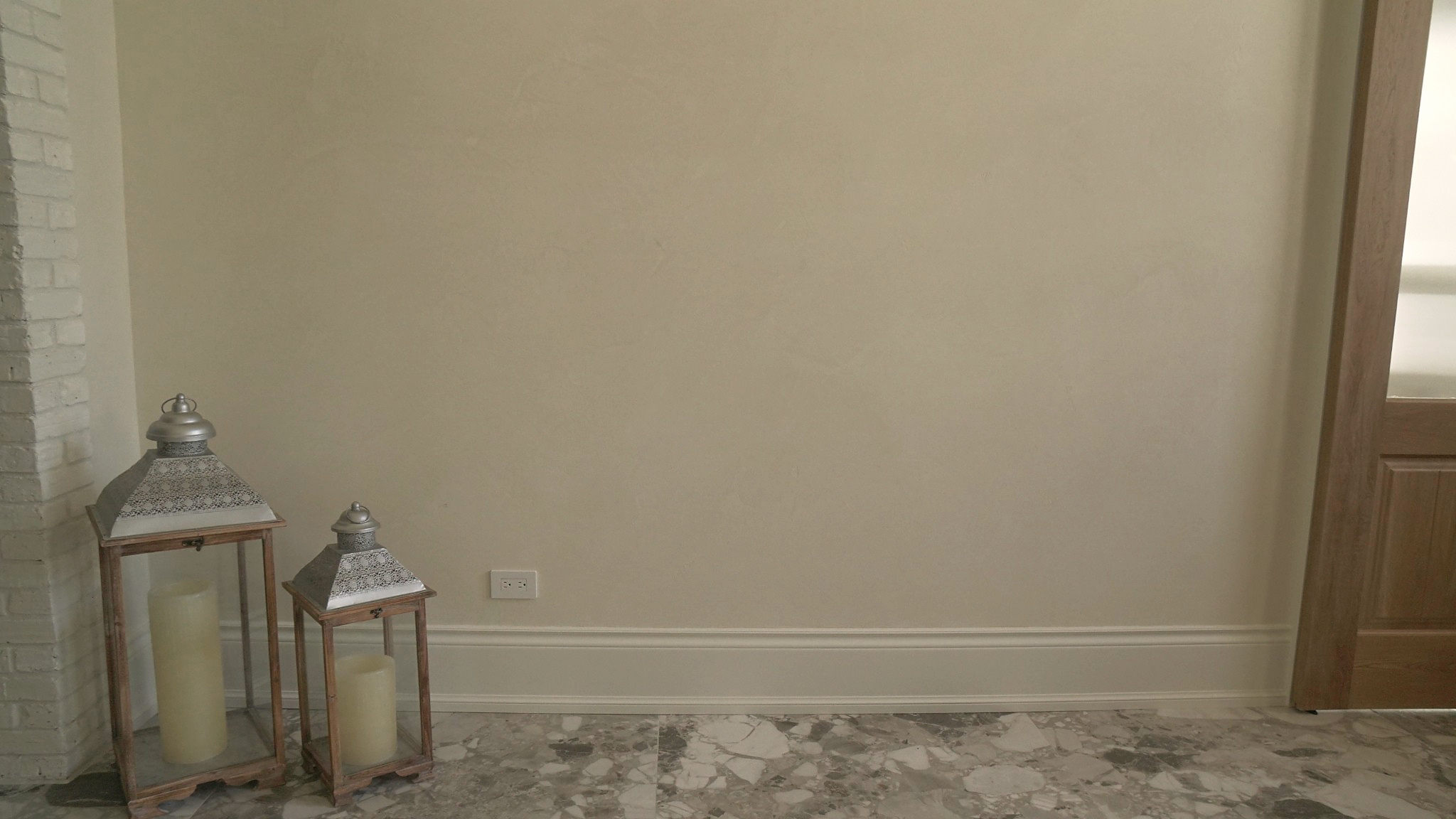
To anchor the room, we pulled a sophisticated palette from the adjacent walls, finished in Benjamin Moore’s Stardust. This soft, earthy greige acts as the perfect companion to the microcement, highlighting its natural “movement” and character. By accenting the surrounding walls in this specific tone, the dining room gained a sense of depth and architectural intent that standard paint simply cannot achieve.
The result is a space that feels both grounded and ethereal—a true testament to how much character a textured microcement wall adds to a modern home. Learn more about ways to use microcement to style bathrooms, kitchens, and more in this article, 10 stylish ways to use microcement in your home and garden.
Where Venetian Plaster Can Be Used
The versatile nature of Venetian Plaster makes it an ideal choice for almost any interior surface where a touch of timeless luxury is desired. Beyond the hallway walls, foyer, and expansive ceilings seen in the Kleins Ridge project, this finish is frequently applied to:
-
Feature Fireplaces: Creating a heat-resistant, stone-like monolithic focal point in Great Rooms.
-
Arched Headers and Portals: Softening architectural transitions with a seamless, hand-crafted glow.
-
Kitchen Hoods and Backsplashes: Providing a durable, elegant alternative to standard cabinetry or tile.
-
Primary Ensuites: Leveraging its natural breathability and mold resistance in well-ventilated luxury spa baths.
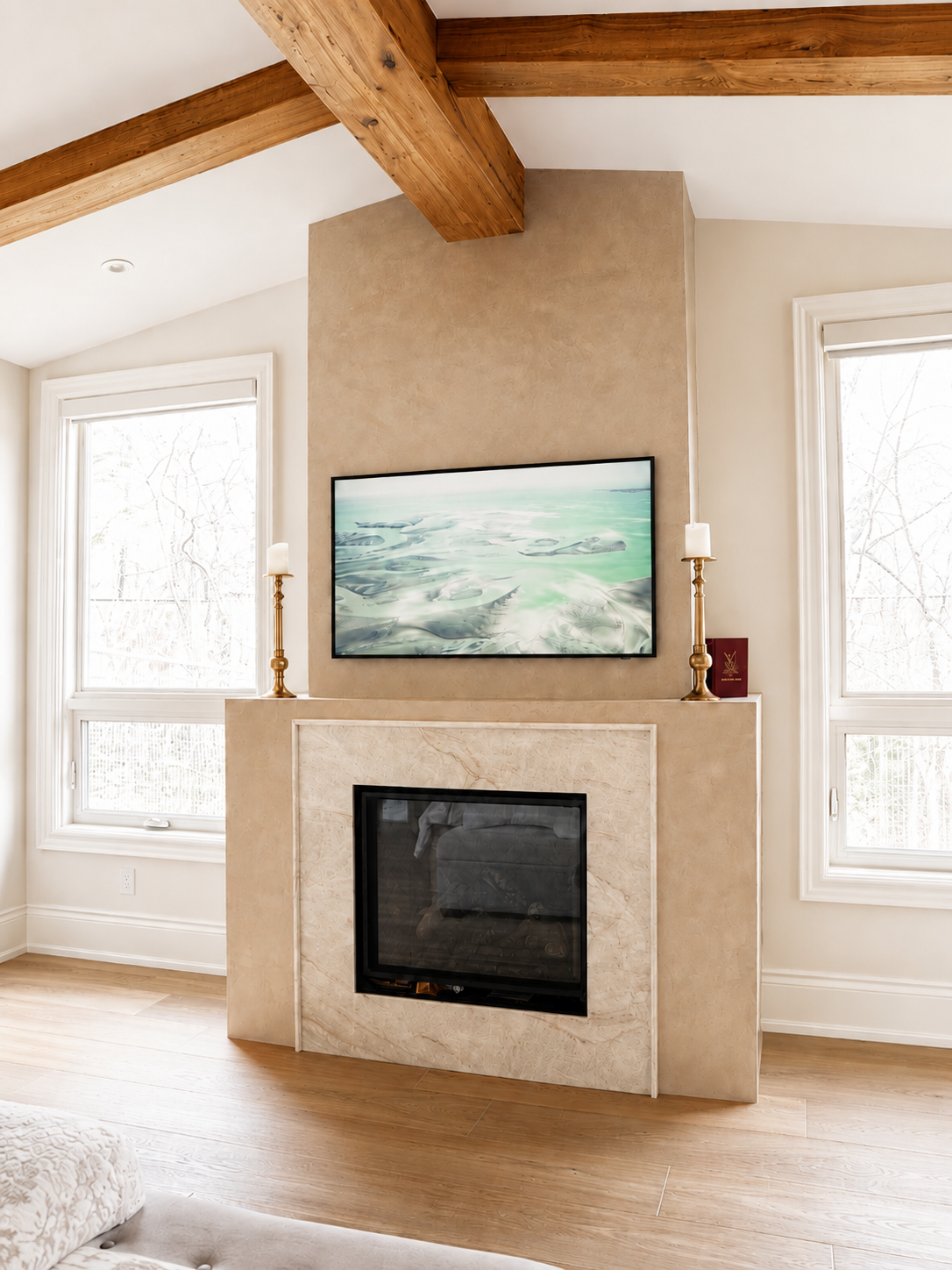
A floor-to-ceiling fireplace in a Great Room finished in a warm, hand-waxed taupe Venetian Plaster.
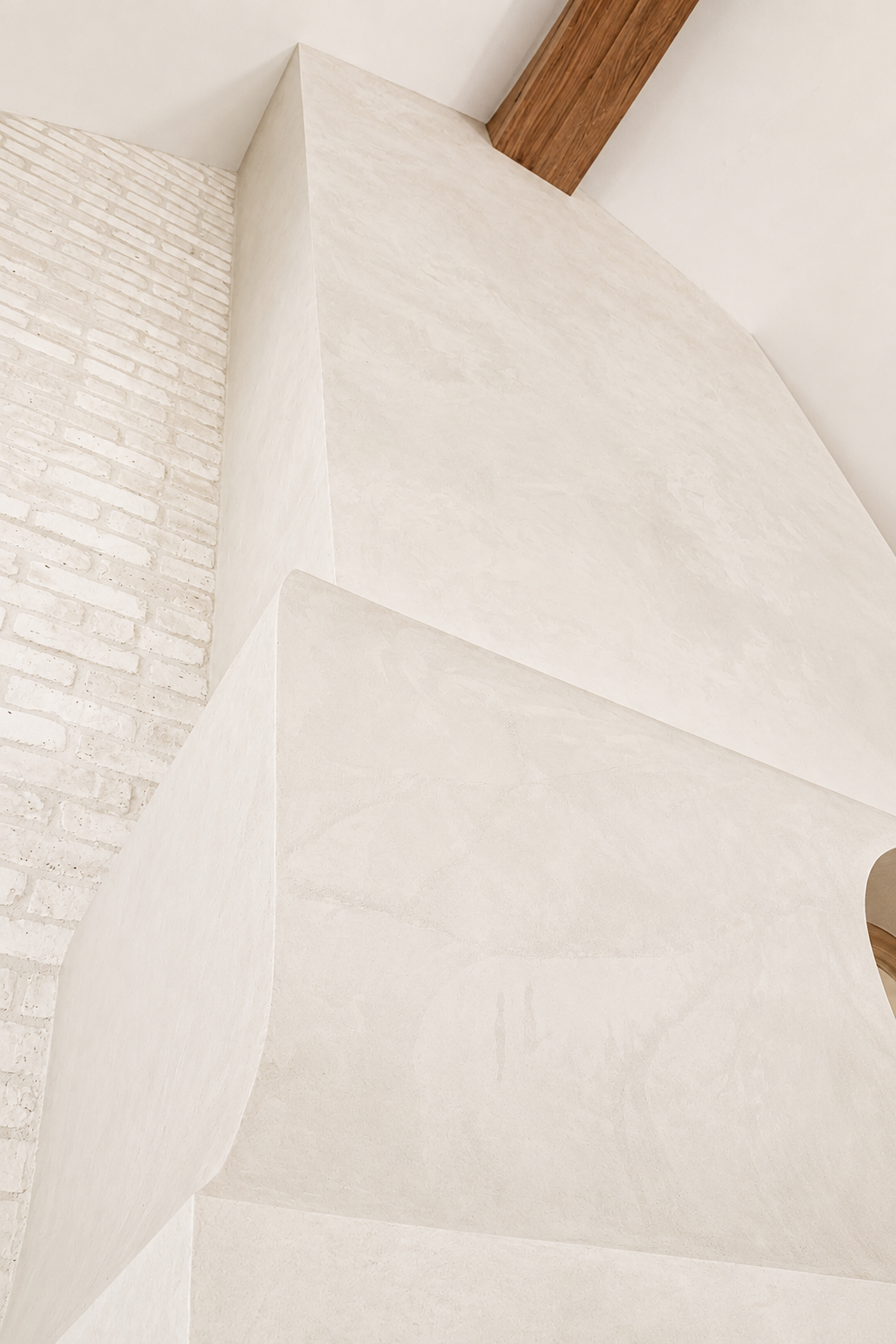
A 18-foot tall kitchen range hood finished in a seamless, shimmering pearlescent Venetian Plaster. Read more on pearlescent venetian plaster, in our recent article.
The Importance of Hiring a Professional Venetian Plaster Artisan
Achieving the “Silent Luxury” of a half-burnished finish requires far more than just a trowel; it requires a deep understanding of mineral chemistry and architectural form. The artisanal application of Marmorino is a delicate dance of timing and technique. A professional artisan knows exactly how to manage the “open time” of the lime to ensure the minimum trowel skips remain consistent across complex surfaces like curved ceilings and arches. Improper application by an inexperienced installer can lead to “chatter marks,” inconsistent tonality, or delamination. Entrusting your project to a specialist ensures that the substrate—whether raw MDF prepped with Durabond or Level 5 drywall—is engineered correctly to support a finish that will age beautifully and maintain its character through 2030 and beyond.
Microcement Walls FAQ: Everything You Need to Know
Don’t settle for a temporary trend. Bring the enduring elegance of Venetian Plaster or Microcement to your home and enjoy a finish that grows in character every year.
Microcement isn’t just a finish—it’s a statement of quality and durability. Contact us today to discuss specifications for your next commercial development or residential masterpiece.
Tel: 416-606-8060
Email: shayan@chromatist.com