
Why Microcement is Redefining the Home Spa

Microcement is The High-Performance, Hygienic Choice for Modern Wellness Spaces

In the world of high-end Toronto real estate, the “home spa” has evolved. It is no longer just a functional bathroom; it is a sensory retreat designed for “Quiet Luxury.” At the heart of this design shift is the emergence of Microcement—a material that has moved from industrial lofts to the most prestigious estates in Castle Frank and Rosedale.

Designing your home spa in Toronto, Texas, or Florida?

Speak To Shayan: 416-606-8060 | Request A Quote

Precision and Seamless Continuity: Microcement Home Spa
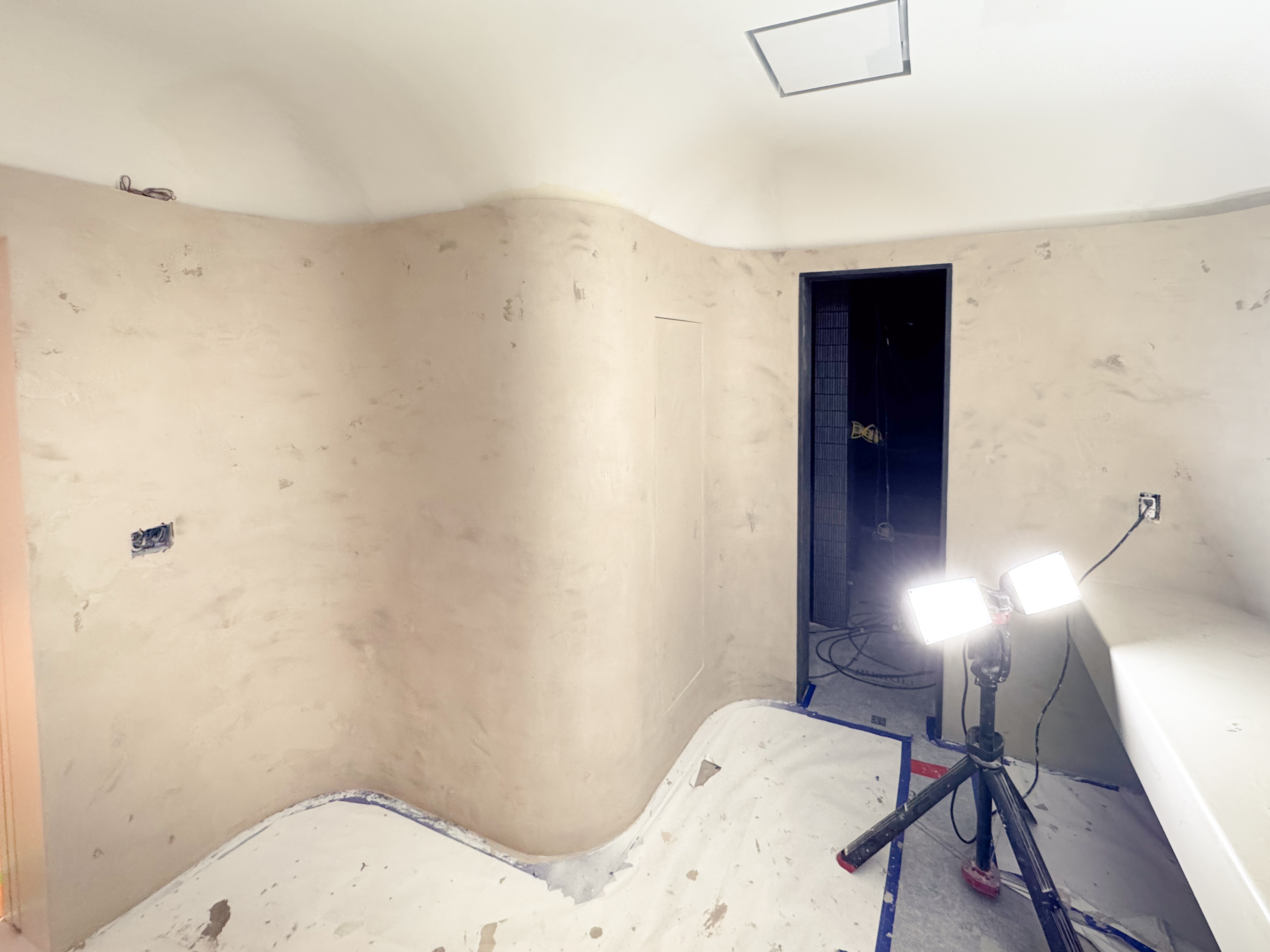
A contemporary home spa in Castle Frank, Toronto, featuring seamless soft grey microcement applied to the walls, closet doors, and a built-in vanity, finished with a matte, waterproof sealer.
Two Colour Microcement Installation for Castle Frank Home Spa

What Exactly is Microcement?

Microcement (often called micro-concrete) is a high-performance, polymer-modified mineral coating. Unlike traditional thick-set concrete, microcement is applied in multiple thin, hand-troweled layers (usually only 3mm thick). It is engineered to bond to almost any existing substrate—including tile, drywall, wood, and MDF—allowing for a stone-like finish without the weight or the demolition.

Why Microcement is the Standard for Modern Wet Areas

Interior designers and architects are increasingly specifying microcement for wet areas and home spas for three primary reasons:

  • The Death of the Grout Line: Traditional tile creates a visual “grid” that can feel busy and clinical. Microcement provides a monolithic flow, turning floors, walls, and ceilings into a single, unbroken skin.

  • Unmatched Hygiene: In high-moisture environments, grout is the weak point where mold and limescale thrive. Microcement is non-porous and seamless, making it the most antimicrobial and easy-to-clean surface available today.

  • Tactile Warmth: Unlike cold porcelain or natural stone slabs, microcement has a natural thermal mass that feels soft and “warm” to the touch—a critical factor for barefoot comfort in a spa setting.

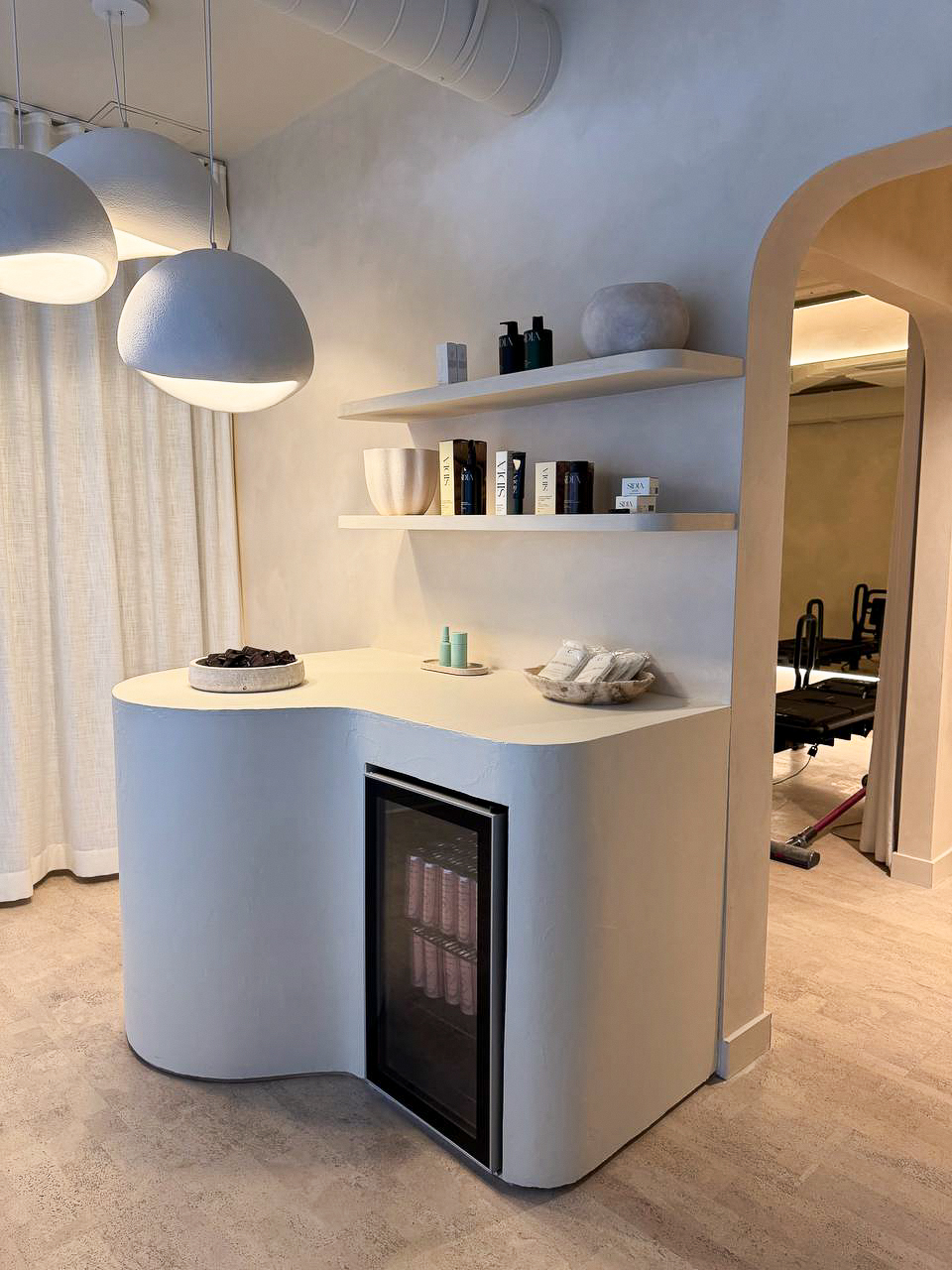
A video showcasing the reception desk at a Pilates studio in Toronto, finished in a moody off-white tone microcement, with soft entrance curves and limewash walls enhancing the serene, sculptural atmosphere.
Reception Desk Microtopping for Lagree Collective Pilates Studio 
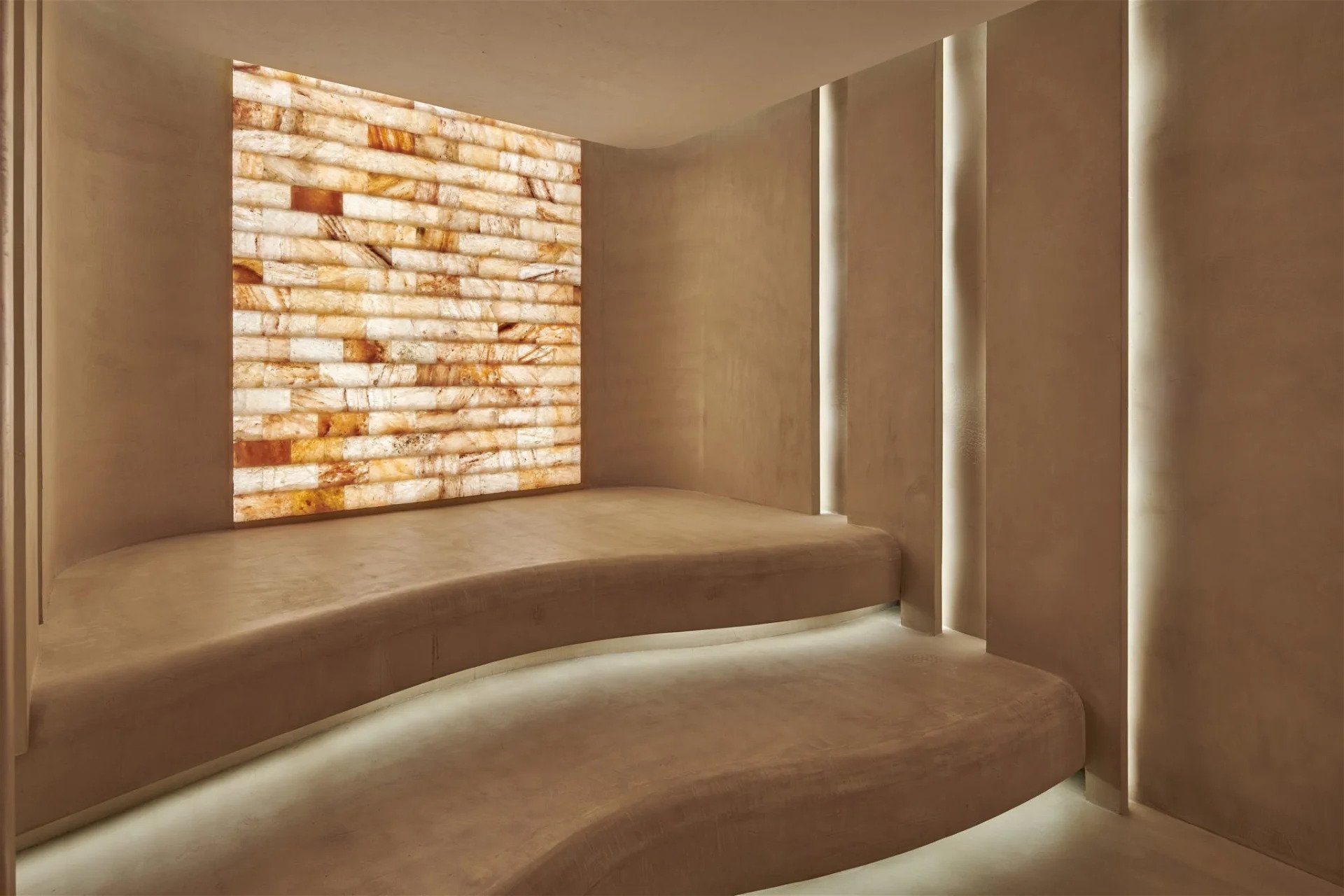
Seamless microcement floor and walls
Microcement floor and wall covering by Diasen
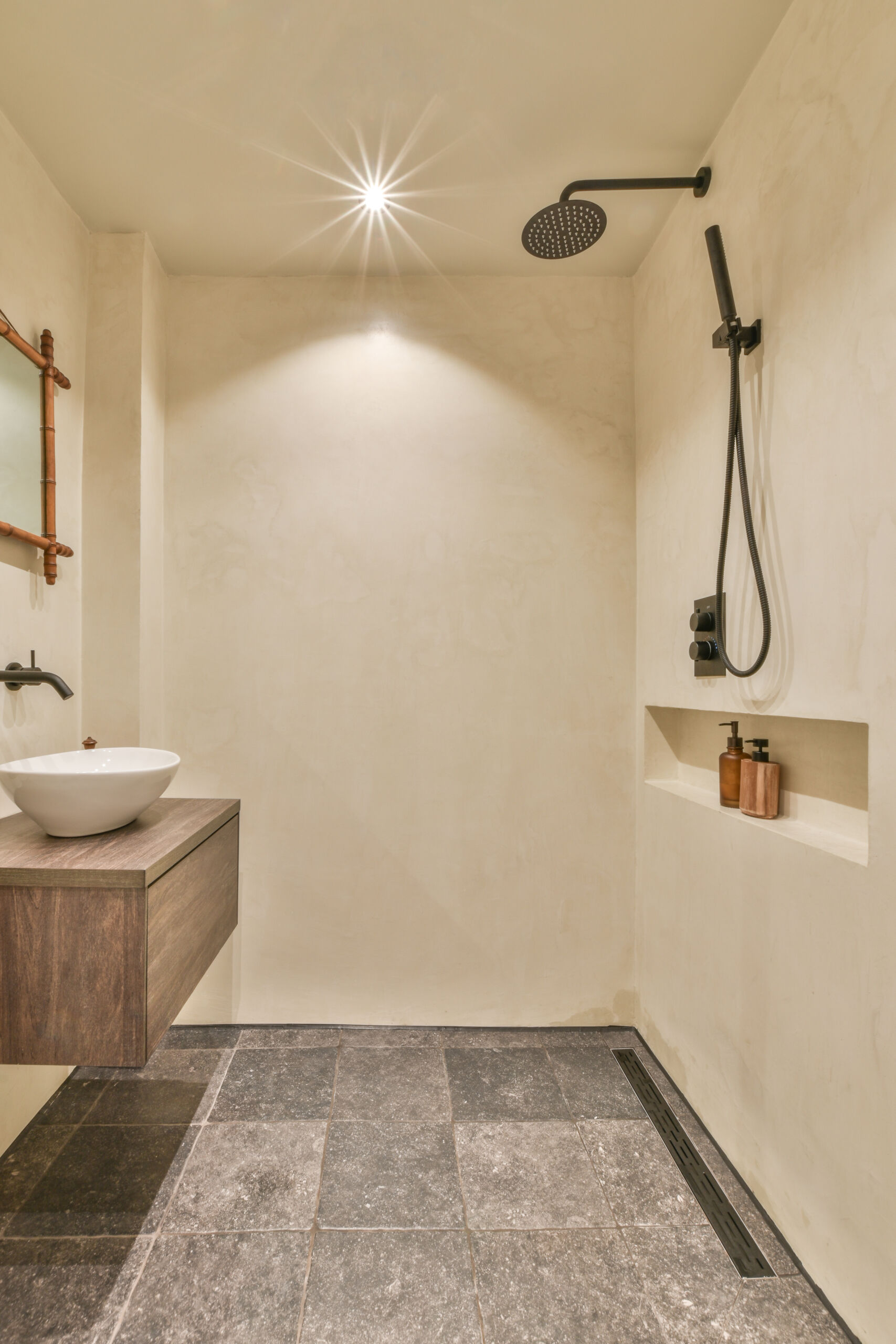
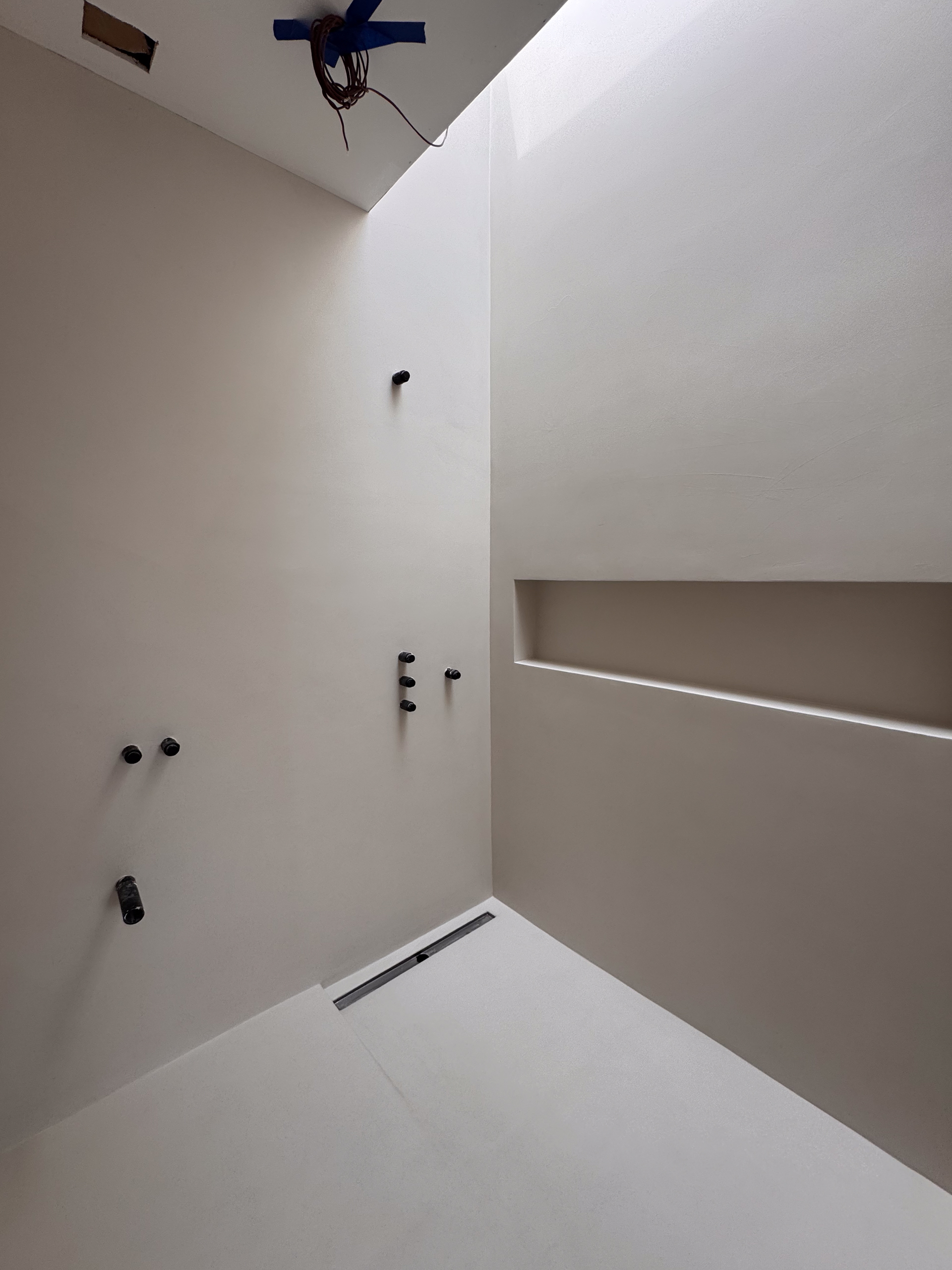
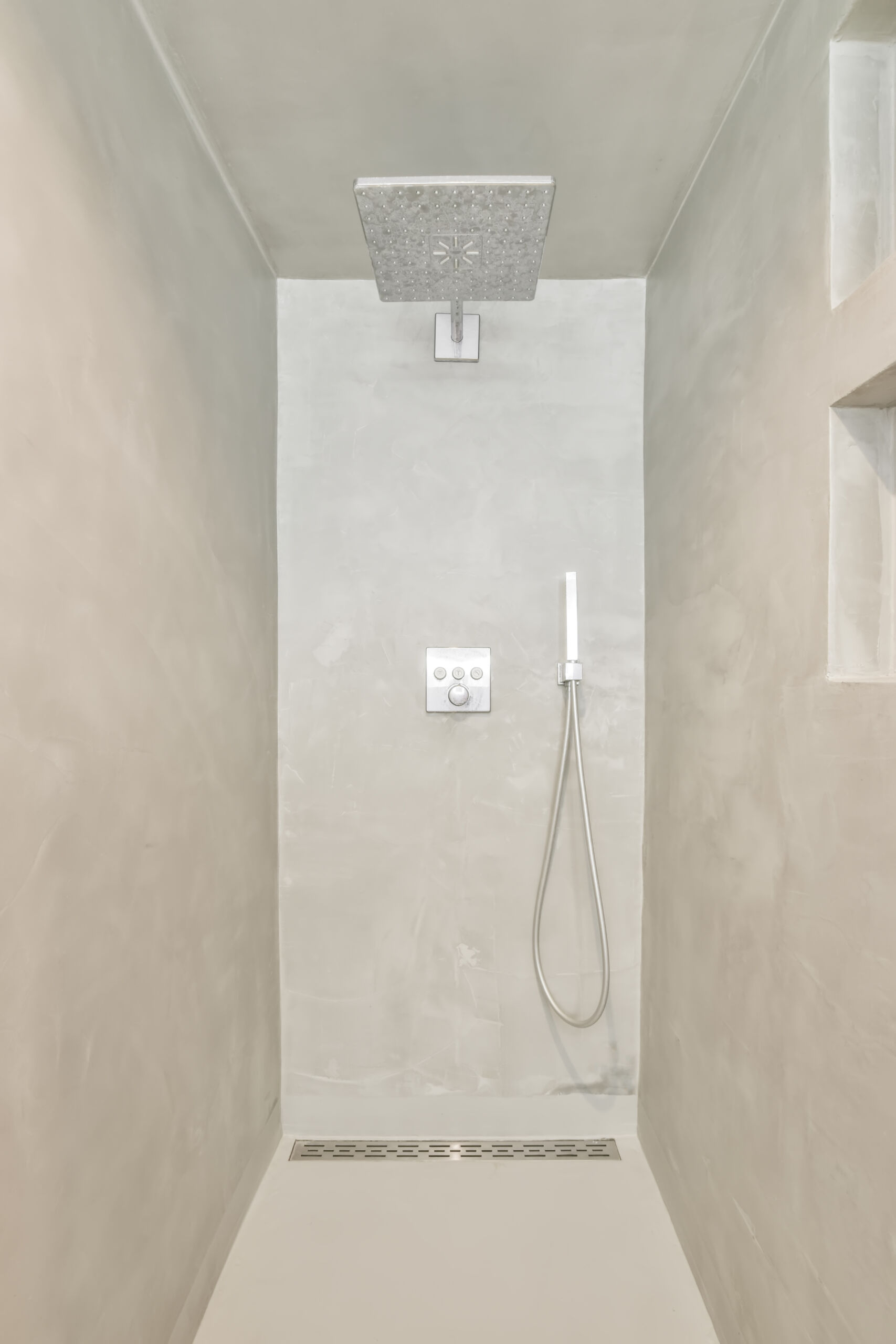
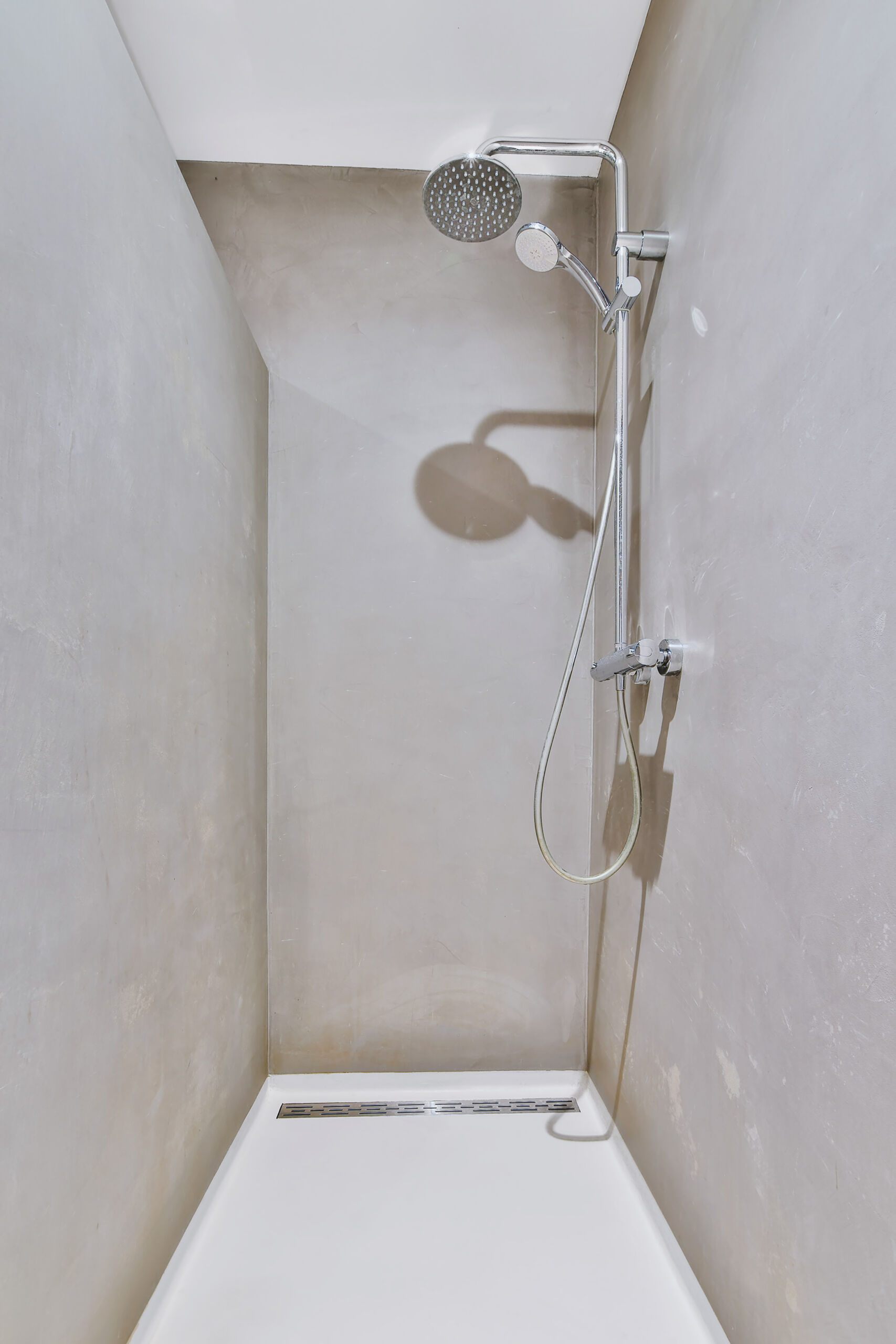
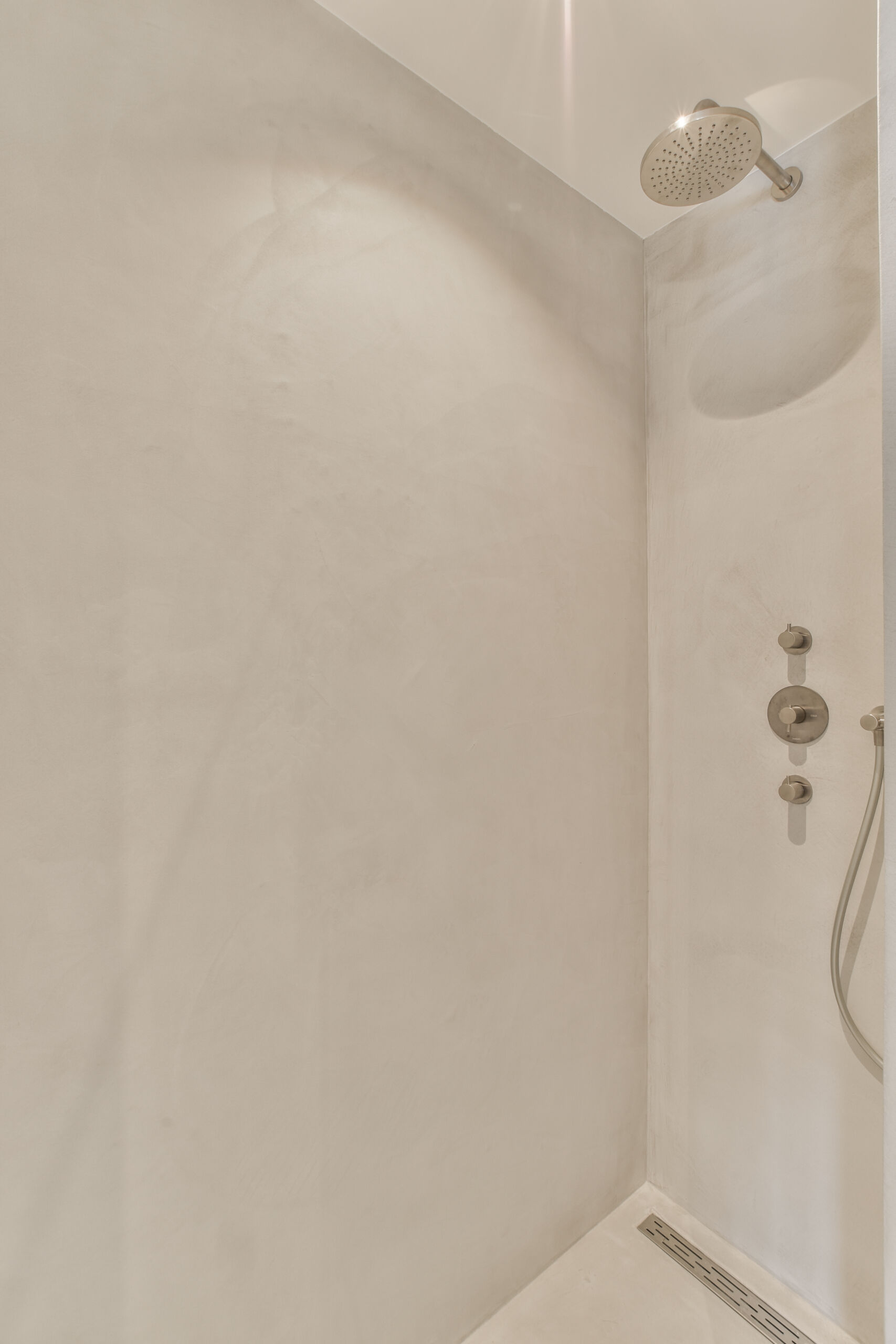
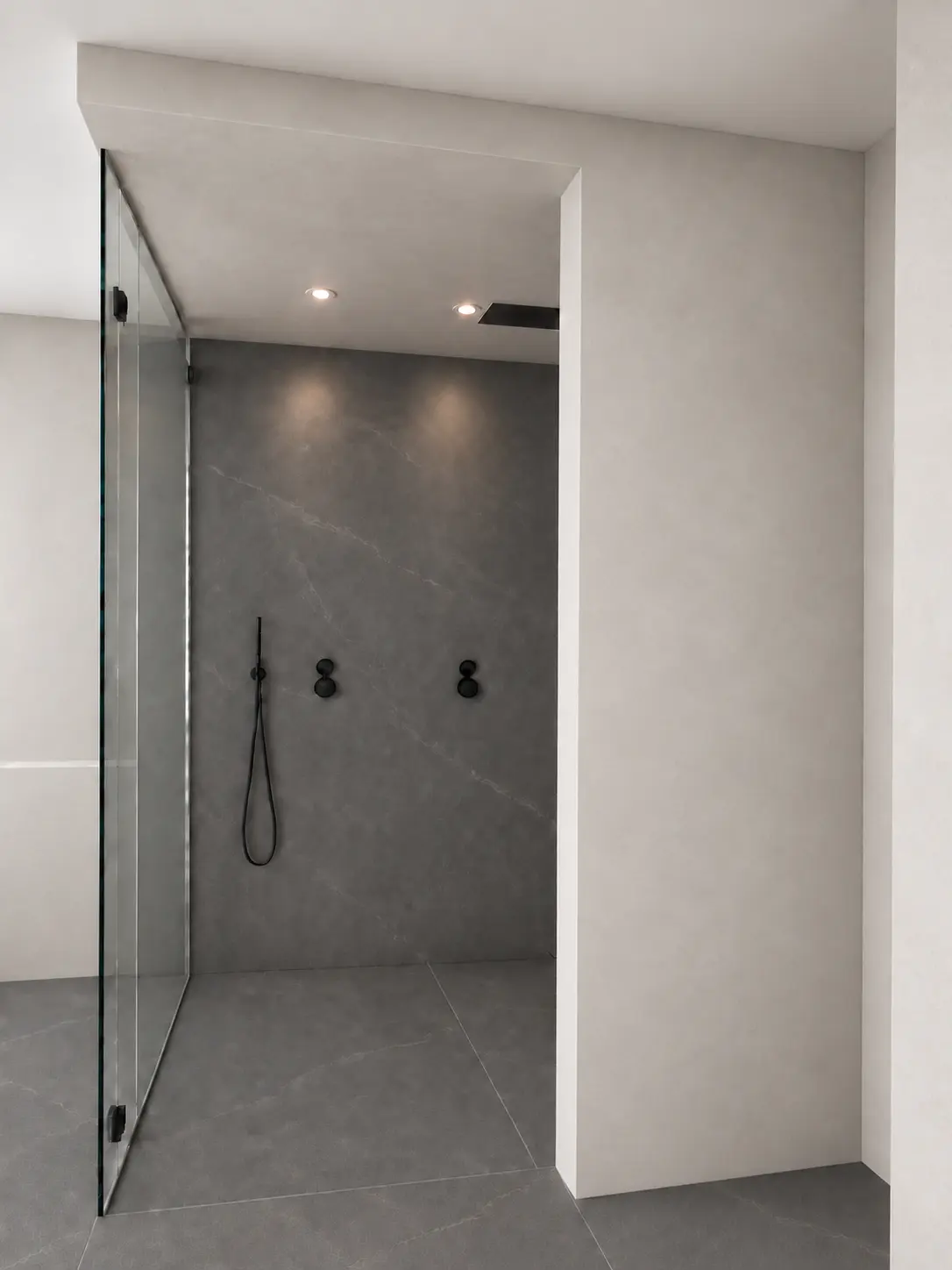
Monolithic microcement flooring and walls in a high-end fitness studio, shower walls and floors, and bathroom niches.

Project Spotlight: The Castle Frank Monolithic Suite

Our most recent installation in Toronto’s historic Castle Frank enclave serves as a masterclass in what is possible when microcement is pushed to its architectural limit.

The Two-Tone Technique

For this private wellness retreat, we moved away from flat colors. Our artisans hand-troweled a bespoke two-tone finish, layering deep mineral charcoals with softer slate greys. This creates a “clouding” effect—a natural movement that mimics the depth of a mountain cavern, providing a meditative backdrop for the spa.

Total Material Integration

The hallmark of this project was the seamless wrap. To achieve a truly monolithic look, we didn’t stop at the walls:

  • The Walls: Hand-troweled in our signature two-tone texture for a stone-carved feel.
  • The Closet Doors: We meticulously wrapped the custom closet doors in the same microcement skin. This “hides” the storage, allowing the cabinetry to disappear into the architecture.
  • The Vanity Stand: The vanity was treated as a sculptural element, wrapped entirely in micro-concrete to eliminate joints between the counter and the base.

The Result: A space that feels “carved” rather than “built.” By unifying the doors, walls, and furniture in a single mineral finish, we eliminated the visual clutter, leaving only a serene, expansive sanctuary.
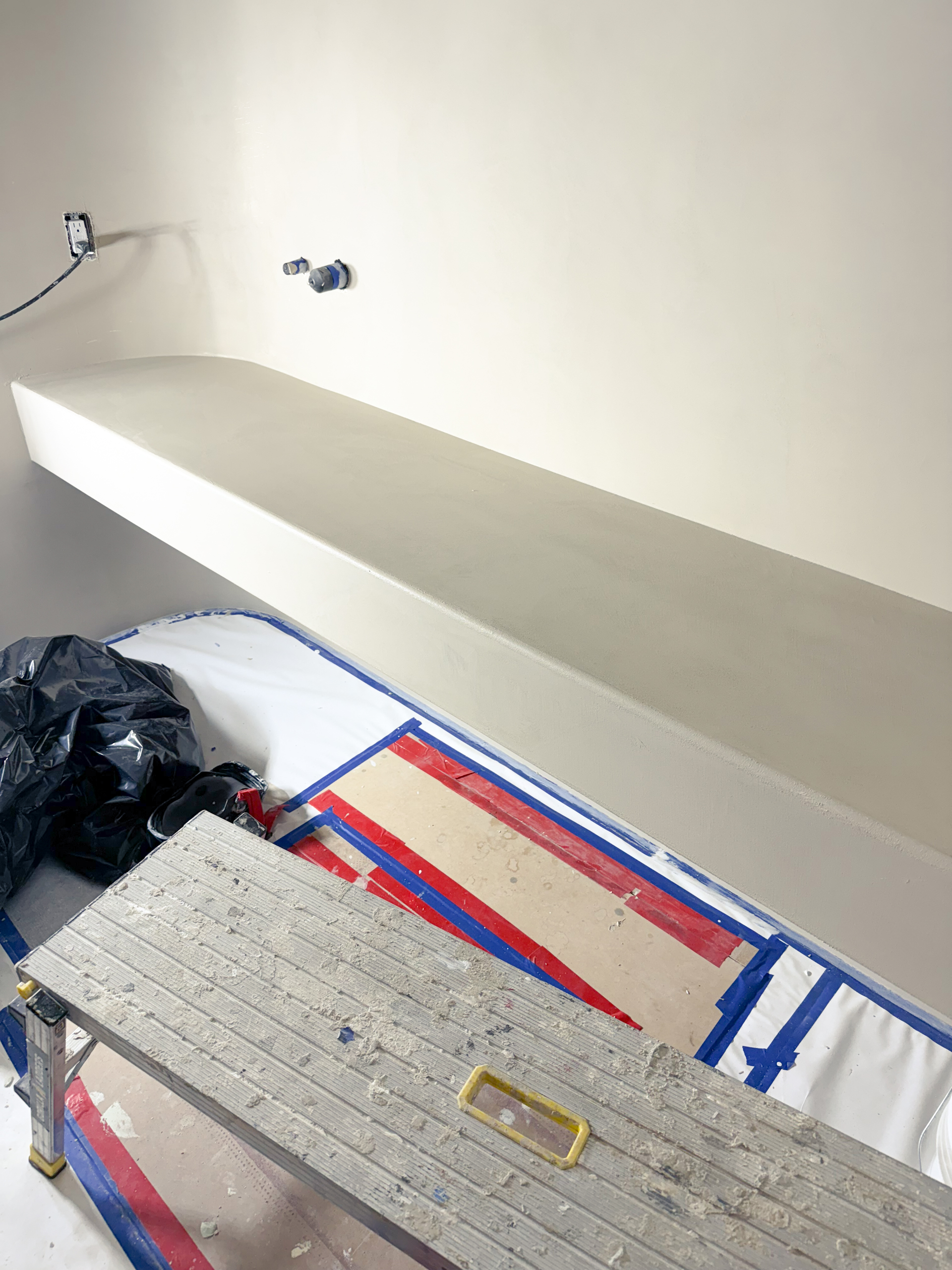
A contemporary home spa in Castle Frank, Toronto, featuring seamless soft grey microcement applied to the walls, closet doors, and a built-in vanity, finished with a matte, waterproof sealer.
Microcement Installation Over Vanity Stand
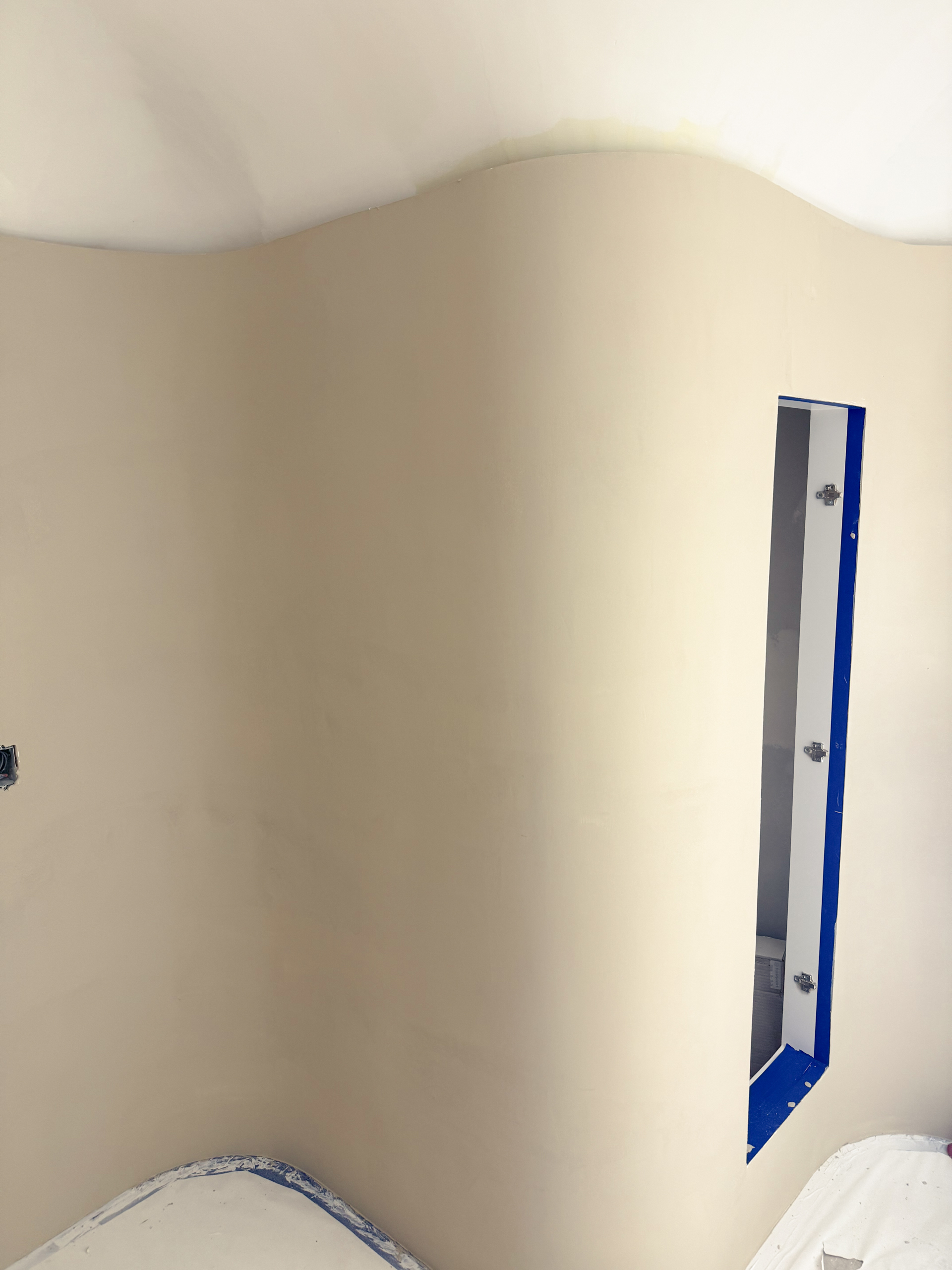
A contemporary home spa in Castle Frank, Toronto, featuring seamless soft grey microcement applied to the walls, closet doors, and a built-in vanity, finished with a matte, waterproof sealer.
Microcement Home Spa Walls and Furniture

Why Choose Chromatist for Your Microcement Project?

Wrapping doors and furniture in microcement requires a level of substrate engineering that goes beyond standard application. We utilize specialized high-flex primers and fiberglass mesh reinforcement to ensure that even “moving” parts like doors remain crack-free and durable for years to come. Learn more about the importance of microcement waterproofing and substrate preparation in our recent blog.

Frequently Asked Questions Microcement in Wet Areas

Is microcement good for bathrooms?2025-08-27T12:38:47-04:00

Yes, microcement is ideal for bathrooms. It’s waterproof, seamless, and highly durable, making it perfect for walls, floors, showers, and vanities. Its modern, minimalist, and seamless look pairs well with both contemporary and organic design styles.


What are the downsides of microcement?2025-08-27T12:38:53-04:00

Microcement can be expensive and requires skilled application to avoid imperfections. It may develop hairline cracks over time if installed improperly or on an unstable substrate. It also needs sealing to remain water-resistant.


Is microcement cheaper than tiling?2025-08-27T12:38:57-04:00

Not always. Microcement is typically comparable or slightly more expensive than tiling, especially for large or custom projects. However, its seamless look, lower maintenance, and design flexibility often justify the investment.

Additionally, microcement can be tinted in a wide range of colours and customized with different textures—from smooth satin to raw concrete or even stone-like finishes. This makes it a versatile alternative for creating personalized and high-end bathroom designs.


Is it expensive to microcement a bathroom?2025-08-27T12:39:04-04:00

Yes, microcement bathrooms usually cost between $25–$35+ per square foot in Toronto, depending on the size, prep work, and finish level. Accent features, niches, or ceilings can add to the cost due to the custom labor involved.

Does microcement crack easily?2025-08-27T12:39:08-04:00

Microcement is flexible and resistant to cracking when applied correctly over a stable, well-prepared surface. However, improper installation or movement in the substructure can cause hairline cracks. Hiring experienced, reputable microcement contractors is essential. Learn more on how to hire a professional contractor, here.


Does microcement go mouldy?2025-08-27T12:39:15-04:00

No, when sealed properly, microcement is non-porous and resistant to mould and mildew. Its seamless finish also means no grout lines where bacteria and moisture can accumulate, making it ideal for hygienic spaces like bathrooms.


Can microcement go over drywall?2025-08-27T12:07:08-04:00

Yes, microcement can be applied over drywall, provided the surface is clean, primed, and reinforced with a mesh layer if needed. Proper preparation ensures strong adhesion and longevity.


What is the lifespan of microcement?2025-08-27T12:07:37-04:00

With proper installation and care, microcement can last 15–20 years or more. It may require resealing every 5–7 years, depending on wear and exposure to moisture


Can you DIY a microcement bathroom?2025-08-27T12:08:00-04:00

Microcement is not recommended for DIY, especially in wet areas like bathrooms. It requires precise technique, layering, and timing. Small mistakes can lead to moisture issues or an uneven finish, so it’s best left to professionals.


Why is microcement so expensive?2025-08-27T12:35:05-04:00

Microcement is labor-intensive, requiring multiple coats, drying time, and expertise in application. The materials themselves are also specialized and imported in many cases. Its durability, aesthetics, and seamless design contribute to its premium price.

How long does it take to microcement a bathroom?2025-08-27T12:35:26-04:00

Most microcement bathrooms take 4–7 days, depending on the scope. This includes priming, multiple base and finish coats, drying time between layers, and sealing. Complex designs or large spaces may take longer.


Is microcement the same as epoxy?2025-08-27T12:35:49-04:00

No. Microcement is a cement-based coating, while epoxy is resin-based. Microcement offers a natural, matte or satin texture, while epoxy is typically glossy and plastic-like. Microcement is more breathable and visually organic—better suited for luxury interiors.


Tadelakt vs. Microcement – Which is better for bathrooms?2025-08-27T12:36:52-04:00

Both Tadelakt and Microcement are excellent waterproof finishes used in modern bathrooms, but they differ in style, application, and maintenance:

Tadelakt is a traditional Moroccan lime-based plaster known for its soft, organic look and natural sheen. It’s hand-burnished with olive soap, creating a waterproof layer. It offers old-world charm but requires more maintenance (yearly maintenance) and skilled artisans for application.

Microcement, on the other hand, is a cement-based coating that offers a sleek, contemporary finish. It’s highly durable, waterproof, and available in many textures and colors. It’s lower-maintenance and more adaptable for modern, minimalist, or industrial designs.

In short:

  • Choose Tadelakt for natural beauty and artisanal charm.
  • Choose Microcement for a clean, seamless, modern finish with more flexibility.


Can microcement go directly over tiles?2025-08-27T12:37:39-04:00

Yes, microcement can be applied directly over existing tiles, making it a popular choice for bathroom renovations. Before application, the tile surface must be:

  • Cleaned and degreased
  • Roughened or primed to ensure proper adhesion
  • Leveled if there are uneven grout lines or significant gaps

This process saves time and demolition costs while creating a seamless, waterproof surface ideal for showers, floors, and walls.

Why has microcement become so popular in bathroom renovations recently?2025-08-27T12:38:32-04:00

Microcement has gained major popularity in bathroom renovations because of its seamless, waterproof finish and modern, minimalist look. In 2025, design trends are shifting away from grout lines and heavy tile patterns toward smoother, sculptural surfaces. Microcement offers:

  • Custom textures and colours
  • Easy maintenance (no grout to clean)
  • Versatility (can be applied on walls, floors, ceilings, and furniture)
  • Quick installation over existing surfaces like tile or drywall
  • It’s also compatible with curved forms, niches, and integrated shelves—making it a go-to for contemporary, spa-like bathrooms.

Learn more about microcement in bathroom renovations here.

How does your microcement contractor service work in Toronto?2025-10-22T15:33:24-04:00

Our microcement service is a comprehensive, multi-step process designed to deliver a flawless custom finish:

  • Consultation & Quote: We begin with an on-site consultation to assess your space, discuss your colour/texture vision, and provide a detailed, custom quote.
  • Custom Sample Creation: Before any work begins, we create a custom sample board for each project. This allows you to approve the exact texture and colour of your chosen finish, ensuring it perfectly matches your vision.
  • Surface Preparation (Key Step): We meticulously prepare the existing surface (e.g., sanding tile, repairing cracks) and apply a specialized epoxy primer to ensure maximum adhesion.
  • Base Coat & Mesh: A flexible fiberglass mesh and microcement base coat are applied to prevent movement and cracking, creating a stable foundation.
  • Application Layers: We apply 2-3 layers of the decorative microcement finish by hand, achieving the unique texture and movement.
  • Curing & Sealing: After adequate curing time, 2-3 layers of high-performance polyurethane sealant are applied. This final step guarantees waterproofing and durability.

Elevate Your Space with Chromatist

From The Beaches to Castle Frank, we are Toronto’s specialists in high-end microcement and decorative plaster.

Ready to see the seamless look in action?

Tel: 416-606-8060

Email: shayan@chromatist.com

Project type: *

Decorative Wall Finishes for Toronto and Surrounding Areas

Areas We Service in Greater Toronto Area

Areas of Service

  • Forest Hill
  • Rosedale
  • Leaside
  • Chaplin Estates
  • Moore Park
  • Deer Park
  • Lawrence Park
  • Lytton Park
  • Ajax
  • Alliston
  • Aurora
  • Barrie
  • Bowmanville
  • Bracebridge
  • Bradford
  • Brampton
  • Burlington
  • Caledon
  • Hoggs Hollow
  • Governor’s Bridge
  • St. Andrew-Windfields
  • Sunnybrook
  • Yorkville
  • Annex
  • Summerhill
  • Casa Loma
  • Concord
  • Durham Region
  • Etobicoke
  • Georgina
  • Innisfil
  • Keswick
  • King
  • Scarborough
  • Schomberg
  • Simcoe
  • King West
  • Queen’s Park & University Avenue Area
  • St. Lawrence Market District
  • Harbourfront
  • Distillery District
  • he Bridle Path
  • Banbury-Don Mills
  • Kleinburg
  • Maple
  • Markham
  • Mississauga
  • Newmarket
  • Oak Ridges
  • Oakville
  • Peel Region
  • Rexdale
  • Richmond Hill
  • York Mills
  • The Kingsway
  • Baby Point
  • High Park North
  • Swansea
  • Bayview Village

  • Sutton
  • Thornhill
  • Toronto
  • Unionville
  • Uxbridge
  • Vaughan
  • Whitby
  • Witchurch-Stoufville
  • Woodbridge
  • York Region

Don’t See Your City? Contact us

Go to Top