
Bringing the Italian Countryside Home with Venetian Plaster
There is a specific kind of magic found in the rural villas of Tuscany—a warmth that feels as though it was baked into the walls by the sun. For our latest Kleinburg custom home project, we were tasked with transporting that rustic charm to a modern interior by applying an Old Tuscan Venetian Plaster finish across a sprawling, curved foyer ceiling.
To achieve an authentic European farmhouse feel, the ceiling couldn’t just be “painted.” It needed the soul, depth, and character of a century-old Italian estate. For this grand foyer, we moved beyond the walls to treat the ceiling as a fifth gallery surface. Using a traditional lime-based Venetian plaster, we created a Tuscan-inspired finish that captures and softens the light entering the entryway. The result is a rugged, breathable canopy that will develop a natural patina over time, grounding the home’s first impression in timeless Mediterranean warmth.
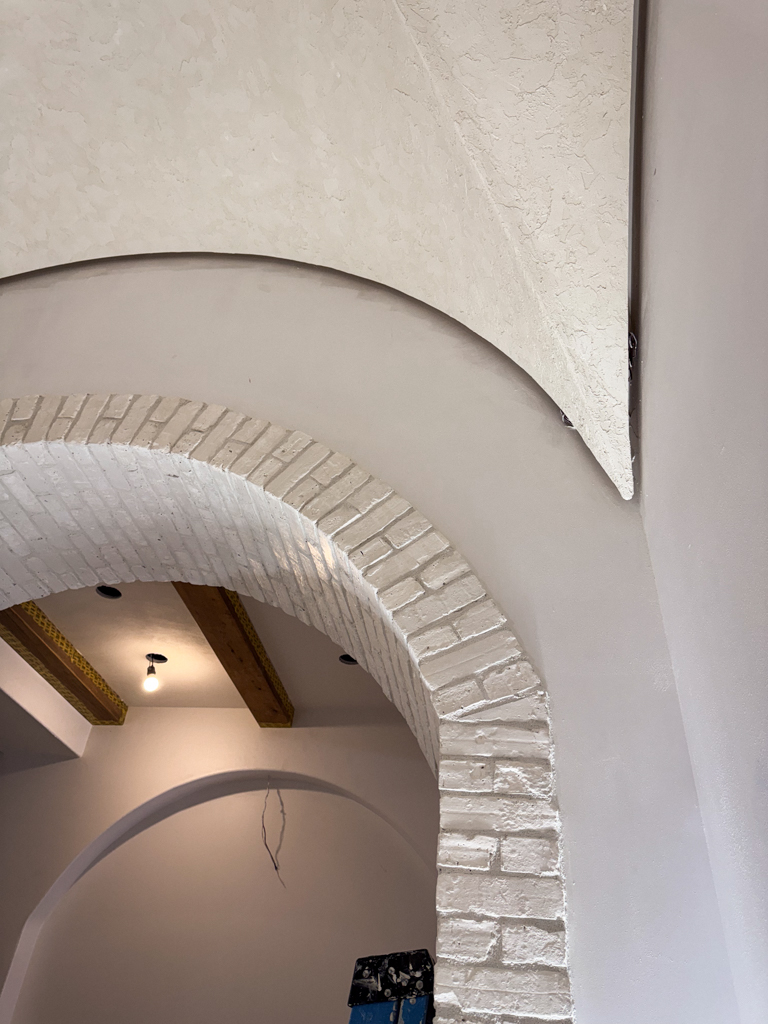
Achieving “Silent Luxury” in the foyer. This mineral-white finish mimics aged limestone, providing a luminous backdrop for the home’s European Farmhouse architecture.
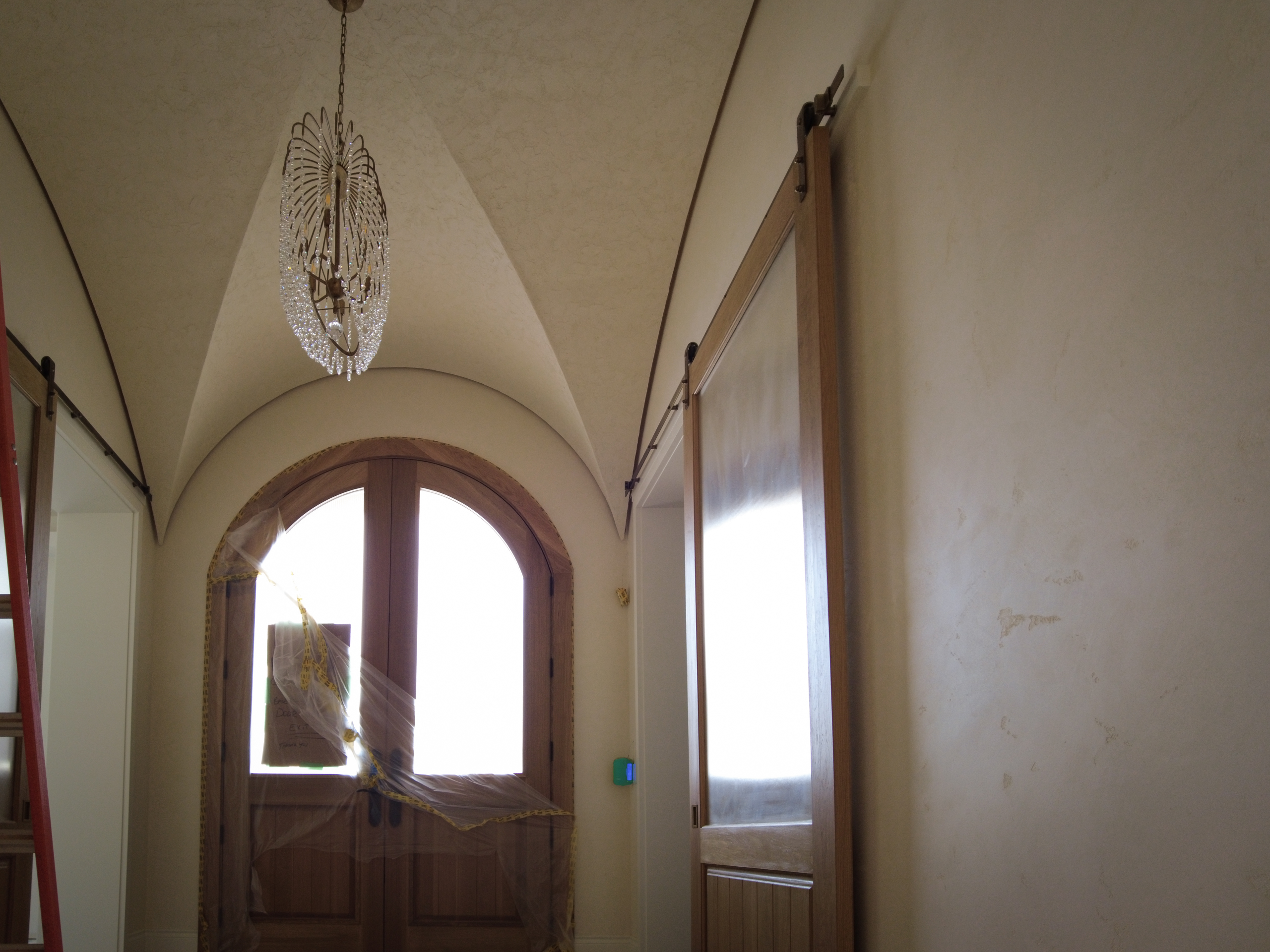
Old-world soul meets modern luxury. The rough skip-trowel texture on this curved ceiling adds a hand-crafted, historic feel to the entryway.
The Art of the Curve: Mastering the Foyer Ceiling
An arched or curved ceiling is a gift to architecture, but it requires a master application to truly shine. Unlike flat walls, a curved ceiling catches light from every angle, meaning any imperfection in the plaster will be magnified.
We hand-troweled the Old Tuscan finish, a specialized Venetian plaster known for its heavier grain and mottled texture. By following the natural radius of the foyer’s arches, we created a seamless flow that guides the eye upward. The result is a ceiling that doesn’t just sit above the room—it embraces it.
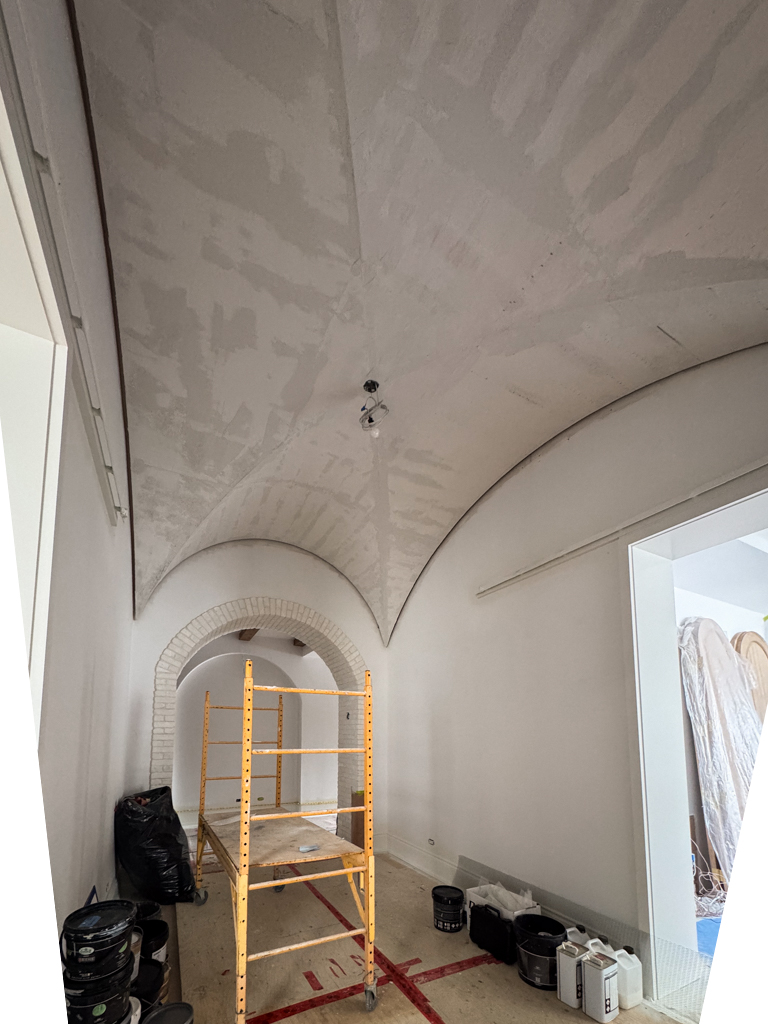
Building the foundation. We transform raw MDF into a “stone-ready” surface using Durabond to ensure a smooth, monolithic canvas for the Venetian layers.
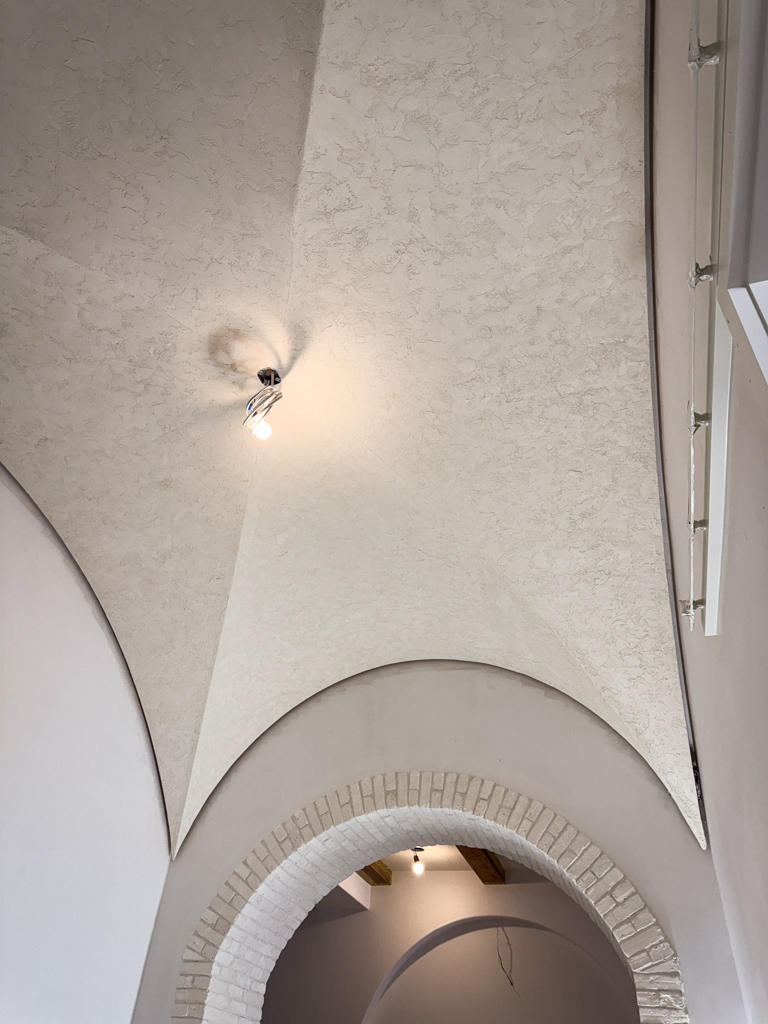
The foyer now boasts a stunning, mineral-white ceiling that looks centuries old yet remains undeniably elegant.
A Symphony of Textures: Brick, Archways, and Plaster
The secret to the “Rustic Italian” look is the layering of organic materials. This project was a masterclass in texture blending:
- The Brickwork: The echalky tones of the interior brick finishes provided the perfect rugged anchor.
- The Archways: Soft, plastered curves replaced sharp corners, mimicking the hand-built feel of a countryside villa.
- The Venetian Walls: We matched the ceiling with soft, tonal Venetian plaster walls to create a continuous “envelope” of color.
By combining the Old Tuscan plaster with these elements, the home lost its “new build” sharpness and gained a lived-in, soulful atmosphere. It’s the difference between a house and a sanctuary.
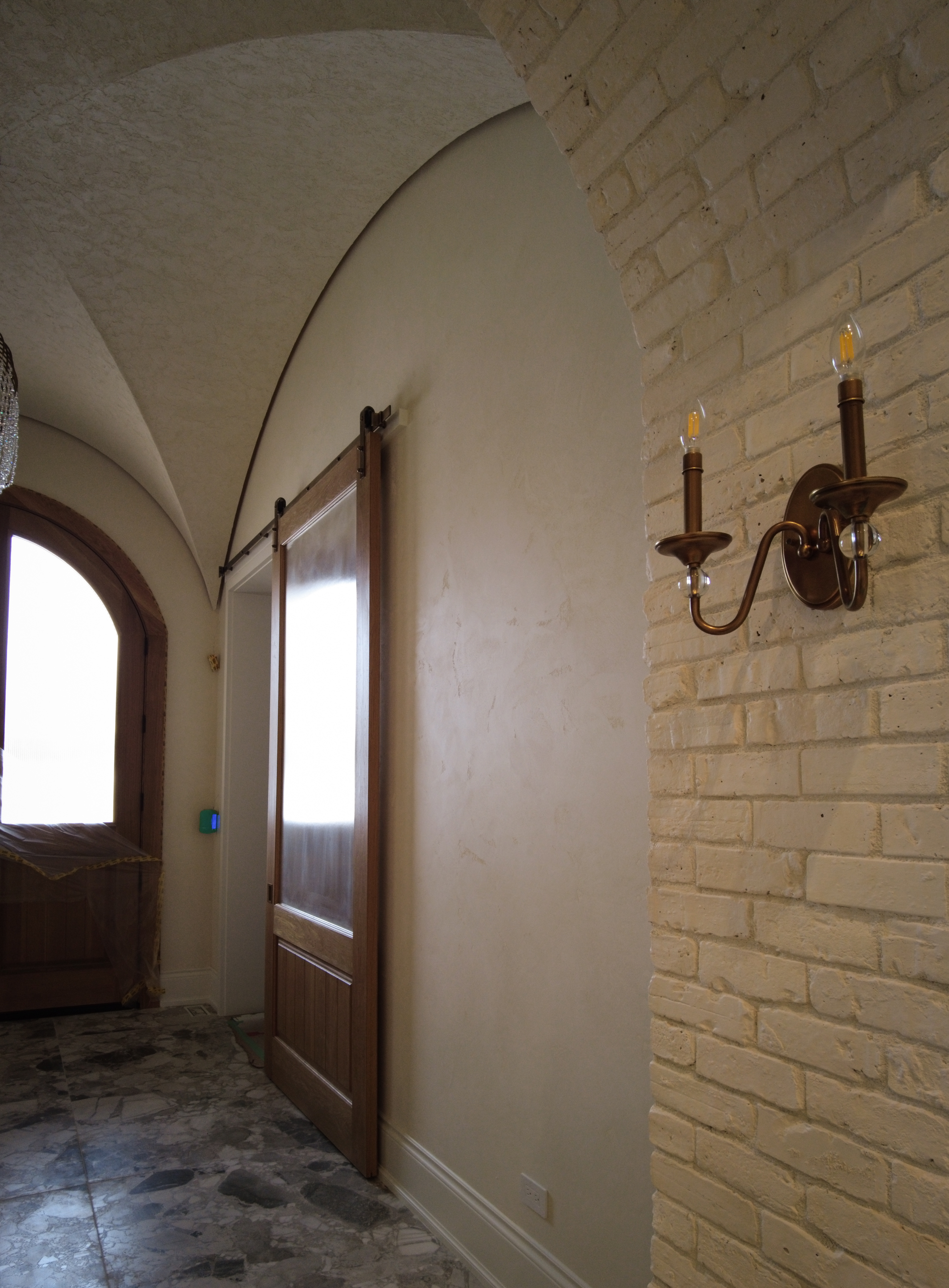
Old-World Tuscan / European Farmhouse
Old World Charm, High-Performance Results
While the look is ancient and rustic, the materials are cutting-edge. Venetian plaster is naturally breathable and lime-based, making it resistant to mold and incredibly durable. It is a high-performance design choice that actually improves with age, developing a soft patina that only enhances the Tuscan vibe over time.
Beyond its striking aesthetic, Venetian plaster is a masterclass in material science. As we move through 2026, it has transitioned from a “luxury niche” to a “functional essential” in high-end design.


Core Properties: The “Living” Wall
What sets Venetian plaster apart from standard paint or wallpaper is its mineral composition.
- Breathability: Its porous nature allows moisture to evaporate, preventing trapped humidity.
- Hypoallergenic: Naturally high pH levels (due to the lime) act as a natural fungicide, making it inhospitable to mold and bacteria.
- Thermal Mass: It helps regulate indoor temperatures by absorbing and slowly releasing heat.
- Hardness: Through a process called carbonatation, the lime reacts with CO2 in the air to turn back into stone, literally petrifying on your walls.
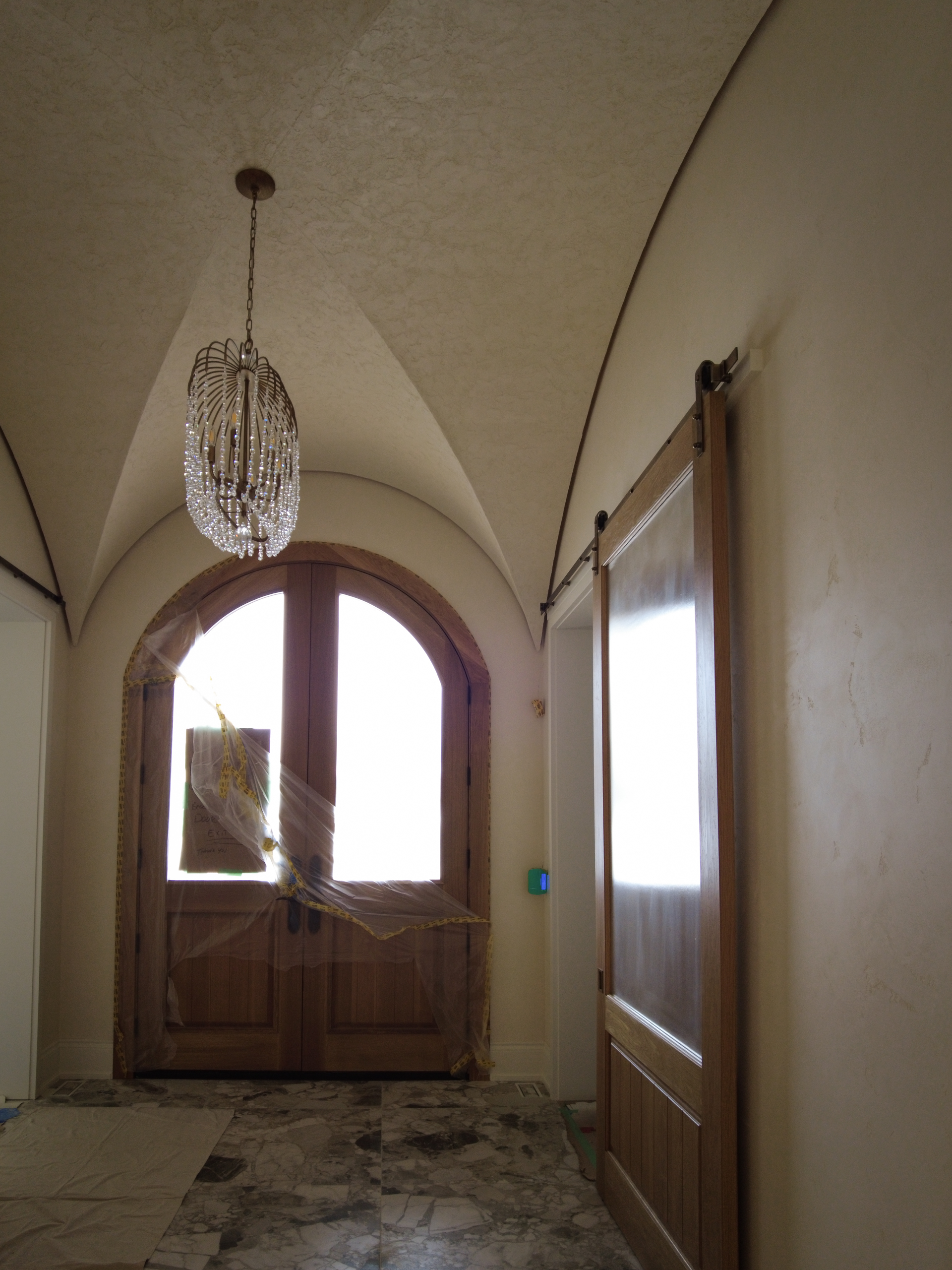
Where to Use It
While traditionally seen in grand foyers, the 2026 trend focuses on seamless continuity:
- Fireplace Surrounds: It is naturally fire-resistant and won’t crack under heat.
-
Kitchen Range Hoods: The ultimate statement piece. Wrapping a hood in plaster allows it to blend architecturally with the walls or stand out as a monolithic sculpture. It handles heat beautifully and eliminates the “industrial” look of exposed metal.
- Ceilings: Designers are “wrapping” rooms in plaster to create a cocoon-like, atmospheric effect.
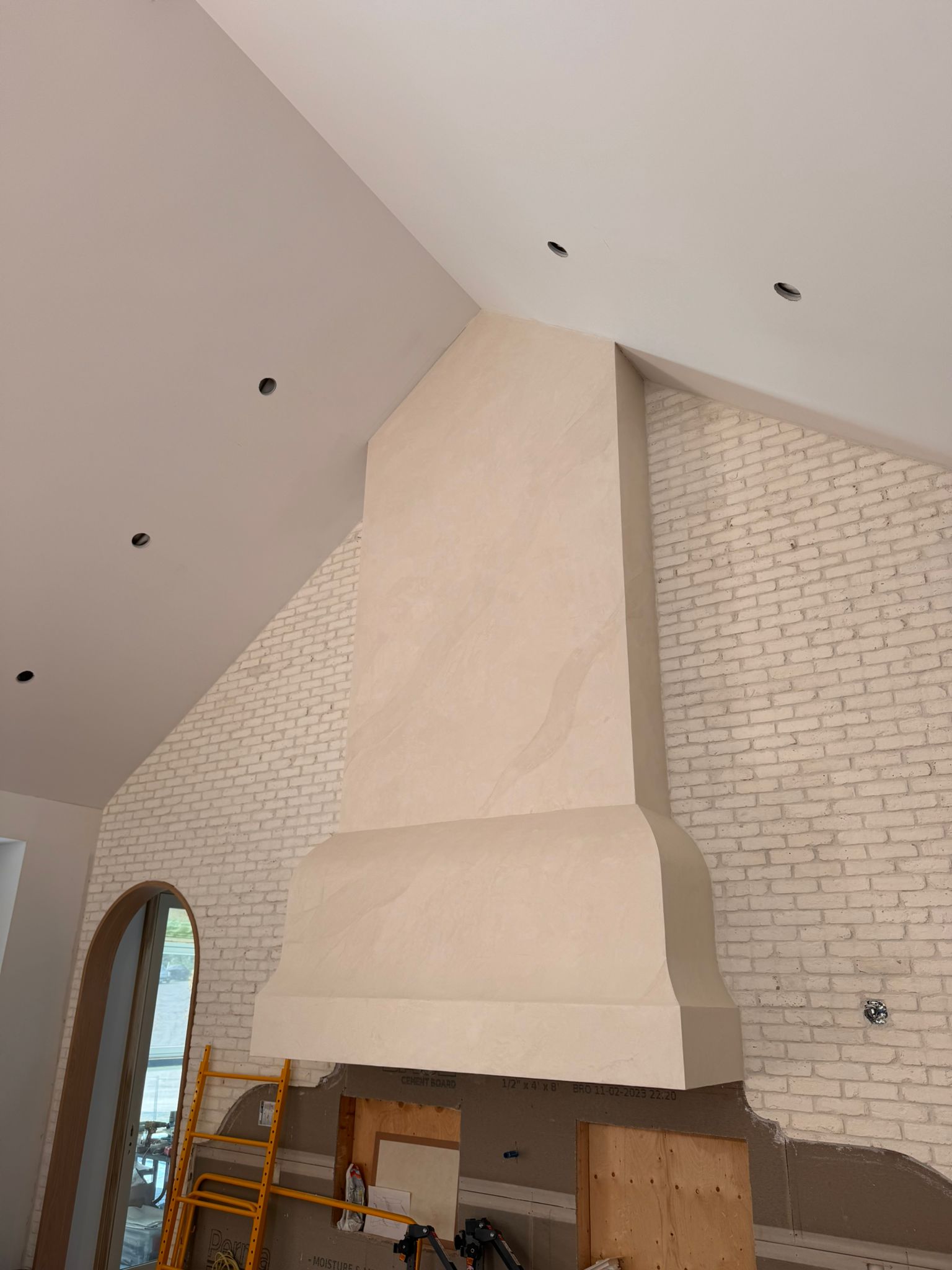
The Kleinburg Statement: Architectural Venetian Plaster Installation in Iridescent Pearl.
Types & Design Aesthetics
Not all plaster is created equal. Depending on the aggregate used, you can achieve vastly different moods:
| Type | Texture | Best For… |
|---|---|---|
| Marmorino | Fine-grain, satin | A classic, stone-like feel with subtle depth. |
| Spatulato | High-gloss, mirror-like | Small spaces where you want to reflect light. |
| Intonaco | Coarse, matte | Achieving that rugged, “rustic farmhouse” or brutalist look. |
| Scagliola | Veined, faux-marble | Mimicking expensive stone slabs without the weight or seams. |
Why Designers Love It in 2026
The obsession with Venetian plaster in 2026 comes down to The Human Element. In an increasingly digital and AI-driven world, homeowners are craving “tactile honesty.”
- Biophilic Connection: Venetian plaster uses raw, earth-derived minerals rather than synthetic plastics or VOC-heavy paints.
- Customization: No two walls are identical. The movement of the artisan’s trowel creates a unique “fingerprint” for the home.
- Sustainability: Venetian plaster is incredibly durable and long-lived. In a “buy once, buy better” economy, a wall finish that lasts decades and improves with age is the ultimate eco-flex.
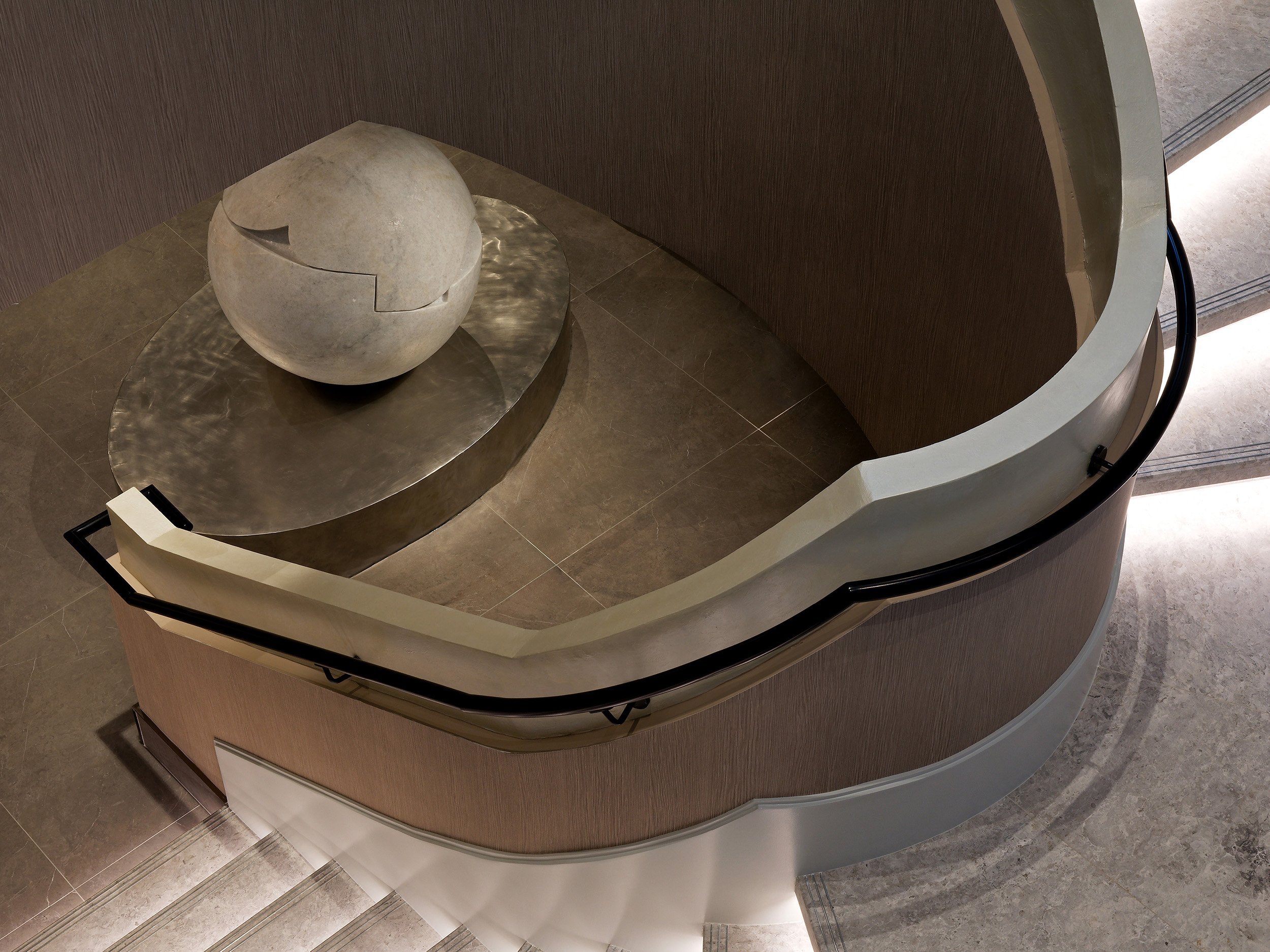
Velvety Venetian Plaster Installation for the Staircase Handrails at the Tridel Project – In collaboration with IIbyIV Design
Make a Lasting Impression.
Venetian plaster isn’t just a finish—it’s a statement of quality and durability. Contact us today to discuss specifications for your next commercial development or residential masterpiece.
Tel: 416-606-8060
Email: shayan@chromatist.com